
How Far Can a Ring Doorbell See: Visual Range and Motion Guide for 2026
Learn how far can a ring doorbell see with details on optical clarity, radar detection, and night vision limits for October 2026.
 By John Carlsen
Updated October 3, 2026
By John Carlsen
Updated October 3, 2026

A front porch camera needs to monitor approaching visitors, porch deliveries, and driveway activity without bombarding your phone with alerts for every passing car down the street. Homeowners installing a video entry device often wonder how far can a ring doorbell see before picture clarity degrades or motion sensors stop triggering. Optical range and detection range represent two distinct operational thresholds, as a wide-angle lens can easily capture sunlight miles away while its internal motion hardware focuses on nearby physical movement. Pairing a wide-angle video feed with reliable smart door lock options helps establish complete control over your home’s main threshold.
Modern doorbell cameras balance resolution, focal length, and digital enlargement to capture meaningful details at varying distances. A device capturing clear footage across a thirty-foot driveway might struggle to reveal facial features beyond fifteen feet, especially in harsh afternoon shadows or total nighttime darkness. Factors like optical resolution, sensor field of view, infrared illumination, and radar range-finding hardware all dictate how effectively your setup monitors distant activity. Evaluating these technical specifications ensures your exterior surveillance covers vital approach pathways while ignoring unnecessary street movement.
| Award | Product | SSG Score About SSG ScoreThe SSG Score is our own rating from 0 to 10, based on performance, design and build, ease of use, and value. It reflects independent research and is never influenced by manufacturers, retailers, or affiliate commissions. Learn more › | |
|---|---|---|---|
| Best Overall |
Ring Battery Doorbell 2K (newest model)
|
9.2/10 | Buy |
| Best Value |
 Ring Battery Doorbell 2K Plus (newest model)
|
9.2/10 | Buy |
| Best Budget |
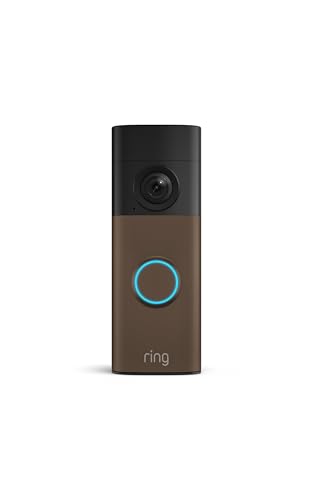 Ring Battery Doorbell 2K (newest model)
|
8.9/10 | Buy |
 Ring Battery Doorbell (newest model)
|
8.9/10 | Buy | |
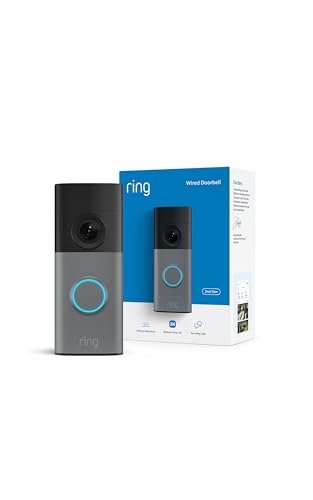 Ring Wired Doorbell 2K (newest model)
|
8.8/10 | Buy | |
 Ring Chime Plus (newest model) , Crisp
|
8.8/10 | Buy | |
 Ring Wired Doorbell 2K Plus (Newest Model)
|
8.8/10 | Buy | |
| Best Premium |
 Ring Wired Doorbell 4K Pro (Newest Model)
|
8.8/10 | Buy |
 Ring Chime , Enhanced audio for real-time alerts
|
8.6/10 | Buy | |
 Ring Battery Doorbell 4K Pro (newest model)
|
8.3/10 | Buy |
Visual Distance and Detection Boundaries on Ring Doorbells
Determining the visual limits of a front door camera requires separating what the lens can physically view from what its software can actively identify or detect. A video doorbell captures ambient light from hundreds of feet away, meaning distant trees, passing cloud cover, and streetlamps remain visible on screen. Motion sensors, digital image processors, and night vision illuminators operate within much narrower operational boundaries. Understanding how these hardware layers interact helps you set realistic expectations for your entryway security.
Optical Field of View vs Motion Detection Range
The optical lens on a smart doorbell possesses an essentially infinite focal depth for large, brightly lit objects. If your front door faces an open roadway, the camera displays passing semi-trucks, city buses, and approaching weather patterns dozens of yards away. This passive visual backdrop does not mean the device actively tracks or alerts on objects at those distances. The camera sensor continuously receives photons across its entire field of view, but processing that image into useful security data depends on motion triggers and pixel density.
Motion detection operates on entirely separate hardware components that dictate when the doorbell records footage or sends a mobile alert. Standard passive infrared sensors evaluate heat differentials across specialized zones rather than scanning every distant pixel. If an object moves beyond the effective range of these thermal or radar detectors, the doorbell will not wake from standby mode to log an event. The camera technically sees the distant horizon during active Live View sessions, yet it remains asleep when distant objects traverse the background.
Passive Infrared Sensing Limits on Battery Hardware
Rechargeable battery models, such as the Ring Battery Doorbell 2K and Ring Battery Doorbell 2K Plus, rely heavily on passive infrared (PIR) technology to preserve battery longevity. These thermal sensors measure ambient infrared radiation across split optical segments, triggering an alert only when a warm body crosses contrasting zones. The effective detection boundary for standard PIR sensors typically caps out around thirty feet under optimal environmental conditions. Objects moving beyond this thirty-foot radius rarely generate enough focused thermal displacement to trip the internal wake-up circuit.
The angle of approach also fundamentally alters how far away a PIR sensor can detect movement. Passive infrared detectors register lateral motion crossing across the lens far more effectively than motion heading straight toward the door. A delivery driver walking perpendicular to your entryway might trip the sensor at twenty-five feet, while someone approaching in a direct straight line may not trigger recording until reaching fifteen feet. Ambient outdoor temperature also plays a major role, as hot summer asphalt reduces thermal contrast and shortens effective detection distance.
Radar-Powered 3D Motion Detection and Exact Distance Tracking
Premium models like the Ring Battery Doorbell 4K Pro and Ring Wired Doorbell 4K Pro incorporate advanced radar technology to overcome the physical limits of thermal sensing. This millimeter-wave radar system continuously emits radio pulses and measures their reflection timing to establish the precise physical distance of moving objects. Instead of relying solely on thermal heat shifts, radar pinpoints subject coordinates in three-dimensional space up to thirty feet away. This active measurement ensures alerts fire reliably regardless of outdoor ambient temperatures or direct-line approach vectors.
Radar technology powers specialized software capabilities, including 3D Motion Detection and top-down Bird’s Eye View mapping. Homeowners can define an exact physical perimeter on an aerial satellite map, specifying whether detection stops at fifteen, twenty, or thirty feet from the threshold. When a visitor crosses that user-defined threshold, the camera starts logging their positional path across the property. This setup prevents vehicles traveling thirty-five feet away in the roadway from triggering alerts while guaranteeing immediate logging the moment someone steps onto your private walkway.
Facial Recognition and Subject Identification Distances
Detecting human presence and clearly identifying a person’s facial features require drastically different levels of pixel concentration. Security camera standards measure identification capability in pixels per foot, requiring sufficient image density across a subject’s face to distinguish distinct visual traits. While a smart doorbell captures the general outline or clothing color of a person thirty feet away, positive facial recognition generally requires the visitor to be within ten to fifteen feet. Beyond fifteen feet, digital compression and optical wide-angle distortion begin blending subtle facial details.
Resolution upgrades significantly expand the useful identification range across your front porch and driveway. Devices equipped with Retinal 2K resolution, including the Ring Wired Doorbell 2K and Ring Battery Doorbell 2K Plus, deliver substantially tighter pixel groupings than older standard definition models. These models feature up to 6x Enhanced Zoom, allowing you to crop into a recorded frame to inspect delivery badges or visitor faces at moderate distances. This digital magnification sharpens details between eight and eighteen feet that would otherwise appear pixelated on standard resolution lenses.
Flagship hardware equipped with Retinal 4K video pushes clear visual detail even further outward across your property. The Ring Wired Doorbell 4K Pro and Ring Battery Doorbell 4K Pro utilize 4K imaging sensors paired with up to 10x Enhanced Zoom. This optical and digital combination allows homeowners to read street numbers or identify distant trespassers up to twenty-five feet away under favorable lighting. Capturing that level of granular fidelity ensures that recorded video clips provide actionable visual evidence rather than blurry silhouettes.
Nighttime Visibility and Low-Light Sight Performance
Nighttime conditions dramatically compress how far any video doorbell can effectively see and record. In total darkness, cameras switch on infrared light-emitting diodes (LEDs) operating on 850nm wavelengths to illuminate the immediate area. These infrared beams project invisible light that the camera sensor reads as monochrome black and white footage. The practical illumination limit of these small onboard LEDs generally ranges between fifteen and twenty feet before rapid light fall-off plunges the background into darkness.
Infrared night vision can also suffer from optical backscatter and glare that restricts distant visibility. If your doorbell sits close to an adjacent wall, siding overhang, or brick column, the infrared LEDs reflect intensely off that nearby surface. The camera sensor automatically adjusts its exposure to compensate for the bright reflection, which darkens everything in the yard beyond ten feet. Angling the camera away from reflective masonry prevents this dynamic contrast collapse and restores your yard view.
Advanced doorbells mitigate nighttime limitations using specialized optical sensors branded as Low-Light Sight. Featured on hardware like the Ring Wired Doorbell 2K Plus, Ring Wired Doorbell 4K Pro, and Ring Battery Doorbell 2K Plus, this technology retains true color video using minimal ambient illumination. Streetlights, landscape fixtures, or low-wattage porch sconces provide enough ambient light for the sensor to resolve full-color detail across twenty to thirty feet. When total darkness takes over, the unit automatically switches back to sharp black and white infrared monitoring.
Vertical Framing and Package Visibility at the Threshold
Focusing solely on horizontal distance often causes homeowners to overlook critical blind spots directly beneath the camera. Porch packages delivered flush against your front door sit mere inches from the wall, where standard narrow lenses fail to view the ground. Expanding vertical field of view ensures the camera captures parcels sitting at zero to two feet while preserving a forward sightline across the yard. Monitoring both nearby packages and distant foot traffic provides balanced security for everyday home deliveries.
Achieving proper threshold coverage requires pairing wide-angle optics with correct mounting hardware. Installing an angled wedge or horizontal corner mount tilts the lens downward to eliminate dead zones around the door mat. Homeowners who integrate their outdoor cameras with integrated door contact sensors gain better awareness of whether an alert represents a simple passerby or an actual door opening. Setting the physical height near forty-eight inches ensures optimal framing for head-to-toe visitor viewing and doorstep parcel monitoring.
Environmental Conditions That Alter Real-World Range
Outdoor lighting extremes can dramatically shrink your camera’s usable visual range during specific times of day. An east-facing or west-facing entryway directly absorbs low-angle morning or late-afternoon sunlight, causing severe lens flare and shadowed silhouettes. High Dynamic Range (HDR) processing balances harsh backlighting by blending multiple exposures into a balanced frame. Without effective dynamic range compensation, a person standing fifteen feet away against a bright sky can appear completely blacked out on screen.
Inclement weather introduces airborne physical obstacles that scatter light and reduce optical clarity across all distances. Dense fog, heavy rainstorms, and falling snow reflect infrared illumination right back into the lens, creating a blinding curtain effect at night. During severe precipitation, useful visibility often collapses from thirty feet down to less than ten feet. Moisture droplets resting on the outer protective glass can also warp incoming light, making distant driveway objects appear blurry until the lens dries.
Network performance directly influences how much visual distance detail actually reaches your smartphone screen. Video doorbells dynamically compress their digital streams when Wi-Fi signal strength drops below recommended thresholds. A weak connection characterized by high packet loss forces the camera to lower its streaming bitrate, smearing fine distance details into blocky compression artifacts. Maintaining strong wireless signal levels at your front doorframe ensures that 2K and 4K video feeds retain their intended visual clarity across twenty to thirty feet.
Calibrating App Settings and Customizable Motion Zones
Software configuration plays a central role in dictating what your video doorbell actively monitors on your property. Through the mobile application, homeowners can draw custom polygonal motion zones that delineate active security areas from public spaces. If your front porch sits twenty feet from a bustling city sidewalk, drafting an activity boundary that ends at eighteen feet eliminates nuisance notifications. The camera lens will still show the sidewalk during Live View, but the notification engine will ignore passing pedestrians.
Fine-tuning motion sensitivity sliders allows you to filter out small or distant environmental triggers that cause false alerts. Lowering the sensitivity threshold instructs the onboard algorithm to ignore distant windblown branches, passing shadows, and small neighborhood animals. Increasing sensitivity prioritizes rapid alerts for subtle human movement at the outer limits of the detection perimeter. Finding the proper balance prevents notification fatigue while ensuring you never miss a legitimate approach along your entryway.
Power Supply Tradeoffs and Audio Extension Accessories
The method used to power your doorbell influences how aggressively it can scan and record distant motion events. Hardwired units connected to continuous low-voltage transformers remain awake and ready to capture immediate movement across their full thirty-foot detection radius. Battery-powered alternatives must enter low-power sleep states between events to conserve their lithium-ion reserves. Cold winter temperatures below freezing can also chemically restrict battery discharge rates, temporarily reducing detection responsiveness until temperatures rise.
Extending doorbell alerts beyond smartphone push notifications creates a more responsive and reliable home security setup. Dedicated plug-in sounders like the Ring Chime and Ring Chime Plus broadcast clear audible chimes throughout interior hallways whenever the exterior camera detects motion. When screening arriving guests from across the yard, combining clear visual confirmation with fast keyless entry locks lets you grant immediate access without stepping outside. This ecosystem synergy ensures that your visual perimeter connects seamlessly with indoor home awareness and entry management.
Balancing visual range and motion detection ensures your smart entry device functions as a dependable security tool rather than a constant nuisance. While your camera can observe the distant horizon on clear days, active motion detection and actionable facial identification operate most reliably within fifteen to thirty feet. Accounting for lighting variations, mounting angles, and network signal quality allows you to customize your detection zones for optimal threshold protection. Evaluating your home’s unique layout helps you choose the right hardware configuration to monitor what matters most.
About the author
John Carlsen is a home security and smart home specialist with more than a decade of experience researching and testing security technology. His expertise covers DIY security systems, security cameras, smart devices, pricing, contracts, and connected-home technology. He combines hands-on product testing with detailed research to explain strengths, limitations, ownership costs, and real-world value in straightforward terms for homeowners and renters.