
Best Whole Home Coverage Door Sensor Battery of 2026 Top Picks
Secure every entry point with the best whole home coverage door sensor battery updated for October 2026, offering reliable wireless contact alerts and long battery life.
 By John R. Delaney
Updated October 3, 2026
By John R. Delaney
Updated October 3, 2026
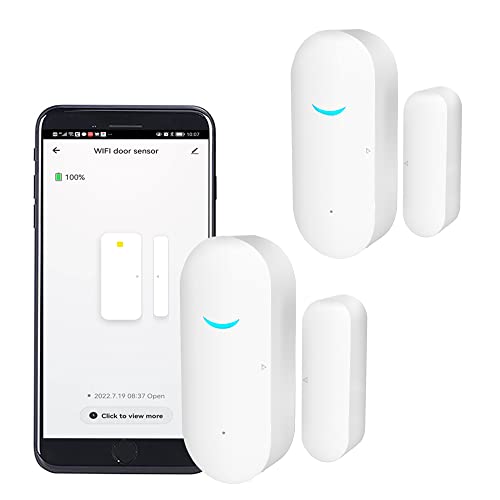
Unnoticed entry points and perimeter blind spots can quickly compromise your home security, especially when battery-powered detectors quit without warning. Wandering downstairs to find an exterior door slightly ajar all night is an unsettling wake-up call for anyone trying to automate their entryways. Pairing responsive magnetic reed switches alongside door sensing accessories solves this vulnerability by delivering instant perimeter awareness without complex wiring. Pinpointing the best whole home coverage door sensor battery requires looking closely at real-world power efficiency, contact gap tolerance, and wireless latency across multiple rooms.
Frequent battery replacements drain your wallet and leave security dead zones whenever a remote sensor drops off your Wi-Fi network quietly. Quality contact transmitters rely on low-power idle states and standard AAA cells to keep your entry alerts active through seasons of heavy foot traffic. Based on manufacturer specifications and wireless transmission data, modern units combine prompt push notifications with broad ecosystem support for Alexa and Google Home routines. Investing in durable door window contact detectors with low power consumption ensures seamless perimeter security monitoring without recurring subscription fees or dead hardware.
| Award | Product | SSG Score About SSG ScoreThe SSG Score is our own rating from 0 to 10, based on performance, design and build, ease of use, and value. It reflects independent research and is never influenced by manufacturers, retailers, or affiliate commissions. Learn more › | |
|---|---|---|---|
| Best Overall |
2 Pack WiFi Door Window Sensor Detector
|
8.1/10 | Buy |
Frequently Asked Questions
How long does the battery last on the best whole home coverage door sensor battery?
Up to one full year of standard operation is typical for sensors running on two AAA batteries. The hardware spends most of its time in an ultra-low power standby mode, waking up only when the magnetic contact separates or reconnects. High-traffic front doors may see slightly shorter lifespans than rarely opened basement windows. You can easily replace the standard AAA cells without dismounting the adhesive base plate.
Do these wireless door sensors require a dedicated smart home hub?
No, these Wi-Fi contact sensors connect directly to your home 2.4 GHz wireless network without requiring a proprietary hub. They interface straight with apps like Smart Life and Tuya Smart to push instant alerts to your phone. This direct Wi-Fi architecture simplifies whole-house setup and keeps your hardware costs low. You just need a stable Wi-Fi signal at each installation doorway.
Can you pair wireless door sensors with smart locks for automated security?
Yes, you can link door sensors with reliable smart door hardware through automation platforms like Alexa and Google Home. When the sensor registers a door closing, it can trigger an automated routine to secure deadbolts or activate interior hallway lights. This setup lets you build custom multi-device triggers across your entire home. It adds an extra layer of perimeter defense to your entryways.
What is the proper alignment distance between the sensor and the magnet?
The two components must mount with their alignment arrows facing each other and stay within a quarter-inch gap when closed. If the magnet sits too far from the sensor body, the internal magnetic reed switch cannot register a closed circuit. Double-sided adhesive tape allows for easy positioning on flush door trims. Make sure normal door swings do not hit or dislodge either housing during daily use.
How do you know when it is time to replace the sensor battery?
The companion mobile app automatically sends a low-battery push alert to your phone before the power drops completely. This warning gives you plenty of notice to swap in fresh AAA cells before the sensor goes offline. In addition, checking the app dashboard displays current battery health across all paired detectors. This feature eliminates guessing and helps prevent unexpected security blind spots.
Can Wi-Fi contact sensors monitor areas other than exterior doors?
Yes, magnetic contact sensors work effectively on garage side doors, sliding windows, gun cabinets, liquor cabinets, and pet gates. Any opening with two adjoining surfaces that separate when opened can accommodate the sensor and magnetic strip. This versatility makes them practical for protecting private interior storage areas as well as perimeter entries. They provide reliable access alerts wherever physical separation occurs.
About the author
John R. Delaney is a veteran technology editor and product reviewer specializing in home security, smart home devices, and wireless networking. With extensive experience evaluating connected security systems, cameras, smart locks, sensors, and networking equipment, he brings a practical testing mindset to consumer technology. His work emphasizes usability, performance, connectivity, and long-term value for homeowners building reliable smart security systems.