
Best Door Sensor Alarm Multi Device Simultaneous High Bandwidth of 2026 for Home Security
Secure every entryway with the best door sensor alarm multi device simultaneous high bandwidth options for October 2026, offering responsive alerts across multiple connected hubs.
 By Alina Bradford
Updated October 3, 2026
By Alina Bradford
Updated October 3, 2026

Perimeter blind spots along back patios, garage entryways, and side doors often leave modern properties vulnerable to undetected access. Many homeowners struggle with laggy transmitters and dropped radio signals when trying to pair multiple entry monitors across a single property. Investing in the best door sensor alarm multi device simultaneous high bandwidth gives you immediate situational awareness by routing trigger signals from multiple contact points to synchronized chimes or mobile apps. Based on product specifications and user feedback, modern systems solve coverage bottlenecks with expansive wireless ranges up to 800 feet and multi-sensor pairing for up to 20 zones. Pairing these multi-zone contact sensors alongside a reliable smart lock door creates an integrated defense layer that keeps you informed whether you are in the basement or miles away at work.
High-traffic entryways demand sensors with swift trigger response times, long battery endurance, and flexible mounting hardware. Magnetic contact switches and passive infrared sensors must send clean signals without congesting local 2.4 GHz Wi-Fi networks or draining compact lithium cells prematurely. Modern configurations offer distinct chime tones per entrance, loud 110 dB sirens, and silent visual LED alerts for quiet hours or sensitive spaces. Careful analysis of frequency handling and receiver limits shows that expandable multi-device setups reduce false alerts while keeping tabs on toddlers, pets, or dementia patients. A dependable multi-device alert network ensures zero gaps in your daily perimeter awareness.
| Award | Product | SSG Score About SSG ScoreThe SSG Score is our own rating from 0 to 10, based on performance, design and build, ease of use, and value. It reflects independent research and is never influenced by manufacturers, retailers, or affiliate commissions. Learn more › | |
|---|---|---|---|
| Best Overall |
Wireless Motion Sensor LED Light
|
9.2/10 | Buy |
| Best Budget |
 Door Chimes When Door Opens with 800 FT Range 40
|
8.6/10 | Buy |
| Best Premium |
 4-Pack Smart Door/Window Sensor: WiFi Alarm
|
8.1/10 | Buy |
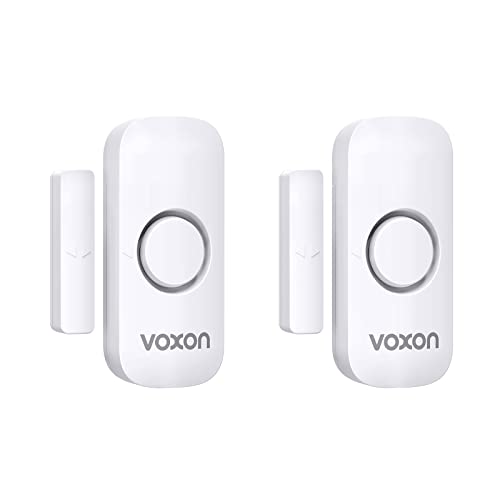 Door Alarms for Kids Safety
|
7.8/10 | Buy | |
 YisTech Caregiver Pager WiFi Door Alarms
|
7.8/10 | Buy |
Frequently Asked Questions
How do multi-device door sensor alarms prevent wireless signal interference?
Most systems utilize dedicated 433 MHz RF signals or structured 2.4 GHz protocols equipped with unique device encoding algorithms. This digital address pairing ensures each contact sensor communicates directly with its paired receiver without overlapping signals or causing packet collisions. Even in homes with numerous active wireless electronics, the encoded bursts transmit in milliseconds to maintain instantaneous chime triggers.
Can a single receiver handle triggers from multiple door sensors simultaneously?
Yes, expandable alert receivers can monitor anywhere from 20 to dozens of individual contact sensors on separate frequency channels. If two entryways open at the exact same instant, the receiver processes the incoming triggers sequentially within a fraction of a second. Many systems allow homeowners to assign unique melodies to each zone, making it easy to identify which entryway opened instantly.
Do Wi-Fi door sensors consume high network bandwidth on a home router?
No, smart door and window contact sensors generate virtually zero continuous bandwidth on residential networks. The transmitters remain in an ultra-low-power sleep state until the magnetic reed switch opens, sending only a few kilobytes of encrypted event payload. This light data footprint prevents network bottlenecks even when syncing alongside a high-traffic smart lock box for replacement parts doorsense integration.
What is the difference between magnetic contact sensors and PIR motion detectors for doors?
Magnetic contact sensors rely on a two-piece physical separation mechanism, whereas PIR detectors scan for infrared heat signatures across a room or entryway. Contact sensors mount directly on door jambs to verify whether a physical portal opens, completely eliminating false triggers from pets walking nearby. Motion detectors offer a wider 110-degree field of view to catch movement across larger interior zones or hallways.
How does magnetic gap alignment affect door sensor trigger accuracy?
Proper trigger reliability requires aligning the sensor and magnet within 0.78 inches (20 mm) of each other when the door is closed. Exceeding this distance prevents the magnetic reed switch from closing properly, which can cause phantom open alerts or constant sirens. Double-sided adhesive tape or mounting screws keep the alignment stable against repeated door slamming.
Can these door sensor systems integrate with voice assistants and smart platforms?
Standalone RF sensor systems chime directly through dedicated plug-in receivers, while Wi-Fi versions connect directly to Alexa and Google Home via apps like Smart Life. Smart Wi-Fi models enable push notifications directly to smartphones anywhere in the world without requiring a proprietary hub. Standalone RF systems offer simpler plug-and-play installation without needing router credentials or internet access.
About the author
Alina Bradford is a safety and security expert with more than two decades of experience researching consumer technology and personal safety. She has tested hundreds of security and safety products and brings first-responder training to her practical approach. Her expertise spans home security equipment, cameras, connected safety devices, apps, and emerging security technology, with a focus on making complex products easier for everyday consumers to understand.