
Best Door Sensor Battery for Homes of 2026 for Long-Lasting Security
Keep entry sensors powered in October 2026. Explore the best door sensor battery for homes to prevent offline gaps and maintain continuous protection.
 By John R. Delaney
Updated October 3, 2026
By John R. Delaney
Updated October 3, 2026

Eliminating Silent Battery Drain in Smart Home Entry Points
Dead cells in security hardware leave entry points vulnerable without sounding a warning until an open door goes unnoticed. Home security magnetic contact sensors depend on steady voltage to bridge magnetic reed switches and transmit radio frequency signals instantly to your base station. A sudden drop in power doesn’t just silence notifications; it leads to dropped smart triggers, offline warnings, or shrill chirps at night. Identifying the best door sensor battery for homes ensures that magnetic contact switches, window alarms, and smart entry detectors maintain continuous communication across every access door. Pairing steady sensor cells with a reliable smart lock door setup keeps exterior entry points fortified against unexpected hardware blackouts.
Entryway security hardware relies on diverse chemistry types, ranging from 3-volt CR123A lithium cells to common AAA alkaline pairs and compact LR44 button cells. Standalone alarms like the PLOJOP units utilize replaceable AAA cells to drive piercing 90dB sounders, while integrated systems like the eufy Security Entry Sensor E20 take advantage of CR123A lithium chemistry for multi-year standby endurance. Long-term reliability depends heavily on selecting cell options with built-in current regulation, high milliampere-hour ratings, and low self-discharge rates. Evaluating your sensor power type helps prevent unexpected offline gaps across high-traffic doors.
| Award | Product | SSG Score About SSG ScoreThe SSG Score is our own rating from 0 to 10, based on performance, design and build, ease of use, and value. It reflects independent research and is never influenced by manufacturers, retailers, or affiliate commissions. Learn more › | |
|---|---|---|---|
| Best Overall |
Enegitech CR123A 3V Lithium Battery
|
9.2/10 | Buy |
| Best Budget |
 Door Window Alarm, 90dB Wireless Sensor Alarm
|
9.1/10 | Buy |
| Best Value |
 eufy Security Entry Sensor E20
|
9.1/10 | Buy |
 4 Pcs 90dB Door Window Alarm,Wireless Sensor Alarm
|
8.9/10 | Buy | |
| Best Premium |
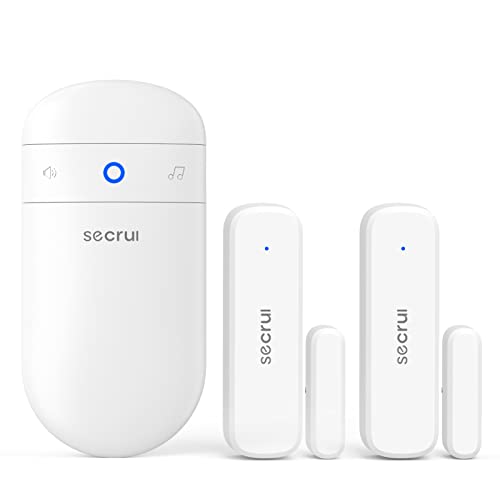 Door Chime When Door Opens
|
8.9/10 | Buy |
 Sanjie Door Window Alarm Sensors, 5 Pack, 125dB
|
8.1/10 | Buy | |
 DEEIRAO Home Keyhole Light Wireless Motion Sensor
|
7.8/10 | Buy |
Frequently Asked Questions
Which battery chemistry lasts longest in door and window sensors?
Lithium 3V chemistries like CR123A provide the longest operational lifespan for entry hardware. Unlike standard alkaline cells with higher self-discharge rates, non-rechargeable CR123A lithium cells offer up to 10 years of standby storage and steady voltage. Devices like the eufy Security Entry Sensor E20 utilize these cells to deliver up to 5 years of continuous protection. Choosing lithium chemistry ensures the best door sensor battery for homes seeking minimal upkeep.
How do you know when a door sensor battery is running low?
Most modern contact sensors signal low power through flashing LEDs, chime chirps, or hub notifications. Standalone contact sensors, like the Sanjie 125dB sensor, flash an onboard LED indicator light once internal LR44 button cells dip below operating voltage. Connected smart sensors push notifications directly to your phone weeks before complete failure. Routine inspections, similar to checking smart lock door battery maintenance compartments, help prevent unexpected security downtime.
Can rechargeable batteries be used in wireless door sensors?
No, standard rechargeable cells are generally not recommended for wireless magnetic contact sensors. Rechargeable lithium-ion or NiMH cells carry differing nominal voltages and experience rapid voltage drop-offs that confuse sensor battery indicators. Manufacturer notes for cells like the Enegitech CR123A explicitly advise using non-rechargeable lithium cells to maintain safe PTC internal protection. Sticking to primary disposable cells ensures predictable signal transmission and long-term circuit safety.
Why do door sensor batteries drain faster in certain locations?
High door cycle frequency and extreme temperature fluctuations drastically accelerate power consumption in magnetic entry hardware. Each time a door opens, the internal reed switch triggers a radio frequency transmission, consuming bursts of milliampere power. Entry doors that swing open dozens of times daily deplete cells much faster than quiet windows. Freezing drafts also temporarily decrease internal chemical reaction rates, lowering effective battery capacity in winter.
Does the gap distance between the sensor and magnet affect battery life?
Yes, improper alignment can trigger continuous transmission loops that drain battery reserves rapidly. Magnetic sensors like Dogxiong or PLOJOP require the contact magnet to sit within 0.39 to 0.6 inches of the sensor housing. If misaligned frames cause the sensor to flutter between open and closed states, the transmitter continuously broadcasts alerts. Aligning alignment notches flush during physical installation preserves battery efficiency and avoids false alerts.
How does cold weather impact the Best Door Sensor Battery For Homes of 2026?
Sub-freezing temperatures temporarily raise internal electrical resistance, reducing the usable capacity of alkaline cells faster than lithium cells. Lithium chemistries maintain stable voltage curves across wider temperature extremes, preventing false offline sensor disconnects in unheated entryways or garages. Selecting dedicated lithium options for exterior-facing doors keeps contact switches operating reliably in 2026 without winter power drops.
About the author
John R. Delaney is a veteran technology editor and product reviewer specializing in home security, smart home devices, and wireless networking. With extensive experience evaluating connected security systems, cameras, smart locks, sensors, and networking equipment, he brings a practical testing mindset to consumer technology. His work emphasizes usability, performance, connectivity, and long-term value for homeowners building reliable smart security systems.