
Best Door Sensor Alarm for Car of 2026 for Reliable Security
Protect your ride with the best door sensor alarm for car for October 2026. Compact contact sensors and loud sirens help stop break-ins instantly.
 By Tyler Lacoma
Updated October 3, 2026
By Tyler Lacoma
Updated October 3, 2026

Perimeter blind spots around parked vehicles often leave car doors vulnerable to quiet, forced entry. Traditional car alarms don’t always trigger when a thief gently pries open a camper shell, tool box, or side door. Installing the best door sensor alarm for car provides an immediate deterrent by sounding an ear-piercing siren the second an entryway shifts out of alignment. Based on our analysis of magnetic contact specifications and user feedback, these standalone wireless sensors trigger instantly once the gap between the magnet and detector exceeds 0.78 inches. Pairing these compact devices with reliable door security systems gives you an extra layer of perimeter defense without complicated wiring.
Tackling vehicle security shouldn’t require tearing apart your dashboard or running complex line voltage wiring. Modern battery-powered magnetic contacts mount in seconds using double-sided adhesive tape, making them ideal for work vans, RVs, glove compartments, and tailgates. Careful examination of alert volume controls, physical gap tolerances, and battery setups across leading models reveals units that deliver dependable intrusion detection without phantom triggers. Also, setting up an alert for child safety around sliding doors or loud theft prevention for your gear in a camper shell ensures your perimeter stays guarded around the clock.
| Award | Product | SSG Score About SSG ScoreThe SSG Score is our own rating from 0 to 10, based on performance, design and build, ease of use, and value. It reflects independent research and is never influenced by manufacturers, retailers, or affiliate commissions. Learn more › | |
|---|---|---|---|
| Best Overall |
TECKNET Door Alarms for Kids Safety
|
8.8/10 | Buy |
| Best Value |
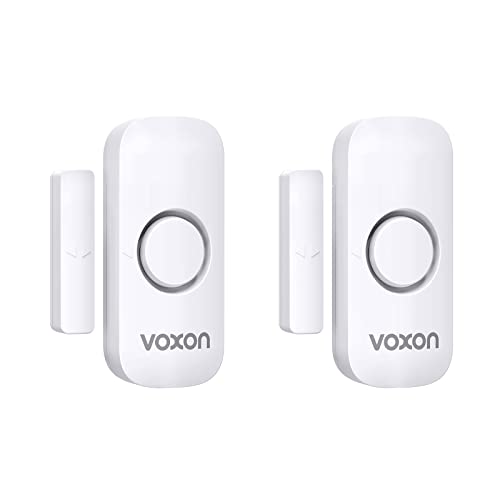 Door Alarms for Kids Safety
|
7.8/10 | Buy |
Frequently Asked Questions
How does a magnetic contact door alarm work inside a car or camper?
A magnetic contact alarm triggers whenever the magnet moves away from the main sensor unit. The internal reed switch detects when the magnetic field breaks beyond approximately 0.78 inches (2 cm), immediately activating the built-in siren and LED indicator. This standalone mechanism requires no vehicle wiring, relying instead on small button batteries to deliver instant intrusion alerts for car doors, trunks, or toolboxes.
Can vehicle vibrations or road bumps trigger false alarms while driving?
Yes, mechanical vibrations can trigger the alarm if the unit remains armed while driving. Most standalone magnetic door sensors, including TECKNET Door Alarms for Kids Safety, feature a manual OFF switch designed specifically to disable the chime or alarm mode before travel. Setting the toggle switch to OFF prevents annoying false triggers caused by road bumps, wind flex, or closing doors during transit.
What is the optimal gap tolerance when mounting a door alarm on vehicle doors?
The recommended installation gap between the alarm body and the magnetic strip is under 0.5 inches (1.2 cm). While the sensor activates once the gap exceeds 0.78 inches, aligning the alignment arrows tightly ensures reliable contact closure when the vehicle door shuts. Checking weatherstripping depth and vehicle frame contours helps maintain a flush mount without physical interference.
How loud is a 100 dB door alarm, and can it be heard outside a closed car?
A 100-decibel alarm produces sound equivalent to a lawnmower or handheld drill, easily piercing through vehicle glass and sheet metal. In quiet residential neighborhoods or campsites, this volume level immediately draws attention and startles intruders attempting unauthorized access. For enclosed spaces where 100 dB might feel overwhelming, models like Door Alarms for Kids Safety offer adjustable volume controls or chime modes for gentler entryway monitoring.
How long do LR44 or button batteries last in standalone car door sensors?
Button cell batteries typically provide six to twelve months of standby power depending on trigger frequency and local temperature. Cold winter nights and extreme summer cabin heat can accelerate chemical drain inside standard LR44 cells. Checking battery levels periodically and keeping spare cells in your glove box ensures uninterrupted perimeter security for your vehicle.
Can standalone door alarms integrate with smart home hubs or phone apps?
No, these compact units operate as self-contained standalone security devices without Wi-Fi, Zigbee, or Matter connectivity. They rely entirely on their built-in sirens and LED indicators rather than sending smartphone push notifications. If your primary goal is remote mobile alerts and automation routines, pairing these local sirens with integrated door sensing hardware inside your home garage provides full app integration.
About the author
Tyler Lacoma is a smart home and home security technology expert with more than a decade of hands-on experience testing connected devices. His expertise includes security cameras, smart locks, home security systems, privacy features, smart-home compatibility, and emerging AI technology. He focuses on translating technical features into practical guidance that helps homeowners understand which security solutions truly fit their homes and everyday needs.