
Best Garage Door Sensor With Wire of 2026 Top Hardware Picks
Reliable closure starts with the best garage door sensor with wire. Review top wired safety kits and cables for smooth operation in October 2026.
 By Rachel Cericola
Updated October 3, 2026
By Rachel Cericola
Updated October 3, 2026
Eliminating Garage Door Reversing Glitches and Safety Sensor Blind Spots
Sudden garage door reversals and blinking overhead opener lights usually point to a compromised optical beam or degraded wiring. Cold drafts, track vibrations, and rodent damage frequently break fragile low-voltage lines along the foundation rails. Installing the best garage door sensor with wire restores reliable communication between the opener motor and safety eyes, ensuring smooth open and close cycles every time. Our review of manufacturer wiring gauges, optical beam tolerances, and user feedback highlights how heavy-duty copper lines and durable magnetic contacts prevent irritating false stops. Connecting dependable sensors also protects valuable entryways, working alongside hardware like a reliable smart lock door to safeguard your home perimeter.
Standard residential openers rely on low-voltage 2-conductor lines to carry continuous monitoring signals to safety reversing eyes. Opting for robust 22 AWG copper sensor wire or a heavy-duty wired magnetic contact sensor eliminates phantom trip faults caused by voltage drop across extended ceiling runs. Quality insulation shields sensitive signal paths from harsh garage temperature swings and mechanical friction along the door track. Whether you need replacement photoelectric beams or armored reed switches, paired security accessories like a fast keyless entry lock create a seamless, worry-free access system.
| Award | Product | SSG Score About SSG ScoreThe SSG Score is our own rating from 0 to 10, based on performance, design and build, ease of use, and value. It reflects independent research and is never influenced by manufacturers, retailers, or affiliate commissions. Learn more › | |
|---|---|---|---|
| Best Overall |
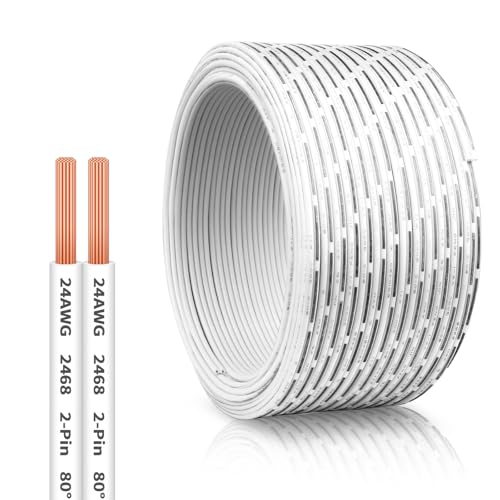
50 FT 24 AWG Universal Garage Door Wire
|
9.1/10 | Buy |
| Best Budget |
 Garage Door Magnetic Contact Sensor, Wired NC
|
8.4/10 | Buy |
| Best Value |
 100 Feet 22 AWG 2-Pin Garage Door Opener Wire
|
8.4/10 | Buy |
| Best Premium |
 41A5034 Safety Sensor Kit
|
7.8/10 | Buy |
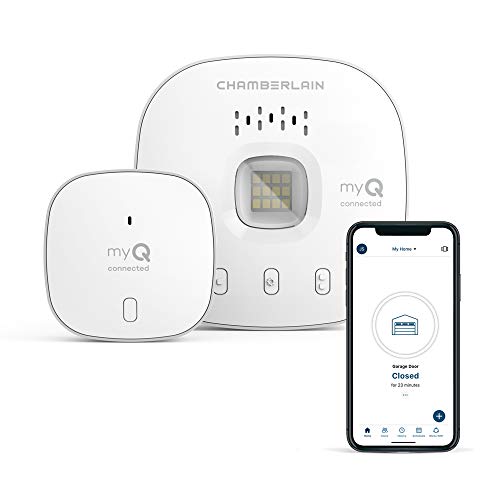 CHAMBERLAIN Smart Garage Control
|
7.8/10 | Buy |
Frequently Asked Questions
What wire gauge is recommended for garage door sensors?
Standard 22 AWG or 24 AWG 2-conductor copper wire is recommended for safety reversing sensors and wall control stations. Most residential openers from LiftMaster, Chamberlain, and Craftsman supply low-voltage current across runs up to 100 feet without measurable signal drop. Pure copper or tinned stranded copper wire handles continuous track vibration and resists corrosion far better than copper-clad aluminum alternatives.
Why does a wired safety sensor cause the garage door to reverse immediately?
Optical misalignment, dirty lenses, or broken conductor lines trigger the opener to reverse as a built-in safety measure. An amber sending LED and a solid green receiving LED confirm accurate beam alignment on standard photoelectric sensors. If the receiving LED flickers or shuts off, checking for staple pinches or damaged copper along the best garage door sensor with wire run usually isolates the issue.
Can magnetic contact sensors work with automated garage doors?
Yes, heavy-duty wired magnetic contact switches integrate smoothly with low-voltage alarm systems, automation relays, and access controllers. Surface-mounted zinc alloy housings with armored cables monitor physical door contact without depending on line-of-sight optical beams. Much like tracking exterior entry status with a Doorsense replacement parts sensor, a normally closed reed switch alerts your system the moment the door track separates.
How do wired safety sensors differ from wireless garage hubs in 2026?
Wired safety sensors connect directly to motor logic boards to reverse closing doors instantly, whereas wireless hubs manage remote opening commands and schedule closures over Wi-Fi. Devices like the CHAMBERLAIN Smart Garage Control use wireless tilt sensors for status reporting but still require fully operational wired safety eyes at track level. Pairing hardwired safety beams with automated hardware like a high-speed smart lock door gives property owners dependable physical and remote entry monitoring.
Can you splice broken garage door sensor wire instead of running a full replacement?
Yes, splicing damaged sensor wires with waterproof gel-filled crimp connectors or twist nuts restores the low-voltage connection. Stripping roughly half an inch of PVC insulation from both wire ends ensures clean copper contact. However, running a continuous 50-foot or 100-foot spool of best garage door sensor with wire avoids intermittent signal dropouts caused by corroded connections in humid garage environments.
Do wired garage door sensors require a neutral wire or line voltage?
No, garage door safety reversing sensors and magnetic contacts operate strictly on low-voltage DC current supplied by the opener terminal board. They do not tap into 120V AC household line voltage and never require a neutral wire connection. This simple two-wire design keeps installation safe for DIYers and simplifies routine maintenance.
About the author
Rachel Cericola is an experienced smart home writer and product tester with extensive hands-on experience evaluating connected devices. Her expertise includes security cameras, video doorbells, smart-home platforms, video storage, privacy, and everyday device usability. She approaches home security from a consumer-first perspective, helping readers understand how products perform beyond specifications and what features matter most in daily use.