
Best Wifi Door Sensor Battery of 2026 for Reliable Security
Protect your entryways with the Best Wifi Door Sensor Battery options for October 2026, featuring easy wireless setup, long battery life, and instant mobile alerts.
 By John R. Delaney
Updated October 3, 2026
By John R. Delaney
Updated October 3, 2026

Dead batteries in wireless security hardware often leave vulnerable entry points completely unguarded without giving any warning. When a contact sensor silently drops off the local network, you lose real-time visibility over doors, windows, and back gates right when you need protection most. Selecting the best wifi door sensor battery setup helps balance extended standby time with fast 2.4 GHz Wi-Fi response. Based on our detailed comparison of detection technologies, coverage ranges, and user feedback, modern battery-powered magnetic switches can operate for months on standard AAA or AA cells. Linking these entry sensors to an existing reliable smart lock setup creates an integrated perimeter that alerts your phone immediately during any entry event.
Fumbling with complicated hubs or rewiring door frames isn’t necessary with standalone Wi-Fi contact sensors. Most models attach in seconds with durable double-sided adhesive and sync directly to your router without extra equipment. Low-power wireless radios sleep during quiet hours and wake up instantly when the magnetic seal breaks, which preserves battery health across busy entry doors. These compact detectors also automate room lighting, trigger loud indoor chimes, and push notifications through platforms like Smart Life or Tuya. Clean installation and dependable power management keep your entryways monitored around the clock without constant maintenance.
| Award | Product | SSG Score About SSG ScoreThe SSG Score is our own rating from 0 to 10, based on performance, design and build, ease of use, and value. It reflects independent research and is never influenced by manufacturers, retailers, or affiliate commissions. Learn more › | |
|---|---|---|---|
| Best Overall |
WiFi Door Window Sensor: Smart Contact Sensor
|
9.2/10 | Buy |
| Best Budget |
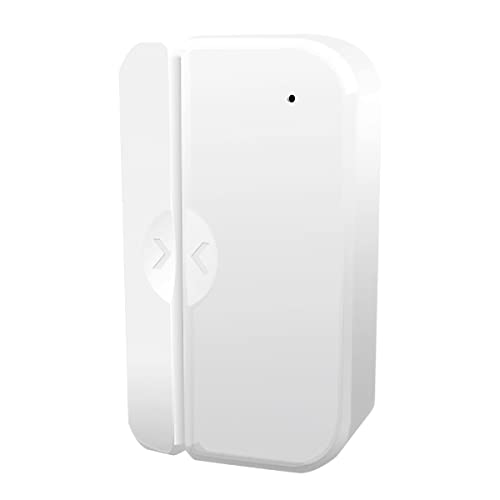 Feit Electric WiFi Door Sensor, No Hub Required
|
9.1/10 | Buy |
| Best Premium |
 WiFi Door Alarm System, 8-Piece DIY Wireless Alarm
|
8.9/10 | Buy |
 Smart WiFi Door Sensor: Wireless Window Sensor
|
8.8/10 | Buy | |
| Best Value |
 WiFi Door Sensor Window Detector
|
8.3/10 | Buy |
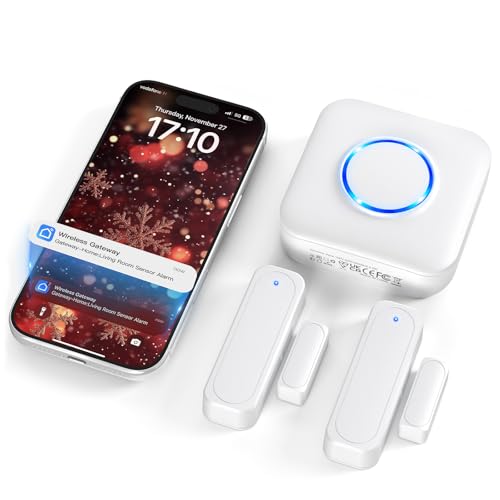 Door Chime, Smart WiFi Door Sensor Chime Window
|
8.3/10 | Buy | |
 PGST Wireless Door and Window Sensor
|
8.1/10 | Buy |
Frequently Asked Questions
How long does the battery typically last in a Wi-Fi door sensor?
Most Wi-Fi contact sensors run between six and twelve months on a standard set of AAA or AA alkaline batteries. Because Wi-Fi radios require notable power when transmitting data, the hardware stays in an ultra-low-power sleep state until the magnetic switch opens or closes. High-traffic front doors will naturally deplete cells faster than rarely opened basement windows. Many models alert you via mobile app when voltage drops below critical operating levels.
Do Wi-Fi door sensors require a dedicated smart home hub?
No, standalone Wi-Fi door sensors connect directly to your home 2.4 GHz wireless router without needing an external bridge or proprietary hub. You configure notifications, alert logs, and device sharing straight through mobile apps such as Smart Life, Tuya, or Feit Electric. This direct connection simplifies installation and avoids the expense of additional bridge hardware.
Can a Wi-Fi contact sensor trigger automated lighting routines?
Yes, you can configure compatible Wi-Fi door sensors to trigger smart light switches, plugs, and ambient bulbs the moment a door opens. Connecting your sensor through Alexa or Google Assistant allows you to build custom automated routines that illuminate dark hallways or entryways immediately upon arrival. Pairing these contact sensors alongside a smart lock with doorsense style setup reinforces both security and convenience across all main entrances.
What causes a Wi-Fi door sensor to drain its battery prematurely?
Weak 2.4 GHz Wi-Fi signal strength is the leading cause of rapid battery depletion in wireless door sensors. When a sensor struggles to maintain a stable handshake with your router, its radio transceiver repeatedly boosts power to transmit state changes, exhausting AAA cells in weeks rather than months. Excessive daily triggers on high-traffic doors can also shorten overall battery runtime.
What is the maximum recommended gap between the door sensor and its magnet?
Most magnetic contact sensors require a maximum separation gap of 10 to 15 millimeters when the door or window is fully shut. Exceeding this distance prevents the internal reed switch from detecting the magnetic field, resulting in persistent open status alerts and failed automations. Aligning the sensor marks closely on door jambs ensures consistent detection and prevents unnecessary wireless reconnect cycles.
About the author
John R. Delaney is a veteran technology editor and product reviewer specializing in home security, smart home devices, and wireless networking. With extensive experience evaluating connected security systems, cameras, smart locks, sensors, and networking equipment, he brings a practical testing mindset to consumer technology. His work emphasizes usability, performance, connectivity, and long-term value for homeowners building reliable smart security systems.