
Best Door Sensor Alexa Under 30 Dollars of 2026 for Home Security
Stop false entry alarms with the Best Door Sensor Alexa Under 30 Dollars options for November 2026, offering instant phone alerts and easy routine automation.
 By John Carlsen
Updated October 3, 2026


Unexpected chime alerts at midnight can rattle any household, especially when an entry detector drops its Wi-Fi signal or triggers late. Reliable contact sensors solve this frustration by immediately reporting whenever a front entrance, patio slider, or garage door cracks open. Selecting the Best Door Sensor Alexa Under 30 Dollars allows you to automate entryway lights, arm custom Alexa guard routines, and verify whether a side gate swung open in heavy wind without overspending. A stable magnetic reed switch setup ensures your voice assistant announces arrivals the exact second a door opens.
Budget-conscious setups often struggle with delayed cloud pings or cumbersome pairing routines. Pairing smart contact sensors alongside a reliable smart lock for exterior doors creates an automated security perimeter that locks deadbolts and turns on foyer lighting instantly. Reviewing hardware specifications, wireless protocols like 2.4 GHz Wi-Fi versus Matter over Thread, and expected battery life helps identify units that maintain dependable connections throughout daily household traffic.
| Award | Product | SSG Score About SSG ScoreThe SSG Score is our own rating from 0 to 10, based on performance, design and build, ease of use, and value. It reflects independent research and is never influenced by manufacturers, retailers, or affiliate commissions. Learn more › | |
|---|---|---|---|
| Best Overall |
Smarter Living Smart WiFi Door and Window Sensor
|
8.9/10 | Buy |
| Best Premium |
 Eve Door and Window Smart Contact Sensor |
8.8/10 | Buy |
 Loopo WiFi Door and Window Sensor 4-Pack |
8.6/10 | Buy | |
| Best Budget |
 SENCKIT Smart WiFi Door and Window Sensor 2-Pack |
8.3/10 | Buy |
 Gaoducash WiFi Door and Window Sensor 2-Pack |
8.1/10 | Buy | |
 XFOX WiFi Door and Window Sensor |
8.1/10 | Buy | |
 Gaoducash WiFi Smart Door and Window Sensor 2-Pack |
8.0/10 | Buy | |
| Best Value |
 GRSICO Zigbee Smart Door Sensor 2-Pack |
8.0/10 | Buy |
Smarter Living Smart WiFi Door and Window Sensor
The Smarter Living Smart WiFi Door and Window Sensor 2-Pack provides reliable open-and-close contact sensing directly over 2.4 GHz Wi-Fi with no hub required. It is an ideal pick for renters and DIY homeowners wanting subscription-free alerts and automated lighting triggers through Alexa, SmartThings, and Smart Life.
Pros
- Operates independently on existing 2.4 GHz Wi-Fi networks without requiring extra hubs or hardware bridges
- Works natively with Smart Life, Tuya, Amazon Alexa, and Samsung SmartThings routines
- Includes standard AAA batteries out of the box with an estimated runtime of up to 12 months
- Bluetooth-assisted pairing eliminates frustrating manual network setup steps
- App push alerts and door event history logs do not require a paid subscription plan
Cons
- Requires a dedicated 2.4 GHz Wi-Fi frequency band and does not support 5 GHz networks
- Google Home integration displays sensor status but does not support triggering routine automations on state change
- Battery longevity depends heavily on Wi-Fi router signal strength and daily open-and-close frequency
Eve Door and Window Smart Contact Sensor
The Eve Door & Window contact sensor delivers fast open and closed state tracking using Matter over Thread for private, hub-coordinated automations. It is an outstanding choice for smart home enthusiasts looking to trigger entryway lights and monitor access points without cloud latency.
Pros
- Native Matter over Thread protocol provides swift local execution across multiple major smart ecosystems.
- Strict privacy architecture functions without cloud servers, user accounts, or background data tracking.
- Instantaneous open and close state changes avoid the reset cooldown delays typical of basic PIR motion sensors.
- Compact 0.91 x 2.05 x 0.94-inch white casing mounts discreetly onto standard interior door and window frames.
- Activity duration and timestamp history can be monitored within the Eve iOS application.
Cons
- Requires a compatible Thread border router and Matter controller from Apple, Amazon, Google, or Samsung.
- Detailed duration history and activity graphs are primarily supported within the Eve app for iOS rather than Android.
- Physical contact design requires precise gap alignment between the sensor housing and magnetic counterpart.
Loopo WiFi Door and Window Sensor 4-Pack
The Loopo WiFi Door and Window Sensor 4-pack connects directly to 2.4GHz Wi-Fi networks without an extra hub, delivering prompt open and close notifications and lighting automation triggers via the Tuya and Smart Life apps. It is a practical, budget-friendly option for homeowners and renters seeking easy entryway and cabinet monitoring.
Pros
- Operates directly on standard 2.4GHz Wi-Fi without the expense of an external hub
- Uses accessible AA batteries rather than hard-to-find coin cells
- Tool-free adhesive mounting protects door frames and rental properties
- Convenient 4-pack provides enough sensors to monitor multiple high-traffic entry points
Cons
- Requires a 2.4GHz Wi-Fi connection and is not compatible with 5GHz-only networks
- Larger physical footprint than ultra-compact coin-cell Zigbee contact sensors
- Automation triggers and notifications rely on active internet and cloud connectivity
SENCKIT Smart WiFi Door and Window Sensor 2-Pack
The SENCKIT WiFi Door and Window Sensor 2-Pack delivers hub-free magnetic open and close monitoring with push notifications and Smart Life routine integration. It is an accessible, budget-friendly pick for homeowners and renters who want to trigger entryway lighting or keep tabs on perimeter openings without investing in a dedicated smart home bridge.
Pros
- Operates over standalone Wi-Fi without the added cost of a dedicated bridge or hub.
- Uses widely available AAA batteries instead of specialty coin cells, with the initial sets included.
- Direct integration with the Smart Life app ecosystem allows seamless door-open lighting automations.
- Discreet physical footprint with quick, peel-and-stick adhesive installation.
Cons
- Wi-Fi battery devices wake from sleep to transmit, creating slight notification latency compared to local Zigbee or Z-Wave sensors.
- Relies on cloud services and an active internet connection for remote notifications and off-site automation triggers.
- Requires precise physical alignment between the sensor body and magnetic strip to prevent false state readings.
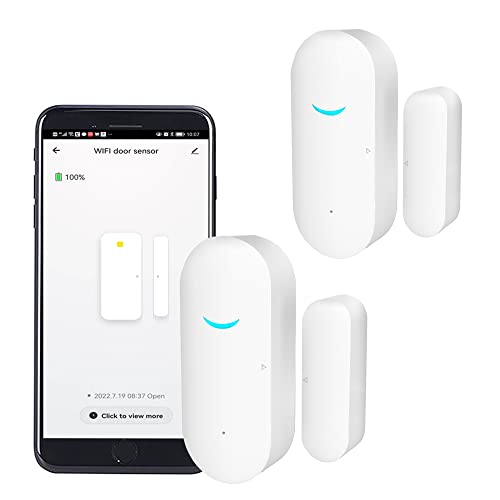
Gaoducash WiFi Door and Window Sensor 2-Pack
The Gaoducash WiFi Door and Window Sensor 2-Pack provides direct-to-router magnetic contact detection through Tuya and Smart Life without requiring a dedicated hardware hub. Powered by included AAA batteries with voice-assistant compatibility, it is a practical choice for renters and homeowners automating entry lighting or monitoring access points.
Pros
- Operates directly over standard Wi-Fi without needing an expensive proprietary smart home hub or bridge.
- Uses readily available AAA batteries rather than hard-to-find coin cells, simplifying ongoing maintenance.
- Tool-free 3M tape mounting protects doorframes and drywall, making it ideal for apartments and rentals.
- Integrates with popular voice platforms including Alexa and Google Assistant for quick status queries.
Cons
- Wi-Fi battery sensors can experience slight notification latency compared to local sub-GHz or Zigbee hardware.
- Lacks an outdoor ingress protection (IP) weather rating, limiting deployment strictly to dry indoor spaces.
- Requires close physical alignment between the main body and the magnetic strip to ensure accurate open/close reporting.
XFOX WiFi Door and Window Sensor
The XFOX WiFi Door and Window Sensor delivers hub-free 2.4GHz wireless open and close tracking with direct smartphone alerts. It is a practical perimeter sensing solution for homeowners and renters wanting entry-triggered lighting automations and access logging through Alexa, Google Home, or Tuya.
Pros
- Hub-free operation connects directly over standard 2.4GHz Wi-Fi networks
- Broad ecosystem integration with Alexa, Google Home, and Tuya-powered automations
- Includes both double-sided adhesive and mounting screws for versatile installation on doors or windows
- Maintains a real-time entry and exit history log accessible from anywhere via the mobile app
Cons
- Requires a dedicated 2.4GHz Wi-Fi network band and cannot pair over 5GHz-only wireless networks
- Wi-Fi battery sensors generally experience shorter battery runtimes than ultra-low-power Zigbee or Z-Wave alternatives
- Relies on active cloud connectivity for mobile push alerts and third-party voice assistant routines rather than purely offline local execution
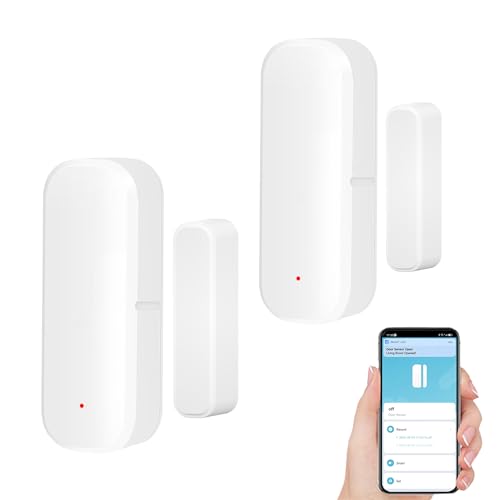
Gaoducash WiFi Smart Door and Window Sensor 2-Pack
The Gaoducash WiFi Door and Window Sensor 2-Pack delivers hub-free magnetic contact detection with app notifications and Alexa routine support. It is a solid choice for homeowners and renters seeking simple entryway monitoring and automatic lighting triggers.
Pros
- Zero hub required, connecting directly to 2.4 GHz Wi-Fi using Bluetooth onboarding
- Uses accessible AAA batteries rather than hard-to-find coin cells, with batteries included in the box
- Seamless scene creation in the Smart Life and Alexa apps to automate entryway lighting or smart plugs
- Generous 24-month warranty coverage provides extra long-term buying confidence
Cons
- Wi-Fi connection relies on cloud processing rather than instantaneous local mesh control
- Rated battery life of over six months requires more frequent battery replacements than ultra-low-power Zigbee sensors
- Requires a 2.4 GHz Wi-Fi network and does not support 5 GHz-only Wi-Fi bands
GRSICO Zigbee Smart Door Sensor 2-Pack
The GRSICO Zigbee Door Sensor 2-Pack delivers compact, tool-free contact sensing designed to trigger prompt lighting automations and instant open-close alerts across SmartThings, Home Assistant, Hubitat, and Alexa ecosystems. It is a practical entry-detection choice for smart home automators and families seeking responsive boundary routines without relying on high-latency cloud Wi-Fi.
Pros
- Integrates cleanly with popular Zigbee platforms including Home Assistant, Hubitat, and SmartThings
- Discreet mini footprint mounts unobtrusively on doors, windows, or pantry jambs
- Tool-free adhesive setup simplifies deployment for renters and homeowners
- Direct Zigbee mesh connection bypasses Wi-Fi network congestion for responsive routine triggering
Cons
- Requires a compatible Zigbee hub or smart coordinator to operate
- Does not support standalone Wi-Fi connectivity without an active bridge
- Proper physical alignment between sensor and magnetic contact is necessary during placement
Frequently Asked Questions
Do Alexa-compatible door sensors require a separate smart home hub?
No, most options under this price point connect directly through 2.4 GHz Wi-Fi without needing an external bridge. Models like the Smarter Living sensor connect straight to your home router, whereas Zigbee-based options like GRSICO require an Echo with a built-in Zigbee hub or a standalone coordinator. Matter over Thread devices like the Eve sensor require a compatible Thread border router, such as an Echo 4th Gen. Choosing the Best Door Sensor Alexa Under 30 Dollars depends on whether your setup already includes a compatible hub or relies solely on standalone Wi-Fi.
Can you use a door contact sensor to trigger Alexa lighting routines?
Yes, open and closed state changes serve as instant triggers for automated Alexa routines. You can configure Alexa to switch on hallway lamps, sound a chime on Echo speakers, or trigger notifications when a door opens after sunset. Integrating contact sensors with automated entry hardware, such as a fast keyless entry lock, helps coordinate lighting and security sequences seamlessly across your home.
What is the difference between Wi-Fi and Zigbee or Thread door sensors?
Wi-Fi sensors communicate directly with your wireless router, while Zigbee and Thread sensors use low-power mesh networks that typically offer faster local response times and lower battery consumption. Wi-Fi units are convenient because they require no bridge, but each sensor adds to your router device count. Thread and Zigbee sensors route commands locally with minimal latency, making them ideal if you run advanced routines in 2026.
How long do batteries typically last in these budget entry sensors?
Most door sensors operate between six and twelve months on standard AAA or AA batteries depending on daily door activity. High-traffic exterior doors consume battery power faster due to frequent state transmissions over the wireless network. App notifications alert you when battery voltage drops below threshold levels, preventing sudden communication drops.
Can magnetic contact sensors be installed on metal doors without false readings?
Yes, but metal surfaces can sometimes interfere with the magnetic reed switch if mounted directly onto iron or steel frames. Placing a thin rubber or plastic spacer between the sensor and a metallic frame restores proper alignment and field separation. For complex doors or alternative entry points, pairing contact monitors with dedicated smart lock hardware accessories ensures complete perimeter status tracking without signal distortion.
Why does an entry sensor show an offline status in the Alexa app?
An offline status usually indicates weak 2.4 GHz Wi-Fi signal strength, depleted batteries, or a dropped third-party cloud skill link. Smart Life and Tuya sensors rely on active cloud communication to push status updates to Alexa. Power cycling the sensor, reconnecting the third-party skill, or moving your router closer quickly restores the connection.
About the author
John Carlsen is a home security and smart home specialist with more than a decade of experience researching and testing security technology. His expertise covers DIY security systems, security cameras, smart devices, pricing, contracts, and connected-home technology. He combines hands-on product testing with detailed research to explain strengths, limitations, ownership costs, and real-world value in straightforward terms for homeowners and renters.