
What Does Poe Mean for Security Cameras: Practical Guide for 2026
Learn what does poe mean for security cameras in November 2026, covering single-cable power and data delivery, switch setup, and NVR wiring.
 By John Carlsen
Updated October 28, 2026


Wireless surveillance equipment often struggles with thick exterior walls, crowded radio frequencies, and the recurring chore of battery charging. Homeowners and property managers researching reliable surveillance infrastructure quickly encounter network terminology, prompting many to ask what does poe mean for security cameras across modern installations. Power over Ethernet represents an engineering standard that transmits electrical current and digital IP video over a single twisted-pair network cable. This single-cable architecture eliminates the need for dedicated high-voltage outlets near every mounting bracket while bypassing the latency and packet loss common to residential wireless networks.
Understanding this transmission method clarifies why commercial facilities and discerning homeowners choose wired infrastructure over completely wireless alternatives. Implementing dedicated network cables allows video streams to feed directly into centralized recorders, which is why configuring multi-camera PoE surveillance systems provides consistent continuous recording without bogging down home internet bandwidth. Devices built on this standard deliver constant operation, robust physical security, and support for high-resolution video streams ranging from 4MP to 4K clarity. Exploring the mechanics of this networking approach reveals significant long-term performance benefits for home security deployments.
| Award | Product | SSG Score About SSG ScoreThe SSG Score is our own rating from 0 to 10, based on performance, design and build, ease of use, and value. It reflects independent research and is never influenced by manufacturers, retailers, or affiliate commissions. Learn more › | |
|---|---|---|---|
| Best Overall |
Reolink RLC-520A 5MP PoE Dome Camera
|
9.2/10 | Buy |
| Best Budget |
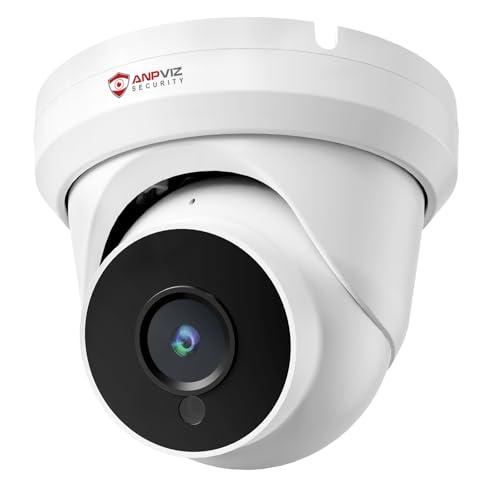 Anpviz 4MP PoE Turret IP Camera |
9.1/10 | Buy |
| Best Premium |
 Reolink E1 Outdoor SE PoE 4K PT Camera |
9.1/10 | Buy |
 CQH 4MP PoE Bullet Security Camera |
8.9/10 | Buy | |
| Best Value |
 AMLINK AL5M-T5171EW 5MP PoE Turret Camera |
8.9/10 | Buy |
 UNILOOK 4MP Turret PoE IP Camera |
8.3/10 | Buy | |
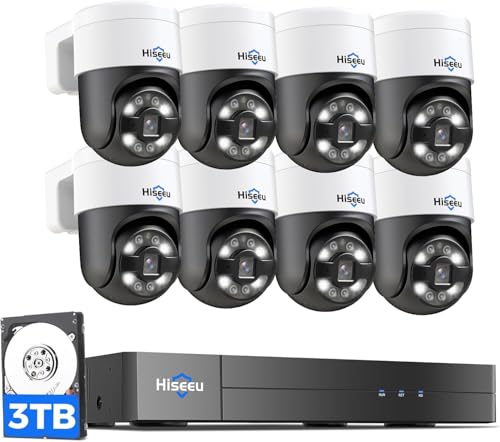 Hiseeu 8-Camera 5MP PoE PTZ Security System |
8.0/10 | Buy |
Reolink RLC-520A 5MP PoE Dome Camera
Delivering crisp 5MP video and built-in audio over a single Ethernet cable, the Reolink RLC-520A provides reliable outdoor surveillance with onboard smart detection for people, vehicles, and animals. It is a practical wired solution for homeowners seeking local or NVR storage without ongoing subscription fees.
Pros
- Sharp 2560x1920 resolution with clear ambient audio
- Accurate on-device AI reduces false alert triggers
- Streamlined single-cable PoE connection
- Versatile local storage choices without required monthly fees
Cons
- Power adapter or PoE injector is not included
- MicroSD card must be purchased separately
- Time-lapse recording requires the Reolink app
Anpviz 4MP PoE Turret IP Camera
Built with an IP66-rated metal housing and a 110-degree wide-angle lens, this Anpviz turret camera captures crisp 1440p surveillance footage over a single network line. Its wide ONVIF and third-party software support makes it well suited for property owners integrating cameras into existing NVR or NAS setups.
Pros
- Sharp 1440p video resolution at 25 fps
- Weatherproof all-metal IP66 housing
- Streamlined single-cable PoE setup
- Broad compatibility with ONVIF and Blue Iris
- Wide 110-degree viewing angle
Cons
- Fixed focal length lacks optical zoom
- Requires PoE switch or compatible NVR setup
Reolink E1 Outdoor SE PoE 4K PT Camera
Designed for reliable perimeter monitoring, the Reolink E1 Outdoor SE PoE pairs crisp 4K imaging with automated pan-and-tilt subject tracking. Its single-cable PoE connection and smart on-device alerts make it a dependable choice for subscription-free home security.
Pros
- Crisp 4K video with clear color night vision
- Wide coverage via 355-degree pan and auto-tracking
- Accurate smart detection reduces false movement alerts
- Convenient single-cable Power over Ethernet connection
- Multiple local storage options with no monthly fees
Cons
- Does not support any zoom functionality
- PoE injector, switch, and DC adapter not included
- MicroSD card must be purchased separately
CQH 4MP PoE Bullet Security Camera
Delivering 4MP video resolution with a 110-degree field of view, this outdoor bullet camera provides dependable perimeter monitoring through a single Ethernet connection. Its rugged IP66 metal housing and ONVIF protocol support make it a solid addition to existing wired surveillance systems.
Pros
- Single-cable PoE setup simplifies installation
- Wide 110-degree viewing angle minimizes blind spots
- Durable IP66 metal housing resists extreme weather
- Efficient H.265+ compression conserves hard drive space
- Works with third-party ONVIF-compliant NVRs
Cons
- DC 12V power adapter is not included
- Fixed lens does not offer optical zoom
- Requires wired cabling without Wi-Fi support
AMLINK AL5M-T5171EW 5MP PoE Turret Camera
Built for robust property surveillance, this NDAA-compliant turret camera combines intelligent human and vehicle filtering with 100-foot full-color night vision. Its heavy-duty weatherproof build and broad software compatibility suit dedicated wired security systems.
Pros
- NDAA compliant for high-security commercial and residential use
- Full-color night vision reaches up to 100 feet
- Expansive 132-degree field of view captures broad areas
- Durable IP67-rated all-metal construction resists harsh weather
- Integrated two-way audio for communication and deterrence
Cons
- Requires a separate PoE injector or switch for power
- Video capture tops out at 20 frames per second
- Web browser access relies on legacy Flash technology
UNILOOK 4MP Turret PoE IP Camera
Designed for reliable property surveillance, this wired turret camera delivers sharp 1440p video paired with smart dual-light color night vision and targeted human detection. Broad ONVIF and third-party software compatibility makes it a flexible addition to custom PoE security networks.
Pros
- Sharp 1440p video with full-color night vision
- Wide 110-degree field of view reduces blind spots
- Durable IP66 weatherproof housing resists harsh weather
- Broad compatibility with ONVIF and third-party software
- Efficient H.265 compression conserves hard drive storage
Cons
- Does not support vehicle detection
- Lacks a built-in speaker for two-way audio
- Power adapter and Ethernet cable are not included
Hiseeu 8-Camera 5MP PoE PTZ Security System
Designed for expansive property surveillance, this Hiseeu package pairs eight pan-tilt cameras with human auto-tracking and a pre-installed 3TB hard drive. The 8-port PoE setup simplifies wired installation, though camera resolution caps at 5MP rather than 4K.
Pros
- Pan-tilt cameras with automatic human tracking
- Pre-installed 3TB hard drive for local continuous recording
- Single-cable PoE connection simplifies multi-camera wiring
- Weatherproof IP66 rating for outdoor durability
- Integrated two-way audio for direct communication
Cons
- Cameras deliver 5MP resolution rather than native 4K
- Expanding beyond eight channels requires an additional PoE switch
- Pan rotation stops at 300 degrees without full 360 coverage
Understanding Power over Ethernet Architecture for Residential Surveillance
At its core, Power over Ethernet delivers both operational low-voltage direct current and high-speed digital networking through a single twisted-pair Ethernet cable. Instead of running separate high-voltage electrical conduits alongside video feeds, a single Category 5e or Category 6 cable handles every functional requirement of the camera. This architecture fundamentally shifts security camera deployment from complex multi-wire installations into an organized, unified networking ecosystem.
For modern property owners, this technological framework resolves the common frustrations associated with battery degradation, weak Wi-Fi reception, and outlet availability. Because power and data travel concurrently along dedicated copper conductors, video feeds experience none of the packet loss or wireless interference that plague consumer-grade smart home cameras. Understanding how this power distribution operates allows homeowners to build surveillance systems that record continuously with professional-grade dependability.
The Fundamental Mechanics of Power over Ethernet Technology
Standard network cables, such as Cat5e and Cat6, contain four twisted pairs of insulated copper wires, amounting to eight individual conductors. In standard Fast Ethernet communication running at 100 megabits per second, data transmission utilizes only two of these pairs for sending and receiving packets. Power over Ethernet takes advantage of this physical design by injecting low-voltage direct current, typically between 44 and 57 volts DC, across the spare pairs or concurrently over the active data lines using phantom power techniques.
The transmission process relies on an active handshake between two distinct physical devices known as Power Sourcing Equipment and the Powered Device. The power source, such as a network switch or dedicated injector, performs an initial low-voltage resistance check to determine whether the connected camera supports standardized power delivery. Once verified, the sourcing equipment safely ramps up voltage to energize the camera circuitry without risking damage to non-PoE network hardware. This standardized negotiation makes the technology safe to integrate into mixed residential networks.
IEEE PoE Standards and Device Power Budgets
Surveillance hardware operates across specific international standards defined by the Institute of Electrical and Electronics Engineers. The most prevalent baseline is IEEE 802.3af, commonly referred to as standard PoE, which delivers up to 15.4 watts of DC power at the switch port and guarantees at least 12.95 watts at the camera end after accounting for line resistance. Fixed-lens dome and turret cameras, such as the REOLINK RLC-520A 5MP PoE Security Camera or the Anpviz 4MP PoE IP Turret Security Wired Camera, operate comfortably within this power envelope because their fixed optical components draw modest energy.
More sophisticated surveillance devices demand increased electrical capacity to support motorized components and advanced illumination. The IEEE 802.3at standard, also known as PoE+, provides up to 30 watts of power at the source, ensuring approximately 25.5 watts reach the powered endpoint. Pan-tilt-zoom devices, such as the REOLINK E1 Outdoor SE PoE 4K Outdoor Camera, require this higher power budget to drive internal stepper motors, dynamic auto-tracking systems, and supplemental white-light LED spotlights simultaneously. Verifying that your sourcing equipment matches the power class of each camera prevents unexpected reboots during peak operational loads.
Essential Hardware for Deploying PoE Cameras
Establishing a reliable Power over Ethernet camera setup requires three foundational hardware elements: the IP cameras, solid copper network cabling, and appropriate power sourcing hardware. Homeowners typically choose between an all-in-one Network Video Recorder with integrated power ports or a standalone PoE network switch paired with external storage. An all-in-one recorder simplifies setup by isolating camera traffic onto an internal private network subnet, reducing configuration hurdles for non-technical users.
Standalone network switches provide greater architectural flexibility, allowing users to place switches in attics or utility rooms while running a single trunk line back to a router or recording server. When adding a single wired camera to an existing non-PoE network switch, a dedicated PoE injector serves as a cost-effective inline power source. Regardless of the topology chosen, utilizing solid copper cabling rather than copper-clad aluminum ensures proper conductivity, minimal voltage drops across distance, and long-term fire safety within residential wall cavities.
PoE Stability Compared to Battery and Wi-Fi Architectures
Battery-operated and consumer Wi-Fi cameras rely on aggressive power-saving sleep modes to preserve charge between motion events. While evaluating battery security cameras with local storage highlights the appeal of rapid wire-free installation, battery systems inherently suffer from wake-up latency that can miss the crucial opening seconds of an incident. In contrast, PoE cameras remain continuously powered from the centralized switch, enabling uninterrupted 24/7 video capture without thermal sleeping limitations or battery recharge cycles.
Wireless networks also face severe degradation from structural barriers, such as brick veneer, concrete foundations, and low-emissivity glass windows. Radio frequency congestion from household routers, Bluetooth peripherals, and neighboring smart devices further introduces jitter and dropped video frames. A physical twisted-pair copper cable establishes an electrically shielded conduit that transmits video bitrates reliably regardless of weather conditions or environmental radio noise. This deterministic connection ensures that security alerts and real-time live views load without buffering delays.
Image Resolution, Compression Codecs, and Bandwidth Management
Modern surveillance systems deliver immense visual clarity, ranging from 4-megapixel Super HD up to full 4K ultra-high-definition imaging sensors. Higher pixel densities, such as the 2560×1920 video stream produced by 5MP cameras, capture the intricate facial contours and vehicle license plates essential for actionable forensic evidence. However, streaming multiple high-definition feeds across a home network demands efficient data management to prevent bandwidth exhaustion.
Advanced video compression protocols, particularly H.265 and proprietary H.265+ algorithms, compress file sizes by up to fifty percent compared to legacy H.264 codecs without degrading visual detail. Cameras like the CQH 4MP PoE IP Turret Bullet Camera,IP Security utilize dual H.265/H.264 compression to maximize local storage efficiency and minimize local network throughput. By analyzing scene dynamics and transmitting only modified pixel blocks between keyframes, modern cameras maintain crystal-clear video clarity while operating well within standard local area network limits.
Centralized Storage Topology and Open Protocol Compatibility
Wired surveillance systems provide complete sovereignty over recorded footage by utilizing localized storage arrays instead of mandatory cloud subscription services. Many IP cameras incorporate high-endurance onboard microSD card slots capable of supporting cards up to 512GB for localized edge storage. However, enterprise-grade reliability centers on pairing cameras with centralized Network Video Recorders or Network Attached Storage servers running continuous hard drive arrays, such as the pre-installed multi-terabyte drives found in complete security bundles.
Protocol standardization represents another significant advantage of wired IP systems, primarily governed by the Open Network Video Interface Forum, commonly known as ONVIF. When expanding an existing surveillance system, selecting compatible add-on cameras for an NVR allows homeowners to mix camera form factors across different manufacturers without losing core video transmission. Cameras supporting ONVIF Profile S and RTSP streaming integrate effortlessly into third-party management platforms like Blue Iris or Milestone. Furthermore, compliance with National Defense Authorization Act standards, found on hardware like the AMLINK 5MP Security AI IP PoE Camera and UNILOOK 4MP PoE Camera, Turret Security PoE IP, provides enhanced cybersecurity assurances for sensitive residential and commercial deployments.
Cable Distance Limitations, Routing, and Environmental Ingress Protection
Standard Ethernet specifications dictate a strict maximum transmission distance of 100 meters, or approximately 328 feet, between the network switch and the security camera. Running cables beyond this structural distance introduces signal attenuation and electrical voltage drops that can destabilize camera firmware and corrupt video streams. For expansive residential properties or outbuildings requiring extended cable runs, installers deploy PoE extenders or intermediary powered switches to regenerate signal integrity and electrical delivery safely.
Exterior cable installation also demands strict adherence to physical weatherproofing practices to prevent water intrusion into sensitive copper pin connections. Cameras carrying IP66 or IP67 weatherproof ratings feature rugged metal housings engineered to withstand torrential rain, dust storms, and extreme temperatures. Installing the manufacturer-supplied waterproof RJ45 connector gland seals the Ethernet termination against moisture, while forming a downward drip loop along the cable run ensures that rainwater trickles harmlessly away from exterior wall penetrations rather than flowing toward the camera mounting bracket.
Night Vision Illumination and Dynamic Power Spikes
Low-light performance represents one of the most demanding operational states for any surveillance camera. During daytime surveillance, a camera draws minimal baseline wattage primarily for its image sensor, processor, and network interface. As ambient dusk transitions into full darkness, mechanical infrared-cut filters disengage, and high-intensity infrared LED arrays or white-light spotlights energize to maintain visual tracking.
This optical transition triggers a sudden electrical spike that can stress an inadequately provisioned power budget. Cameras equipped with smart dual-illumination features, which illuminate supplementary white LEDs upon detecting human or vehicle presence, momentarily demand peak power from the switch. Ensuring that your central PoE switch possesses adequate surplus wattage across its total power budget prevents cameras from dropping offline during these critical nighttime illumination cycles.
Electrical Protection, Cable Selection, and System Longevity
Investing in continuous wired surveillance requires thoughtful protection against exterior electrical anomalies and thermal stresses. Running network cabling outdoors exposes camera endpoints to induced electrical surges caused by nearby lightning activity or static atmospheric accumulation. Incorporating dedicated inline Ethernet surge protectors grounded to the home electrical ground bus diverts hazardous transient voltages before they reach expensive network switches or recording appliances.
Connecting the primary PoE switch or NVR to an uninterruptible power supply guarantees continuous property monitoring even during sudden municipal grid outages. The backup battery array maintains power to the switch and all connected cameras, ensuring uninterrupted 24/7 video capture when residential properties are most vulnerable. Selecting pure solid copper Category 6 riser or outdoor-rated direct-burial cable ensures that physical wiring withstands seasonal freeze-thaw cycles without conductor cracking, preserving your surveillance investment for decades.
Adopting Power over Ethernet transforms residential security from an assortment of fragile, high-maintenance wireless gadgets into a cohesive, commercial-grade monitoring network. Consolidating high-voltage electrical delivery and uncompressed digital video data onto a single Category 6 copper cable eliminates battery maintenance, eliminates wireless signal dropouts, and guarantees true 24/7 continuous video recording. By calculating device power budgets, selecting robust solid copper cabling, and integrating standardized ONVIF equipment, property owners establish an uncompromising surveillance infrastructure that protects families and assets with unwavering reliability.
About the author
John Carlsen is a home security and smart home specialist with more than a decade of experience researching and testing security technology. His expertise covers DIY security systems, security cameras, smart devices, pricing, contracts, and connected-home technology. He combines hands-on product testing with detailed research to explain strengths, limitations, ownership costs, and real-world value in straightforward terms for homeowners and renters.