
Can Security Cameras Record Sound: Practical Guide for 2026
Learn if can security cameras record sound, how audio hardware works, and essential wiretap consent laws for your home in November 2026.
 By Tyler Lacoma
Updated November 5, 2026


Homeowners installing modern surveillance equipment frequently prioritize clear visual resolution while overlooking whether their chosen hardware captures environmental audio. Residential security systems vary considerably in acoustic design, ranging from models with built-in omnidirectional microphones and two-way talk to specialized units designed strictly for silent video capture. When investigating whether can security cameras record sound, property owners must evaluate both internal component specifications and the distinct legal boundaries that govern acoustic surveillance. Understanding these technical capabilities ensures that a residential system captures valuable evidentiary context without violating neighbor privacy expectations.
Audio integration introduces practical trade-offs regarding storage consumption, wireless network stability, and sensor trigger reliability. Many property owners evaluate battery security cameras with local storage to balance continuous recording requirements against battery drain and upstream bandwidth constraints. Built-in microphones also enable intelligent audio triggers, such as detecting unusual glass breakage or pet distress calls, which complement standard motion sensors. Examining hardware architectures helps buyers configure their recording profiles responsibly while avoiding unnecessary notifications.
| Award | Product | SSG Score About SSG ScoreThe SSG Score is our own rating from 0 to 10, based on performance, design and build, ease of use, and value. It reflects independent research and is never influenced by manufacturers, retailers, or affiliate commissions. Learn more › | |
|---|---|---|---|
| Best Overall |
AviaryEye 1080P Mini Body Camera with Audio
|
8.8/10 | Buy |
| Best Budget |
 GNCC 2K Pan-Tilt Indoor Security Camera |
8.6/10 | Buy |
| Best Value |
 GGX 1080p Hidden Camera Pen (32GB) |
8.4/10 | Buy |
 Kasa EC70 1080p Pan/Tilt Camera |
8.3/10 | Buy | |
| Best Premium |
 Tkiplay 1080p Picture Frame Hidden Camera |
8.1/10 | Buy |
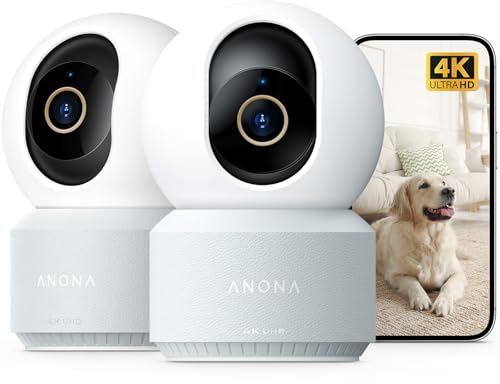 Anona 4K Indoor Pan-Tilt Security Camera 2-Pack |
8.0/10 | Buy |
AviaryEye 1080P Mini Body Camera with Audio
The AviaryEye Mini Body Camera provides convenient 1080p recording with 6-foot infrared night vision, motion activation, and an included 64GB card. It is a cost-effective, zero-subscription tool for security guards, property inspectors, and homeowners seeking wearable personal documentation.
Pros
- Pre-installed 64GB microSD card offers 10 to 11 hours of local storage with zero ongoing monthly subscription fees
- Lightweight 0.03-pound design with an adjustable clip allows comfortable, hands-free wearable security recording
- Continuous recording capability of up to 5 hours on a single charge handles lengthy security shifts or inspections
- Infrared night vision provides clear illumination up to 6 feet in complete darkness
Cons
- Infrared night vision range is limited to 6 feet, making it unsuitable for long-range perimeter surveillance
- Lacks Wi-Fi connectivity and companion app integration, requiring a physical USB connection to view or offload footage
- Housing lacks an official IP weather-resistance rating, meaning it should not be exposed to heavy rain or wet conditions
GNCC 2K Pan-Tilt Indoor Security Camera
Designed for keeping tabs on pets or living areas, this compact camera pairs clear 2K resolution with full 355-degree pan-and-tilt tracking. It provides continuous monitoring through wired Type-C power and works smoothly with Alexa or Google Assistant.
Pros
- Full 355-degree pan and 90-degree tilt coverage
- Clear 2K video with night vision capabilities
- Two-way audio enables direct real-time communication
- Supports continuous 24/7 local microSD recording
- Compatible with Alexa and Google Assistant
Cons
- Only supports 2.4GHz Wi-Fi networks
- MicroSD card is not included
- Requires constant wired Type-C power connection
GGX 1080p Hidden Camera Pen (32GB)
Disguised as a functional writing pen, this discreet recorder captures 1080p video and high-resolution stills with straightforward single-button operation. It offers a practical, portable solution for professionals and students seeking unobtrusive documentation during meetings and lectures.
Pros
- Functions as a real pen with extra refills included
- Simple one-button operation requires no smartphone app
- Includes 32GB memory and supports up to 256GB
- Discreet pocket-clip form factor for portable use
Cons
- Single button offers no visual confirmation of active recording
- Battery runtime is limited to 150 minutes per charge
- Fixed lens orientation requires careful manual positioning
Kasa EC70 1080p Pan/Tilt Camera
Equipped with motorized pan and tilt alongside 30-foot night vision, the Kasa EC70 delivers reliable 1080p coverage for indoor monitoring. It suits homeowners and pet owners seeking responsive motion detection with flexible local or cloud recording options.
Pros
- Continuous local recording up to 256 GB without subscription
- 30-foot night vision with real-time motion and sound alerts
- Customizable patrol mode for broad area coverage
- Smart Actions automate routines with other Kasa smart devices
Cons
- Requires 2.4 GHz Wi-Fi and lacks 5 GHz support
- Requires a continuous wired power connection
- MicroSD card for local storage is sold separately
Tkiplay 1080p Picture Frame Hidden Camera
Disguised as a standard photo frame, this battery-powered camera records crisp 1080p video locally without needing an internet connection. It is an accessible choice for offline room monitoring, provided you do not need sound recording.
Pros
- Inconspicuous design blends seamlessly into home decor
- Simple offline operation requires no Wi-Fi network
- Clear 1080p video recording resolution
- Motion-activated mode conserves storage space
- Automatic loop recording prevents storage lockouts
Cons
- Does not capture or record audio
- MicroSD card is not included
- Lacks remote viewing and real-time smartphone alerts
Anona 4K Indoor Pan-Tilt Security Camera 2-Pack
This Anona 4K pan-tilt indoor security camera two-pack pairs sharp ultra-high-definition video with dual-band Wi-Fi 6 and on-device detection for pets, people, and crying babies. It is an ideal pick for parents, pet owners, and apartment dwellers who want expansive room coverage and flexible local microSD storage without mandatory cloud subscription fees.
Pros
- Native 4K ultra-high-definition video delivers sharp image clarity compared to standard 1080p or 2K indoor cameras
- Dual-band Wi-Fi 6 compatibility provides stable data transmission across both 2.4 GHz and 5 GHz frequencies
- Motorized 360-degree pan and 110-degree tilt with auto-tracking ensure moving subjects remain in view
- High-capacity local storage slot accepts up to 512 GB microSD cards for subscription-free clip retention
- Dedicated sound and motion filtering detects persons, pets, and baby crying sounds directly
Cons
- Engineered strictly for indoor environments and lacks weatherproofing or water resistance for outdoor placement
- Requires a constant connection to a standard electrical outlet as it does not include an internal battery
- MicroSD card is not included and must be purchased separately for local clip recording
Technical Capabilities and Legal Realities of Surveillance Audio
Most modern security cameras can record sound, but audio capability depends heavily on the specific hardware configuration and intended operating environment. Many indoor surveillance devices incorporate integrated microphones and speakers to support two-way conversation and sound-activated alerts. In contrast, certain specialized outdoor cameras, covert units, and industrial models deliberately omit audio recording hardware altogether. Manufacturers make these hardware choices to satisfy varying international privacy regulations, preserve battery life on wireless units, and reduce manufacturing expenses.
Determining whether a specific camera captures audio requires examining the product specification sheet for microphone hardware, audio compression codecs, or two-way talk features. Some cameras activate audio recording automatically alongside the primary video stream, whereas other models keep acoustic capture disabled in firmware until a user enables it manually. There are also surveillance devices designed exclusively for silent video capture that possess no physical audio reception circuitry. Understanding how sound capture operates across different equipment categories ensures that property owners select hardware that matches their security objectives and legal boundaries.
Surveillance Microphone Hardware and Signal Processing
Security camera audio recording relies on miniature microphones embedded directly within the camera housing or weather-sealed enclosure. Most residential and commercial IP cameras utilize micro-electro-mechanical systems (MEMS) or electret condenser microphones engineered for wide omnidirectional pickup. These sensitive transducers convert acoustic sound waves into continuous analog electrical signals. An internal preamplifier boosts this faint signal before routing it to an analog-to-digital converter, which packages the audio into digital data packets synchronized with outgoing video frames.
Audio signal processing plays an essential role in separating intelligible human speech from ambient environmental hums. High-sensitivity microphones can capture conversational tones across an entire room, but uncalibrated sensors frequently suffer from harsh clipping and distortion when exposed to sudden loud noises. Digital signal processors inside the camera apply automatic gain control to level out sudden volume fluctuations and suppress persistent low-frequency hums from appliances. Without competent onboard digital signal filtering, recorded audio often becomes an indistinct wash of background interference rather than useful evidence.
Compression algorithms determine how digital audio behaves within the camera buffer and storage pipeline. Standard codecs such as G.711, AAC, and uncompressed PCM balance vocal clarity against overall transmission overhead. While uncompressed audio preserves maximum fidelity, modern AAC compression dramatically reduces stream bitrates without sacrificing speech comprehension. Surveillance manufacturers calibrate these audio codecs carefully so synchronized audio tracks stream smoothly alongside high-resolution video feeds without introducing frame latency.
Acoustic Detection Features and Two-Way Communication
Surveillance cameras frequently expand basic audio logging into active acoustic monitoring through specialized edge-AI software routines. Rather than simply capturing a passive soundtrack, modern camera processors evaluate incoming acoustic waveforms to detect specific frequency signatures. Common acoustic recognition profiles include glass breakage, infant crying, vehicle alarms, and persistent dog barking. When an internal neural processing unit identifies one of these distinct sounds, the camera immediately triggers push alerts to user smartphones even if the event occurs outside the camera lens view.
Two-way audio communication represents another widespread capability found across residential surveillance systems. Cameras equipped with both an internal microphone and a built-in miniature loudspeaker allow property owners to speak directly with individuals standing near the device. Full-duplex audio architecture permits simultaneous transmission and reception, allowing natural two-way conversation similar to a telephone call. Simplex or half-duplex architectures function more like traditional push-to-talk intercoms, preventing acoustic echo and feedback squeals when the speaker and microphone share the same compact enclosure.
Audio hardware implementation varies considerably depending on the physical form factor and surveillance objective. Consumer pan-tilt indoor cameras regularly feature sensitive microphones and speakers to assist pet owners and parents with daily monitoring. On the other hand, specialized covert surveillance devices, such as certain picture frame cameras, intentionally omit microphones entirely to maintain compliance with strict workplace and domestic privacy statutes. Personal security devices like wearable body cameras utilize directional microphones specifically to document legal interactions and security guard patrols with high verbal fidelity.
Federal and State Statutory Consent Frameworks
Recording verbal conversations introduces strict legal responsibilities that differ substantially from silent video recording. In the United States, federal law under the Federal Wiretap Act (18 U.S.C. § 2511) strictly prohibits the intentional interception of oral communications where individuals carry a justified expectation of privacy. While silent visual surveillance across outdoor property curtilage is broadly permissible, capturing spoken words without statutory consent can trigger serious federal or state felony violations. Property owners must never assume that an outdoor camera installation automatically grants legal permission to record surrounding private conversations.
State laws divide audio surveillance consent into one-party and all-party (often called two-party) statutory frameworks. Under one-party consent rules, an individual participating in a conversation can legally record the discussion without notifying the other speakers. Conversely, all-party consent states, including California, Florida, Illinois, Pennsylvania, and Washington, require every individual in a conversation to grant explicit consent before recording can occur. Operating an outdoor perimeter camera with a high-gain microphone that captures private conversations across a neighbor boundary fence can lead to severe civil liability in all-party jurisdictions.
The legal doctrine of a reasonable expectation of privacy serves as the primary benchmark in residential surveillance disputes. Courts consistently hold that individuals maintain an absolute expectation of privacy inside private residential quarters, bathrooms, and fenced backyards. Although front walkways, driveways, and curbside spaces possess lower expectations of visual privacy, acoustic expectations remain protected by law. A security camera microphone powerful enough to pick up muffled speech through an adjacent home closed window creates clear legal exposure regardless of the physical mount location.
Property owners can mitigate legal risks through clear administrative notices and prudent hardware management. Installing prominent, highly visible signs stating that audio and video surveillance operates on the premises establishes clear notice for visitors and service workers. Disabling microphone audio feeds in software when monitoring property boundaries or shared tenant hallways provides dependable protection against wiretap claims. Because regional statutes vary significantly and evolve continually, consulting a qualified local attorney remains recommended when installing active audio surveillance systems.
Network Bandwidth and Local Storage Requirements for Audio
Continuous audio recording adds measurable data overhead to residential network infrastructure and local storage media. Although compressed audio tracks consume far less bandwidth than high-definition video streams, they require continuous multiplexing into the overall media container. A standard AAC audio stream consumes between 32 kbps and 128 kbps of dedicated throughput depending on sample rates and bit depths. Over weeks of continuous operation across several cameras, this auxiliary data stream consumes multiple gigabytes of storage space on local flash cards.
Centralized network recording architectures handle combined audio and video streams using structured Ethernet cabling and high-capacity hard drives. Installing a dedicated PoE security camera system allows network video recorders to manage synchronized media streams over stable physical wiring. Hardwired connections eliminate the wireless packet loss and signal jitter that frequently cause audio dropouts on crowded residential Wi-Fi networks. Dedicated surveillance-grade hard drives comfortably write multiple multiplexed streams around the clock without dropping critical audio packets.
Wireless security cameras streaming audio to remote cloud repositories face distinct broadband constraints. Standard residential cable and DSL internet connections often provide limited upstream bandwidth, which multiple streaming cameras can easily overwhelm during peak home usage. When Wi-Fi signal attenuation weakens network throughput, camera transceivers frequently drop audio packets to maintain video frame stability. Implementing modern Wi-Fi 6 routers and assigning security hardware to dedicated 2.4 GHz or 5 GHz wireless channels helps preserve audio stream continuity.
Flash memory endurance represents another critical factor when continuous audio accompanies high-resolution video recording. High-endurance microSD cards featuring Class 10, U3, or V30 speed ratings handle continuous small-block audio writes significantly better than standard consumer cards. Multiplexing continuous audio alongside 2K or 4K video creates relentless flash cell wear that can cause premature media failure if low-grade cards are used. Periodically formatting local storage cards directly through the camera management application helps preserve file system integrity and prevents recording corruption.
Outdoor Acoustic Interference and Environmental Limitations
Outdoor audio monitoring faces severe environmental obstacles that do not exist within climate-controlled interior rooms. Moving air currents flowing across microphone ports generate low-frequency turbulence that can completely overwhelm delicate acoustic diaphragms. Even moderate gusts of wind produce deafening rumble that drowns out human speech on unprotected exterior cameras. Quality outdoor camera manufacturers combat wind noise by recessing microphone ports inside protective baffles or incorporating internal acoustic dampening membranes to dissipate direct airflow.
Distance and ambient background noise severely limit the effective range of outdoor security camera microphones. Acoustic energy drops off rapidly according to the physical inverse-square law, causing vocal volume to decrease sharply as distance from the camera increases. Heavy suburban road traffic, lawn maintenance equipment, humming air conditioner compressors, and falling rain easily mask subtle conversational sounds. Deploying motorized pan tilt zoom driveway cameras gives homeowners expansive visual tracking across large properties, but capturing clear, intelligible audio beyond fifteen or twenty feet remains unrealistic without dedicated external microphone arrays.
Severe temperature fluctuations and seasonal weather extremes also influence microphone diaphragm mechanics. Sub-freezing winter weather can stiffen flexible microphone membranes, temporarily blunting acoustic sensitivity and altering frequency pickup curves. In contrast, extreme summer heat combined with direct solar radiation can degrade delicate weatherproofing seals, potentially allowing moisture to enter the acoustic chamber. Verifying that exterior security cameras hold certified IP65 or IP66 weatherproofing ratings ensures sensitive audio components remain protected against rain, snow, and dust ingress.
Physical mounting surfaces can also introduce acoustic resonance and structural noise into recorded audio tracks. Securing a camera directly to thin vinyl siding, metal downspouts, or hollow soffits allows structural vibrations from slamming doors or wind friction to transfer directly into the microphone. Rigid mounting surfaces such as solid brick, stone, or heavy exterior framing provide superior acoustic damping and prevent unwanted mechanical vibration. Installing rubber isolation washers between the camera bracket and the mounting surface further eliminates distracting structural rattle from recorded audio files.
Configuring Audio Controls and Hardware Privacy Features
Deploying surveillance cameras responsibly requires full familiarity with software audio settings and hardware privacy controls. Almost all major smart home security applications provide straightforward configuration switches to disable audio recording completely. Deactivating the microphone in software leaves the video surveillance pipeline operational while halting all acoustic data capture at the device firmware level. This software isolation allows property owners to monitor sensitive entryways and boundary areas visually without incurring legal risks associated with unintended audio interception.
Advanced camera management interfaces also allow users to fine-tune sound detection sensitivity and define operational schedules. Calibrating acoustic sensitivity sliders ensures the system ignores routine background traffic while remaining alert to abnormal sound spikes like forced door entries or breaking glass. Some indoor camera models feature mechanical privacy shutters that physically cover the lens and disconnect the internal microphone when residents arrive home. Pairing automated geofencing triggers with these privacy features ensures that private household conversations are never recorded or uploaded to cloud servers.
Network hardening remains an indispensable component of audio surveillance privacy. Because network-connected microphones transmit real-time audio across local routers, unsecured cameras can expose private household conversations to unauthorized network intruders. Property owners should isolate security cameras on a dedicated IoT virtual local area network (VLAN), change all default administrative credentials, and enforce mandatory two-factor authentication on mobile access accounts. Keeping camera firmware regularly updated patches known security vulnerabilities and prevents unauthorized access to live audio feeds.
Physical examination of a security camera body provides straightforward confirmation of audio hardware for privacy-conscious homeowners. A miniature pinhole port, often marked with an acoustic symbol or positioned near the lens housing, indicates the presence of an integrated microphone sensor. For environments where absolute acoustic privacy is essential, selecting security devices specifically manufactured without audio hardware offers unconditional certainty. Balancing active visual deterrence with deliberate acoustic controls allows homeowners to maintain an effective, legally sound residential security perimeter.
Deciding whether to enable audio recording on residential security cameras ultimately involves balancing enhanced situational awareness against strict statutory compliance. While two-way audio and acoustic detection provide convenient communication and rapid event alerts, they introduce distinct legal and storage considerations. Reviewing manufacturer hardware specifications, verifying local wiretap consent requirements, and actively managing software privacy settings ensures that property surveillance remains both practically effective and legally compliant.
About the author
Tyler Lacoma is a smart home and home security technology expert with more than a decade of hands-on experience testing connected devices. His expertise includes security cameras, smart locks, home security systems, privacy features, smart-home compatibility, and emerging AI technology. He focuses on translating technical features into practical guidance that helps homeowners understand which security solutions truly fit their homes and everyday needs.