
Do Security Cameras Increase Home Value: Practical Guide for 2026
Do Security Cameras Increase Home Value? Explore real estate appraisal realities, buyer appeal, and smart security ROI updates for November 2026.
 By Rachel Cericola
Updated November 20, 2026

Appraisers and prospective real estate buyers evaluate residential improvements through very specific functional lenses. Many homeowners wonder whether modern surveillance hardware provides a measurable return on investment or if systems simply function as personal electronics. Residential property appraisals treat permanent fixtures differently from standalone gadgets, which directly influences whether and how do security cameras increase home value during an official property assessment. While wireless battery-powered units often move with the homeowner when selling, permanently mounted systems that offer comprehensive perimeter protection create immediate buyer appeal and tangible peace of mind. Investing in reliable surveillance equipment helps safeguard entryways while presenting a modern, well-maintained exterior to potential home purchasers.
Prospective homebuyers frequently prioritize existing safety features when comparing properties in competitive neighborhoods. Integrating practical solutions like battery security cameras with local storage allows property owners to demonstrate active perimeter coverage without burdening future residents with mandatory monthly service fees. In addition to perceived safety, documented surveillance infrastructure can qualify certain properties for annual homeowners insurance premium discounts of roughly two to five percent depending on provider policies. The key distinction rests on whether a system requires complicated account transfers or remains an accessible, functional benefit that improves day-to-day security across driveway choke points and porch access areas.
| Award | Product | SSG Score About SSG ScoreThe SSG Score is our own rating from 0 to 10, based on performance, design and build, ease of use, and value. It reflects independent research and is never influenced by manufacturers, retailers, or affiliate commissions. Learn more › | |
|---|---|---|---|
| Best Overall |
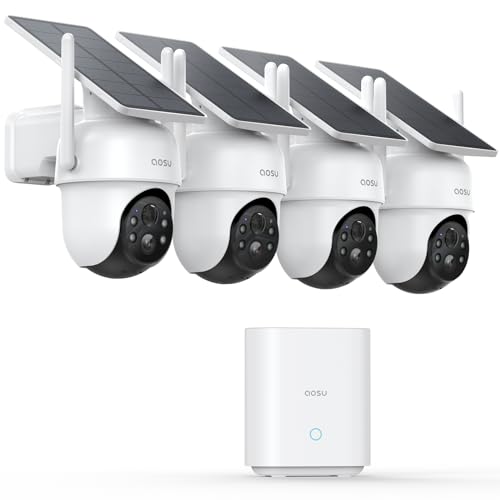
aosu D1 Classic 4-Cam Wireless Outdoor Security
|
9.2/10 | Buy |
| Best Budget |
 Vimtag 2.5K Indoor Outdoor Security Camera 2-Pack |
8.4/10 | Buy |
 WNEDSU 2K Indoor Security Camera 2-Pack |
8.3/10 | Buy | |
| Best Value |
 VISION WELL 2K Wireless Security Camera |
8.3/10 | Buy |
 AOQEE G5 2K Indoor Security Camera (2-Pack) |
8.1/10 | Buy | |
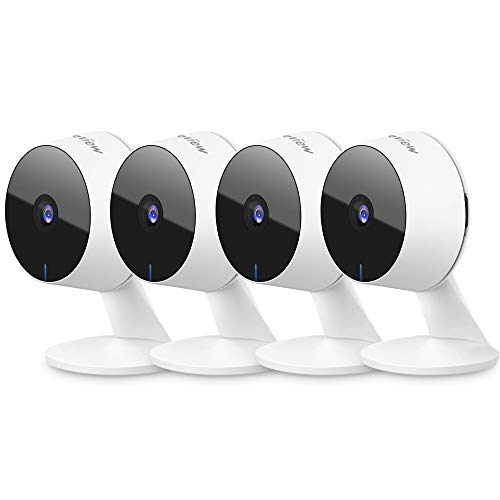 LaView 1080P Indoor Security Camera (4-Pack) |
8.0/10 | Buy | |
| Best Premium |
 Hiseeu 5MP Wireless Security Camera System |
8.0/10 | Buy |
aosu D1 Classic 4-Cam Wireless Outdoor Security
The aosu D1 Classic 4-Cam Kit delivers complete perimeter visual defense using solar-powered 2K pan-and-tilt cameras paired with a dedicated aosuBase hub for subscription-free encrypted local storage. It is an ideal zero-monthly-fee security solution for suburban homeowners looking to monitor entryways, yards, and driveways without wiring hassles.
Pros
- Subscription-free residential security with 32GB of encrypted local loop recording housed safely inside the aosuBase hub.
- Continuous solar charging requires only three hours of sunlight daily, minimizing the need for manual battery recharging.
- 360-degree pan-tilt coverage with automatic motion tracking ensures subjects are actively followed across the camera view.
- Simultaneous four-camera split-screen live viewing and cross-camera event sequencing simplify outdoor perimeter monitoring.
Cons
- Requires sufficient daily sunlight exposure (at least three hours), which may limit optimal placement under deep soffits or shaded tree canopies.
- Lacks cellular backup and relies entirely on local wireless connectivity, meaning remote push alerts depend on home internet uptime.
- Permanent exterior installation requires drilling mounting holes, making it less adaptable for strict drill-free rental balconies.
Vimtag 2.5K Indoor Outdoor Security Camera 2-Pack
The Vimtag 2.5K Indoor/Outdoor Security Camera 2-Pack offers 4MP video clarity, dual-band Wi-Fi flexibility, and color night vision backed by a built-in spotlight and siren. It provides a versatile, cost-effective monitoring solution for homeowners and renters seeking reliable indoor or perimeter coverage with local microSD storage support.
Pros
- Dual-band 2.4 GHz and 5 GHz Wi-Fi compatibility provides greater connection flexibility than standard 2.4 GHz-only cameras
- Solid 2.5K video resolution paired with spotlight illumination ensures clear daytime and nighttime video capture
- IP66-rated enclosure allows seamless transition between indoor nursery monitoring and exposed outdoor surveillance
- Local microSD slot enables subscription-free video storage without forcing an ongoing monthly cloud fee
- Convenient plug-and-play setup supports freestanding tabletop placement or permanent wall mounting with included screws
Cons
- MicroSD card is not included in the box and must be purchased separately for local recording
- Continuous AC power connection is required, limiting placement to areas near electrical outlets
- Advanced cloud video recording and extended alert history require an optional paid Vimtag Cloud subscription
WNEDSU 2K Indoor Security Camera 2-Pack
The WNEDSU 2K Indoor Security Camera 2-Pack delivers crisp home surveillance with dual-band 2.4GHz and 5GHz Wi-Fi, 49-foot infrared night vision, and subscription-free AI detection for people and pets. It provides an accessible, plug-in monitoring solution for renters and homeowners seeking continuous 24/7 local recording on a microSD card without monthly fees.
Pros
- Dual-band 2.4GHz and 5GHz Wi-Fi support simplifies setup on modern split-band home routers
- On-device AI person and pet detection functions out of the box without requiring a paid subscription
- Continuous 24/7 recording is fully supported when paired with an optional high-capacity microSD card up to 256GB
- Extended 49-foot infrared night vision provides clear viewing across large living rooms and hallways in pitch darkness
- Compact footprint measuring under 3.5 inches allows non-intrusive placement on shelves, desks, or mantels
Cons
- Fixed-lens construction lacks motorized pan, tilt, or mechanical 360-degree subject tracking
- Continuous AC plug-in design requires positioning within reach of a standard wall outlet
- Strictly rated for indoor deployment with no weather resistance for outdoor or exterior window mounting
VISION WELL 2K Wireless Security Camera
The VISION WELL 2K Wireless Security Camera delivers flexible, wire-free surveillance for indoor or outdoor spaces with clear 2K resolution, color night vision, and on-device AI motion filtering. It is a dependable, budget-conscious choice for homeowners and renters seeking reliable entryway deterrence without mandatory monthly fees.
Pros
- Completely wire-free battery installation with included bracket and screws, making it ideal for renters and suburban homeowners.
- Sharp 2K video clarity supported by full-color night vision and a 33-foot illumination range.
- PIR motion detection paired with smart AI filtering for people, vehicles, pets, and packages.
- Local recording support on microSD cards up to 128GB to avoid mandatory monthly subscriptions.
- IP65 weather-resistant rating suitable for exterior perimeter or sheltered entryway mounting.
Cons
- Only connects to 2.4 GHz Wi-Fi networks and does not support 5 GHz frequencies.
- Designed for motion-activated event clips rather than continuous 24/7 video recording.
- MicroSD storage card is not included in the box and must be purchased separately.
AOQEE G5 2K Indoor Security Camera (2-Pack)
Designed for pet and home monitoring, this two-pack delivers 2K video resolution with 360-degree pan-and-tilt tracking. Dual-band Wi-Fi and local microSD storage make it a flexible indoor surveillance option without requiring mandatory monthly subscription fees.
Pros
- Dual-band Wi-Fi offers versatile wireless network compatibility
- Auto-tracking keeps moving pets and people in frame
- Operates normally with local storage without cloud fees
- Invisible infrared lights avoid sleep disturbances at night
Cons
- Requires continuous wired power connection to operate
- MicroSD card is not included in the package
- Alexa voice control is limited strictly to live viewing
LaView 1080P Indoor Security Camera (4-Pack)
This four-pack of LaView wired indoor cameras delivers reliable 1080p resolution and night vision for complete multi-room coverage. It serves homeowners and pet owners looking for versatile monitoring with both local microSD and cloud recording options.
Pros
- Crisp 1080p video with 33-foot night vision
- Four-camera bundle provides broad multi-room coverage
- Supports local microSD cards up to 128GB
- Noise-canceling two-way audio for easy communication
- Accessible via mobile app and desktop web browser
Cons
- Incompatible with 5GHz Wi-Fi networks
- Requires continuous wired power connection
- Cloud storage requires subscription after 30-day trial
Hiseeu 5MP Wireless Security Camera System
This Hiseeu wireless surveillance package combines four 5MP outdoor bullet cameras with an all-in-one 10-inch monitor NVR, delivering continuous 24/7 recording to a pre-installed 1TB hard drive without recurring subscription fees. It is well-suited for homeowners and property managers wanting an easy-to-deploy perimeter defense system with zero monthly cloud overhead.
Pros
- Complete all-in-one system includes a dedicated 10-inch NVR monitor and pre-installed 1TB hard drive
- Zero ongoing monthly subscription fees with up to 45 days of continuous 24/7 recording
- Dual-band 2.4 GHz and 5 GHz wireless transmission provides flexible remote or standalone local operation
- Durable IP66 weatherproof construction operates reliably in extreme temperatures from -13°F to 122°F
- Expandable system supports up to 10 camera channels for comprehensive property security scaling
Cons
- Requires physical power outlets near each camera location since cameras are corded rather than battery-powered
- Features one-way audio listening only, lacking two-way intercom talkback functionality
- Does not list native smart home voice assistant integrations like Amazon Alexa or Google Home
Understanding How Security Cameras Affect Home Appraisals and Resale Value
Security cameras rarely trigger an automatic, dollar-for-dollar increase on a formal home appraisal, but they meaningfully influence buyer perception and overall marketability. Appraisers follow strict lending guidelines established by institutional lenders and national valuation organizations. These standards classify most smart security gadgets as personal property rather than structural improvements. Understanding the real-world financial return of home surveillance requires looking beyond simple appraisal adjustments to examine buyer behavior, insurance benefits, and property differentiation.
The Appraiser Perspective: Personal Property Versus Permanent Fixtures
Professional real estate appraisers evaluate residential properties based on permanent improvements that transfer automatically with the real estate deed. Under standard property law, a fixture must be physically attached through permanent wiring, masonry anchors, or plumbing, where removal would cause cosmetic or structural damage. Standalone battery-powered security devices mounted with simple slide brackets or adhesive tabs do not meet this legal threshold. Appraisers classify these wire-free devices as personal property, similar to wall art, portable appliances, or unattached audio gear.
Even when outdoor cameras feature conduit runs and screw-mounted bases, appraisers rarely assign them standalone monetary value on standard assessment forms. Lending guidelines established by major mortgage authorities focus primarily on gross living area, room counts, structural condition, and recent neighborhood comparable sales. Minor accessory items such as smart thermostats, video doorbells, and perimeter cameras get grouped into general condition ratings rather than receiving distinct monetary adjustments. An appraiser might note an updated security system under property features, but it will not artificially inflate the appraised square-footage valuation.
Buyer Psychology and the Value of Move-In-Ready Perimeter Defense
Homebuyers often make purchasing decisions based on emotional security and move-in readiness rather than strict appraisal accounting alone. Touring a property that already features cohesive perimeter monitoring creates an immediate sense of personal safety, particularly for families relocating to an unfamiliar neighborhood. Buyers recognize that sourcing, installing, and configuring a reliable camera system demands substantial time, technical effort, and physical installation labor. A fully functional system eliminates a daunting initial weekend project, allowing new owners to feel secure from their very first night in the residence.
Cohesive outdoor coverage also serves as an effective visual deterrent against casual property trespass and package theft. Modern buyers actively seek out homes with monitored front porches, detached garages, and illuminated driveway approaches. Visible camera enclosures signal to the entire street that the property is actively defended and monitored around the clock. This visible security presence elevates overall neighborhood curb appeal, transforming an otherwise standard entryway into a fortified, modern residential environment that attracts stronger buyer offers.
Insurance Premium Discounts and Ongoing Financial Returns
Tangible financial returns from residential surveillance systems frequently manifest through annual homeowner insurance policy credits. Major property insurance carriers routinely offer rate reductions for residences protected by monitored security devices and fire safety hardware. Depending on carrier underwriting guidelines, installing comprehensive perimeter cameras and connected sensor networks can yield policy discounts ranging between two and five percent each year. Over several consecutive years of homeownership, these cumulative insurance savings offset a meaningful portion of initial equipment expenditures.
Insurance underwriters evaluate camera deployments based on their capacity to prevent loss, document property damage, and discourage fraudulent liability claims. High-resolution outdoor footage provides undeniable visual evidence in the event of fallen tree limbs, vehicle collisions with fences, or unauthorized trespassing. This evidentiary documentation accelerates insurance claim processing and protects homeowners against groundless personal injury claims from third parties on the property. Insurers reward this reduced underwriting risk by lowering comprehensive property damage premiums.
Hardwired Continuous Systems Versus Wire-Free Battery Deployments
System architecture plays a critical role in how prospective buyers and property inspectors assess the permanence of your surveillance setup. Wire-free battery units offer unmatched DIY flexibility, but they introduce routine maintenance chores that can frustrate uninitiated new homeowners. Battery cells require periodic manual recharging, and extreme northern winter freezes can temporarily throttle lithium-ion discharge performance. Consequently, battery-operated units feel transient, reinforcing the buyer perception that the hardware is simply personal gear destined to leave with the seller.
Hardwired installations present a substantially more permanent, professional aesthetic that appeals directly to prospective real estate buyers. Connecting through dedicated low-voltage wiring, plug-in AC adapters, or structured Cat6 cabling guarantees continuous electrical power without the chore of battery maintenance. In particular, centralized Power over Ethernet systems provide both electrical current and gigabit data transmission across a single network line, completely eliminating Wi-Fi interference risks. Buyers recognize that hardwired systems operate reliably through all four seasons without requiring ladder climbs to swap spent power cells.
Multi-camera kits with dedicated local recording units offer the operational stamina needed for continuous video recording around the clock. Systems utilizing localized network video recorders and pre-installed hard drives record continuous video streams without consuming domestic internet bandwidth or dropping frames during local broadband disruptions. The Hiseeu 5MP system, for instance, pairs multiple cameras with a dedicated 4K NVR featuring a pre-installed one-terabyte hard drive, supporting over forty-five days of continuous recording. This architectural permanence delivers genuine turnkey convenience that prospective buyers can appreciate as an enduring property asset.
Outdoor camera kits designed with integrated solar panels occupy an effective middle ground between wire-free flexibility and continuous power maintenance. Devices like the aosu D1 Classic kit combine wireless pan-and-tilt hardware with compact solar panels, requiring only a few hours of direct daily sunlight to sustain ongoing battery reserves. Homeowners enjoy simple exterior surface installation without pulling wiring through attic spaces or drilling into structural framing. For buyers looking for low-maintenance perimeter monitoring without complex server racks, solar-assisted hardware provides an attractive, self-sustaining alternative.
The Hidden Deterrent of Subscription-Locked Surveillance Features
Subscription fatigue is an escalating concern among modern homeowners who are already managing dozens of recurring digital monthly charges. Many popular consumer camera brands artificially gate essential capabilities behind mandatory monthly cloud subscriptions. Basic features such as smart human detection, activity zone masking, and multi-day video history frequently lock up behind paywalls if the monthly service fee lapses. Presenting a prospective homebuyer with a surveillance system that immediately demands recurring monthly cloud fees diminishes perceived property value.
Modern buyers respond far more enthusiastically to zero-subscription surveillance architectures that keep all functionality unlocked permanently. Systems equipped with local storage slots or dedicated base stations preserve homeowner privacy and eliminate ongoing financial overhead. Products such as the VIMTAG 2.5K camera and WNEDSU indoor cameras offer onboard microSD expansion slots alongside optional cloud connectivity, giving property owners complete control over their storage choices. When new residents discover that they can review event history without recurring fees, the security system becomes a true asset rather than an ongoing financial obligation.
Localized hardware hubs provide enhanced data security that appeals to privacy-conscious real estate buyers. The aosuBase hub, for example, encrypts video data locally across thirty-two gigabytes of onboard memory, offering several months of loop recording safely inside the residence. Even if an exterior camera is damaged, tampered with, or vandalized by an intruder, recorded video evidence remains secure within the home. This local storage architecture guarantees that core surveillance and instant push notifications continue functioning independently of proprietary cloud subscription tiers.
Optical Clarity and DORI Standards at Critical Entryway Choke Points
Resolution numbers alone do not guarantee practical security unless cameras achieve actionable visual identification at designated entry zones. The security industry measures optical performance through international DORI standards, which outline specific pixel densities required for Detection, Observation, Recognition, and forensic Identification. Merely detecting that a human figure is standing fifty feet away does little to resolve a property crime or identity dispute. To provide genuine security value, cameras positioned at driveways and front doors must deliver sufficient pixel density to identify facial features and vehicle license plates.
Deploying high-resolution sensors ensures that recorded clips withstand digital magnification without disintegrating into unusable pixel noise. Upgraded 2K and 5MP cameras capture substantially sharper environmental details, including clothing patterns, delivery emblems, and vehicle makes, compared to legacy 1080p sensors. Utilizing versatile pan-tilt-zoom perimeter cameras allows homeowners to actively track subjects across wide physical spaces, eliminating blind spots along extended property boundaries. Wide-angle lens configurations paired with motorized rotation ensure complete perimeter visibility that reassures potential buyers during property inspections.
Nighttime optical clarity represents another vital consideration when evaluating a security system’s real-world contribution to home defense. Standard infrared illumination produces monochrome video that obscures critical identification details such as clothing colors or vehicle shades. Cameras outfitted with integrated LED spotlights, such as the VISION WELL wireless outdoor units, produce full-color night vision across thirty-three feet of darkness. Capturing vivid color footage after nightfall dramatically improves evidentiary value and reinforces the impression that the property possesses professional-grade surveillance coverage.
Environmental Durability and Weatherproofing Standards for Resale Appeal
Outdoor security hardware must withstand rigorous environmental conditions to maintain functional integrity and retain aesthetic appeal over multiple seasons. Ingress Protection ratings provide an objective engineering standard for assessing how well camera enclosures resist airborne particulate matter and moisture. Outdoor systems rated at IP65 or IP66 feature specialized silicone gaskets, sealed cable entry ports, and UV-stabilized exterior housings. Units engineered to survive heavy rain, winter sleet, and intense summer sun prevent internal electronic corrosion that leads to premature hardware failure.
Deteriorated, yellowed, or fogged camera enclosures actively harm property value by detracting from exterior curb appeal. Potential buyers viewing a home will immediately notice cracked mounting brackets, dangling wires, or moisture trapped inside camera optical lenses. Installing rugged hardware designed to operate across extreme temperature thresholds ensures that exterior equipment remains visually clean and mechanically sound. Systems like the Hiseeu outdoor cameras, engineered to operate in temperatures ranging from thirteen degrees below zero to one hundred twenty-two degrees Fahrenheit, project long-term structural reliability.
Practical Disclosure, Audio Wiretap Laws, and Privacy During Home Sales
Operating active surveillance systems during real estate open houses and private showings introduces distinct legal and ethical obligations. Federal wiretap statutes under Title III of the Omnibus Crime Control and Safe Streets Act, alongside state-level eavesdropping laws, strictly regulate audio recording. Many states enforce all-party consent rules, meaning that recording spoken conversations without the consent of all participants constitutes an unlawful interception. Because prospective buyers and their agents frequently discuss negotiating tactics, budgets, and property critiques while touring a home, unauthorized audio recording can create severe legal exposure.
Disabling onboard microphones or placing prominent notification signs at all primary entry doors protects sellers from potential statutory violations. Real estate associations strongly advise sellers to inform their listing agents in writing regarding the presence of any active audiovisual recording hardware. Indoor cameras, such as the AOQEE 360-degree pan-tilt units or compact LaView four-pack cameras, should ideally be powered down or placed into privacy modes during scheduled buyer tours. Protecting visitor privacy prevents uncomfortable disclosures and fosters a welcoming environment for serious prospective buyers.
Maximizing Return on Investment When Installing Residential Cameras
Maximizing the practical value of your security setup requires treating installation as a balanced property improvement rather than an isolated gadget purchase. Prioritize permanent, clean cable management, weather-resistant mounting hardware, and intuitive camera placement covering essential entry points. Position cameras at mounting heights between eight and ten feet to maintain an optimal balance between human facial identification angles and physical tamper resistance. Ensuring that the front door, driveway approach, and ground-floor side entrances are fully covered provides comprehensive perimeter defense without over-saturating the property with redundant hardware.
Selecting dual-band networking hardware guarantees stable live streaming and rapid push notifications across modern residential networks. Indoor models like the WNEDSU 2K cameras support both 2.4 gigahertz and 5 gigahertz Wi-Fi frequencies, minimizing wireless network congestion across busy smart home routers. When preparing to place a home on the market, compile system user manuals, factory reset instructions, and warranty paperwork into a dedicated binder for incoming buyers. Providing an organized transition packet reassures new homeowners that they can assume control of the equipment smoothly on closing day.
Thoughtfully planned security camera systems contribute to a safer, more marketable residence that instills immediate confidence in prospective buyers. While appraisers may not add a distinct line item for consumer electronics, the cumulative benefits of enhanced curb appeal, move-in readiness, and potential insurance discounts deliver meaningful financial value. Focusing on durable hardware, zero-subscription local storage, and code-compliant installation ensures that your surveillance investment protects your household today while supporting long-term property appeal.
About the author
Rachel Cericola is an experienced smart home writer and product tester with extensive hands-on experience evaluating connected devices. Her expertise includes security cameras, video doorbells, smart-home platforms, video storage, privacy, and everyday device usability. She approaches home security from a consumer-first perspective, helping readers understand how products perform beyond specifications and what features matter most in daily use.