
How Does Home Security Cameras Work? Practical Guide for 2026
Understand how does home security cameras work with this technical breakdown of sensors, Wi-Fi, storage, and motion alerts for November 2026.
 By John Carlsen
Updated November 5, 2026


Unpredictable property intrusions, porch package theft, and frequent nuisance alerts often push homeowners toward residential surveillance systems. Navigating the sheer variety of optical lenses, power configurations, and video archiving methods can quickly feel overwhelming. Understanding how does home security cameras work requires examining how physical sensors capture ambient light, how onboard processors encode visual data, and how networks transmit live feeds to your mobile screen. Modern security cameras function through coordinated hardware and software pipelines designed to maintain property awareness while managing residential network bandwidth.
From compact indoor tabletop units to wire-free outdoor sentries, today’s surveillance hardware balances visual clarity with energy efficiency. Evaluating whether to deploy hardwired hardware or flexible battery security cameras with local storage depends on your physical property layout and available Wi-Fi coverage. Knowing how digital video compression, passive infrared motion detection, and local storage architectures interact helps you establish reliable perimeter coverage. Choosing the right configuration prevents notification fatigue and eliminates unexpected gaps in your video security logs.
| Award | Product | SSG Score About SSG ScoreThe SSG Score is our own rating from 0 to 10, based on performance, design and build, ease of use, and value. It reflects independent research and is never influenced by manufacturers, retailers, or affiliate commissions. Learn more › | |
|---|---|---|---|
| Best Overall |
Gianteye 2K Solar Wireless Security Cameras
|
9.2/10 | Buy |
| Best Budget |
 IHOMWAY K09 2K Dual-Band Security Camera |
9.1/10 | Buy |
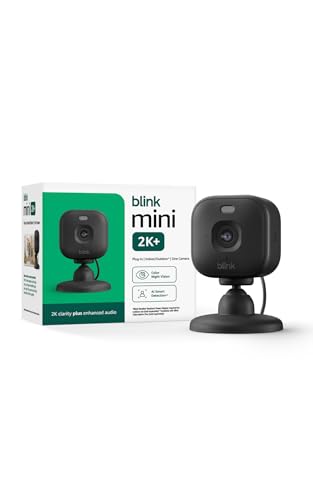 Blink Mini 2K+ Plug-In Indoor Smart Security |
9.1/10 | Buy | |
 VSMAHOME 4MP Dual-Band Security Camera |
8.9/10 | Buy | |
| Best Value |
 HITELLARCAM 2K Wireless Outdoor Security Camera |
8.8/10 | Buy |
 blurams 2K 360° Indoor Security Camera |
8.6/10 | Buy | |
| Best Premium |
 VISION WELL 2K Wireless Security Camera |
8.3/10 | Buy |
Gianteye 2K Solar Wireless Security Cameras
The Gianteye 2K Solar Wireless Security Camera 4-Pack delivers comprehensive outdoor surveillance with motorized 360-degree pan-tilt coverage, dual-band Wi-Fi flexibility, and continuous solar charging. It is an ideal multi-camera system for homeowners seeking expansive perimeter monitoring without running cables or paying forced monthly subscription fees.
Pros
- Four-camera package provides multi-angle coverage across driveways, yards, and entryways with motorized 360-degree pan-tilt mobility.
- Dual-band 2.4GHz and 5GHz Wi-Fi connectivity provides reliable connection options depending on router placement and wall interference.
- Detachable solar panels provide continuous trickle-charging, eliminating the chore of dismounting cameras for manual battery recharging.
- Subscription-free local video storage via onboard MicroSD slots allows homeowners to retain private event footage without recurring fees.
- IP65 weather-resistant rating ensures dependable performance through harsh seasonal rain, snow, and heat.
Cons
- MicroSD storage cards are not included in the package and must be purchased separately for each camera.
- Like most battery and solar-powered surveillance units, it operates on motion-activated recording and does not support continuous 24/7 video capture.
- Smart home voice integration is limited to Amazon Alexa, lacking native support for Apple HomeKit or Google Home.
IHOMWAY K09 2K Dual-Band Security Camera
Built for indoor monitoring, the IHOMWAY K09 pairs crisp 2K video with dual-band Wi-Fi support for low-latency live streaming. Continuous local recording and free rolling cloud storage make it a practical choice for keeping tabs on pets or family without monthly subscription fees.
Pros
- Supports both 2.4GHz and 5GHz Wi-Fi networks
- Free rolling cloud storage with no subscription required
- Sharp 2K video with non-disturbing infrared night vision
- Continuous 24/7 recording onto high-capacity microSD cards
- Customizable AI motion detection reduces false alarms
Cons
- Fixed viewing angle with no pan or tilt capability
- MicroSD card is not included in the box
- Requires a nearby outlet for constant wired power
Blink Mini 2K+ Plug-In Indoor Smart Security
The Blink Mini 2K+ is a compact plug-in indoor security camera that delivers crisp 2K video resolution, clear two-way audio with noise cancellation, and seamless Alexa compatibility. It is an ideal surveillance solution for apartment renters, pet owners, and homeowners seeking straightforward, dependable indoor monitoring.
Pros
- Sharp 2K video resolution with up to 4x zoom provides clear daytime and low-light indoor coverage.
- Upgraded two-way audio with noise cancellation makes communicating with pets or visitors clear and intelligible.
- Ultra-compact and lightweight design fits easily onto shelves or mounts to walls with the included hardware.
- Doubles as an indoor plug-in chime when paired with an optional Blink Video Doorbell.
- Plug-in AC operation ensures continuous surveillance without battery recharge cycles.
Cons
- Advanced person and vehicle AI detection features require an optional paid Blink Subscription Plan.
- Requires proximity to an electrical wall outlet, limiting placement options away from AC power.
- Exterior placement requires purchasing a separate weather-resistant power adapter.
VSMAHOME 4MP Dual-Band Security Camera
Equipped with dual-band Wi-Fi and 4MP color night vision, this compact wired camera delivers versatile monitoring for indoor rooms or outdoor perimeters. Its IP66 weatherproof housing and built-in siren provide essential deterrence without a complicated setup.
Pros
- Supports both 2.4 GHz and 5 GHz Wi-Fi networks
- IP66 weatherproof rating withstands harsh outdoor conditions
- Color night vision via integrated white LED lights
- Two-way audio and built-in siren for deterrence
Cons
- Manual angle adjustment lacks motorized pan and tilt
- Continuous power outlet required due to wired design
- MicroSD card not included and cloud requires a subscription
HITELLARCAM 2K Wireless Outdoor Security Camera
The HITELLARCAM 2K wireless outdoor security camera provides wire-free surveillance featuring dual-band Wi-Fi, full-color night vision, and flexible storage via a microSD slot or free SD-quality cloud tier. It serves as an accessible option for suburban homeowners or renters seeking budget-friendly entryway and perimeter coverage without mandatory monthly fees.
Pros
- Dual-band 2.4GHz and 5GHz Wi-Fi support provides flexible home network integration
- Free SD-quality cloud storage option provides clip access without mandatory subscription fees
- Onboard microSD card slot supports up to 256GB for zero-monthly-cost local video storage
- IP66 weather-resistant construction withstands exposure to outdoor rain and dust
- Integrated LED spotlights enable full-color night recording and visual deterrence
Cons
- Free cloud storage tier is limited to standard-definition playback unless upgraded to a paid plan
- MicroSD card is not included with the camera and must be purchased separately
- Battery runtime varies significantly based on trigger frequency, live-view streaming, and cold temperatures
blurams 2K 360° Indoor Security Camera
Designed for complete room coverage, this blurams indoor camera combines crisp 2K video with automatic motion tracking and abnormal sound alerts. It is an effective monitoring solution for pet owners and parents who want smart voice integration without mandatory subscription fees.
Pros
- Sharp 2K resolution with 360-degree automatic tracking
- Free rolling 24-hour cloud storage for motion clips
- Compatible with Alexa, Google Assistant, and IFTTT
- Built-in privacy mode and two-way audio support
Cons
- MicroSD card for local storage is sold separately
- Free cloud recordings are capped at 12 seconds
- Continuous 24/7 cloud recording requires an optional subscription
VISION WELL 2K Wireless Security Camera
The VISION WELL 2K Wireless Security Camera delivers flexible, wire-free surveillance for indoor or outdoor spaces with clear 2K resolution, color night vision, and on-device AI motion filtering. It is a dependable, budget-conscious choice for homeowners and renters seeking reliable entryway deterrence without mandatory monthly fees.
Pros
- Completely wire-free battery installation with included bracket and screws, making it ideal for renters and suburban homeowners.
- Sharp 2K video clarity supported by full-color night vision and a 33-foot illumination range.
- PIR motion detection paired with smart AI filtering for people, vehicles, pets, and packages.
- Local recording support on microSD cards up to 128GB to avoid mandatory monthly subscriptions.
- IP65 weather-resistant rating suitable for exterior perimeter or sheltered entryway mounting.
Cons
- Only connects to 2.4 GHz Wi-Fi networks and does not support 5 GHz frequencies.
- Designed for motion-activated event clips rather than continuous 24/7 video recording.
- MicroSD storage card is not included in the box and must be purchased separately.
The Engineering and Operation of Modern Home Security Cameras
Home security cameras convert ambient light and physical movement into encrypted digital video streams that homeowners can view from anywhere. Modern surveillance devices operate as specialized computing units equipped with optical lenses, image processors, radio transmitters, and intelligent firmware. Each subsystem functions in tandem to capture visual evidence, filter harmless environmental motion, and store footage across local or cloud infrastructure. Understanding these internal mechanics explains why specific hardware choices influence video clarity, alert precision, and long-term reliability.
Optical Sensors, Image Processing, and Video Resolution
Every home security camera begins its imaging process at the optical lens and image sensor assembly. Incoming light passes through a fixed lens aperture, which controls how much illumination reaches the internal complementary metal-oxide-semiconductor (CMOS) sensor. This sensor contains millions of microscopic photodiode sites that convert incoming photons into electrical voltage signals. The physical size of this image sensor, often measuring 1/2.8 inch or larger, dictates low-light performance. Larger sensors gather more light per pixel, significantly reducing visual noise in dim evening conditions.
Once electrical charges leave the CMOS sensor, the onboard Image Signal Processor (ISP) refines the digital frame. The ISP applies algorithms for color balance, sharpness, and High Dynamic Range (HDR) exposure correction. HDR processing merges multiple exposure levels in real time, preventing bright morning sunlight from washing out faces standing in deep porch shadows. Resolution levels like 1080p, 2K, or 4K define the total rendered pixel grid. Higher resolution delivers sharper digital zoom, allowing homeowners to inspect distant background details without immediate pixelation.
Evaluating optical capability requires looking beyond marketing claims to standardized surveillance metrics. The international IEC EN 62676-4 standard establishes DORI guidelines, categorizing coverage into Detection, Observation, Recognition, and Identification based on pixel density. Detection requires only 25 pixels per meter to confirm presence, whereas positive forensic Identification demands at least 250 pixels per meter across facial features. A wider field of view spreads available pixels across a broader horizontal space, covering large yards while reducing identification distance. Balancing field of view against subject distance ensures usable evidentiary detail.
Night Vision Technologies: Infrared Spectrum vs. Full-Color Spotlights
Security cameras rely on specialized lighting once ambient illumination drops below daylight lux thresholds. During the day, an internal mechanical IR-cut filter sits between the lens and the CMOS sensor to block infrared light. Blocking infrared rays prevents daylight images from appearing unnaturally discolored. When an onboard photodiode registers darkness, a small mechanical actuator swings this filter away with an audible click. This physical transition allows the sensor to absorb infrared wavelengths alongside available visible light.
Standard infrared night vision illuminates dark scenes using light-emitting diodes operating at either 850-nanometer or 940-nanometer wavelengths. The 850nm diodes produce a faint red glow on the camera faceplate while projecting an infrared beam across yards. In contrast, 940nm diodes remain completely invisible, making them well-suited for indoor pet or nursery monitoring where visible lights cause disturbance. However, infrared light reflects off double-pane window glass. Pointing an infrared camera through an interior window causes severe glare washout that blinds the sensor to outdoor events.
Full-color night vision operates differently by introducing supplementary white illumination into the monitored area. Integrated LED spotlights activate upon motion detection, illuminating the scene so the CMOS sensor can remain in daytime color mode. Capturing full-color nighttime video provides crucial forensic value, such as recording vehicle colors or visitor clothing details. Modern cameras combining large-aperture lenses with sensitive sensor chips can also capture color video under ambient street lighting without activating visible spotlights, preserving discreet surveillance after sunset.
Motion Detection Mechanics: Passive Infrared vs. Computer Vision AI
Battery-powered cameras depend on hardware Passive Infrared (PIR) sensors to initiate recording while preserving stored battery power. A PIR sensor contains pyroelectric elements behind a faceted Fresnel lens that divides the environment into discrete thermal zones. The sensor measures differential infrared radiation emitted by moving warm objects like humans and vehicles. When a warm target crosses these optical zones, the voltage spike wakes the main processor from sleep mode. PIR sensors detect lateral cross-motion across their field of view far better than head-on movement.
Continuous-power cameras frequently utilize optical pixel-change motion analysis rather than passive thermal sensors. In this approach, the image processor continuously compares consecutive video frames to identify changes in pixel color and luminance values. If a cluster of pixels shifts beyond a chosen sensitivity threshold, the camera records the event and sends an alert. While this method enables custom detection zones, it can generate nuisance alerts. Moving tree branches, headlights, and insect swarms frequently trigger unwanted notifications in basic pixel-based systems.
Modern surveillance units overcome false alerts by incorporating edge-based artificial intelligence directly onto onboard silicon. Specialized Neural Processing Units (NPUs) run computer vision algorithms trained to recognize specific shapes right on the camera hardware. These edge algorithms evaluate movement within milliseconds to distinguish humans, vehicles, pets, and package drops from harmless environmental motion. Onboard AI processing minimizes notification fatigue and eliminates the latency associated with sending video clips to cloud servers for external analysis. Homeowners receive timely notifications that accurately reflect genuine security events.
Audio Hardware Engineering and Surveillance Privacy Regulations
Surveillance audio systems combine sensitive microphones with miniature speakers to facilitate real-time property communication. Onboard processors apply acoustic echo cancellation and background noise suppression to isolate spoken words from wind or passing traffic. Audio communication operates through either half-duplex or full-duplex protocols. Half-duplex systems function like walkie-talkies where only one person can speak at a time, requiring deliberate pacing. Full-duplex channels enable simultaneous two-way conversation, allowing natural dialogue when speaking with couriers or warning trespassers away.
Audio recording introduces strict legal considerations that differ from visual property surveillance under United States law. The Federal Wiretap Act, codified under 18 U.S.C. 2511, restricts the non-consensual interception of oral communications where individuals maintain a reasonable expectation of privacy. State statutes further divide jurisdictions into one-party and all-party consent categories. In all-party consent states, recording private conversations without the explicit knowledge of every speaker can lead to civil liabilities or criminal penalties. Property owners should consult local statutes before enabling outdoor audio capture beyond property boundaries.
Responsible surveillance deployment requires balancing home security goals with neighbor privacy boundaries. Outdoor cameras should be angled downward to capture walkways, driveways, and entryways rather than adjacent yards. Many camera companion applications offer privacy masking tools that black out neighbor windows or shared fence lines in software. Disabling audio recording toggles on street-facing units avoids unintentional legal violations while preserving visual perimeter deterrence. Respecting privacy around private living quarters ensures that residential surveillance remains ethical and lawful.
Video Compression, Network Transmission, and Bandwidth
High-definition video creates massive data streams that would congest home Wi-Fi networks without efficient digital compression codecs. Modern security cameras utilize Advanced Video Coding (H.264) or High Efficiency Video Coding (H.265) to compress video files. These codecs divide footage into intra-frames for full images and inter-frames that record only pixels that move between frames. By transmitting only visual changes, H.265 compression cuts required upload bandwidth and storage consumption by half compared to older standards. Efficient compression maintains smooth 2K streaming without exhausting residential internet connections.
Wireless security cameras communicate with home routers across 2.4 GHz and 5 GHz radio bands. The 2.4 GHz frequency provides long transmission range and penetrates exterior obstacles like brick, siding, and drywall effectively. However, 2.4 GHz channels experience heavy radio interference from nearby routers and household electronics. The 5 GHz frequency band delivers faster throughput and lower latency for responsive live viewing, but its shorter radio waves struggle against exterior home walls. Dual-band cameras allow property owners to assign the most reliable frequency band for each camera location.
Property owners requiring enterprise network stability often bypass wireless signals in favor of structured Ethernet cabling. Installing a centralized PoE security camera system allows DC power and high-speed data to travel across a single Cat6 network cable. Governed by IEEE 802.3af and 802.3at standards, this wired architecture avoids Wi-Fi latency, radio interference, and channel congestion. Hardwired cables support steady video bitrates up to one hundred meters from the central switch, delivering dependable performance for multi-camera residential networks.
Storage Topologies: Local MicroSD, Standalone NVRs, and Cloud Infrastructure
Surveillance video storage strategies generally divide into on-device local media and remote cloud hosting. Onboard storage uses removable microSD cards inserted into a weather-sealed slot directly on the camera body. When set to continuous recording, files write in loop segments that overwrite the oldest footage once capacity fills. Continuous recording subjects flash memory cells to intense write cycles, making consumer cards vulnerable to premature failure. Selecting High Endurance cards rated for Video Speed Class 30 (V30) provides the sustained write durability required for continuous video archiving.
Centralized recording systems avoid individual memory cards by streaming video to a dedicated Network Video Recorder (NVR) or Network Attached Storage (NAS) unit. Standard protocols like Real-Time Streaming Protocol (RTSP) and ONVIF Profile S enable third-party cameras to communicate with centralized storage hardware. Video archives directly onto specialized surveillance hard drives designed for constant write operations over several years. This localized storage topology keeps all video behind your home firewall, eliminating recurring monthly subscription fees and protecting footage from external server outages.
Cloud surveillance platforms transmit recorded video clips across your broadband connection to remote data centers. Video transmits using Transport Layer Security (TLS 1.3) protocols and rests behind AES-128 or AES-256 bit encryption within off-site cloud vaults. The primary benefit of cloud archiving is physical theft protection, ensuring visual evidence survives even if someone steals or vandalizes the camera. However, continuous cloud streaming consumes notable upstream broadband bandwidth. Cloud platforms also generally require recurring subscription fees to retain video history or access advanced cloud-based smart alerts.
Power Architectures, Battery Chemistry, and Environmental Ingress Protection
Power architecture determines whether a security camera can support continuous 24/7 video recording or must use event-triggered sleep modes. Hardwired cameras connect to constant electrical sources like plug-in DC transformers, low-voltage doorbell wiring, or PoE switches. Constant power enables uninterrupted video recording and instant motion response buffers. In contrast, wire-free battery cameras remain in deep sleep until an external trigger trips the PIR sensor. While battery systems provide simple installation on posts or fences, they cannot record continuously without depleting their power reserves rapidly.
Outdoor battery cameras rely on rechargeable lithium-ion cells that react strongly to ambient seasonal temperatures. When winter temperatures drop below 32 degrees Fahrenheit (0 degrees Celsius), internal electrolyte resistance increases within the battery cells. This chemical reaction causes voltage drops that temporarily lower usable battery capacity by thirty percent or more. Internal safety circuits also halt battery charging below freezing to prevent permanent cell damage, stopping connected solar panels from replenishing energy until the air warms. Mounting battery cameras in locations sheltered from harsh winter winds helps preserve operational endurance.
Physical weatherproofing protects internal camera circuitry from wind-driven rain, airborne dust, and seasonal humidity. Ingress Protection (IP) ratings established by the International Electrotechnical Commission define enclosure sealing performance. An IP65 rating denotes complete dust sealing and protection against low-pressure water jets from any angle. Sturdier IP66 enclosures resist high-pressure water jets, making them suitable for fully exposed exterior siding. Articulated outdoor devices like pan-tilt-zoom cameras for driveways utilize internal silicone gaskets to maintain watertight protection while adjusting along motorized axes.
Modern home security cameras succeed by pairing precision optics, low-power processing silicon, intelligent detection algorithms, and flexible video storage networks. Selecting the right power delivery, frequency band, and motion sensing mechanism for your property layout ensures dependable perimeter surveillance without frustrating network lag or rapid battery drain. Understanding these foundational engineering principles empowers you to position your cameras effectively, respect household privacy boundaries, and maintain reliable visual security across your property.
About the author
John Carlsen is a home security and smart home specialist with more than a decade of experience researching and testing security technology. His expertise covers DIY security systems, security cameras, smart devices, pricing, contracts, and connected-home technology. He combines hands-on product testing with detailed research to explain strengths, limitations, ownership costs, and real-world value in straightforward terms for homeowners and renters.