
What Is Difference Between Wifi Security Camera: Practical Guide for 2026
Understand what is difference between wifi security camera models and wired systems for November 2026 to choose the right surveillance setup.
 By Alina Bradford
Updated November 5, 2026


Modern residential surveillance often creates confusion when homeowners attempt to distinguish network transmission protocols from physical power delivery methods. Understanding what is difference between wifi security camera options compared to traditional surveillance installations is essential before investing in residential hardware. While a conventional PoE security camera system utilizes physical Ethernet cabling to handle both data transmission and electrical current, a Wi-Fi camera transmits video streams wirelessly over radio frequency bands to a local router. This fundamental architectural variation alters how devices handle network bandwidth, physical installation flexibility, and overall signal resilience across indoor and outdoor spaces.
Wireless security hardware eliminates the labor-intensive requirement of running network lines through attics or drilling through exterior masonry walls. However, consumers frequently encounter practical distinctions regarding power sources, local storage topologies, and onboard detection capabilities among wireless models. Devices range from battery-operated compact units to AC plug-in motorized cameras equipped with dual-band networking. Navigating these distinctions ensures that property owners select surveillance devices capable of delivering continuous protection without unexpected cloud subscription fees or chronic signal dropouts.
| Award | Product | SSG Score About SSG ScoreThe SSG Score is our own rating from 0 to 10, based on performance, design and build, ease of use, and value. It reflects independent research and is never influenced by manufacturers, retailers, or affiliate commissions. Learn more › | |
|---|---|---|---|
| Best Overall |
fijawee 1080P USB Charger Hidden Camera
|
9.1/10 | Buy |
| Best Budget |
 QOKBZQ 1080P Mini WiFi Camera (2 Pack) |
8.9/10 | Buy |
| Best Premium |
 SensForge 2.5K Pan-Tilt Indoor Camera |
8.8/10 | Buy |
| Best Value |
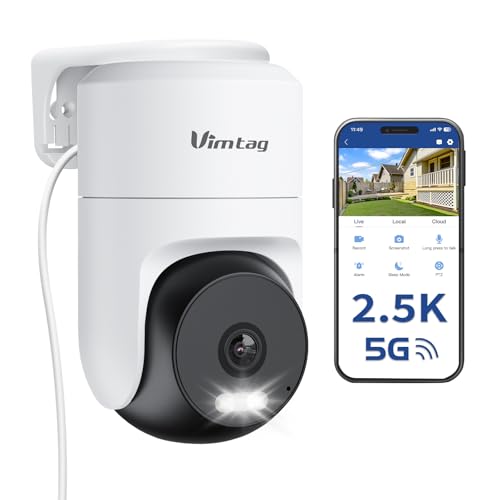 VIMTAG 2.5K Pan-Tilt Wired Outdoor Security Camera |
8.4/10 | Buy |
 Zaiew MiniSmart 2K Wireless Hidden Camera |
8.3/10 | Buy | |
 Chamberlain myQ Gen 2 2K Security Camera |
8.0/10 | Buy | |
 ZHOUCXZDA Mini Wireless Security Camera |
7.8/10 | Buy |
fijawee 1080P USB Charger Hidden Camera
Disguised as a standard wall adapter, this fijawee camera delivers 1080p live streaming and automated motion alerts straight to your smartphone. It supports continuous loop recording to local storage, providing a discreet option for indoor security.
Pros
- Covert design blends into everyday home outlets
- Live 1080p remote viewing via mobile app
- Instant alerts when motion is detected
- Continuous loop recording prevents memory overflow
- Easy in-app footage playback and management
Cons
- MicroSD card is not included
- Relatively bulky dimensions for a wall plug adapter
- Requires a constant power outlet connection
QOKBZQ 1080P Mini WiFi Camera (2 Pack)
Designed for discreet home monitoring, this compact two-camera set delivers 1080p video with wide-angle coverage. Continuous around-the-clock recording and remote viewing via iOS or Android allow seamless tracking of pets, nurseries, or living areas.
Pros
- Compact black casing blends easily into home spaces
- Full 1080p resolution provides clear video playback
- Wide-angle lens captures broader room coverage
- Supports round-the-clock continuous video recording
- Two-pack bundle expands multi-room coverage
Cons
- Requires companion mobile app for remote viewing
- Available only in black finish
SensForge 2.5K Pan-Tilt Indoor Camera
Designed for subscription-free home and pet monitoring, this indoor camera combines sharp 2.5K video with full 360-degree room coverage. It pairs dual-band Wi-Fi connectivity with an included 64GB microSD card for secure, hassle-free local storage.
Pros
- Included 64GB memory card eliminates recurring storage fees
- Dual-band Wi-Fi connects to 2.4GHz and 5GHz networks
- Full 360-degree pan-tilt coverage eliminates room blind spots
- Smart onboard AI distinguishes between humans and household pets
Cons
- Mobile app is restricted to the US and Canada
- AI video summaries require an optional paid membership
- Not suitable for monitoring through window glass
VIMTAG 2.5K Pan-Tilt Wired Outdoor Security Camera
The VIMTAG 2.5K Pan/Tilt Wired Outdoor Security Camera delivers 2560x1440 QHD video, motorized 360-degree coverage, and dual-band Wi-Fi for dependable residential surveillance. It is a practical choice for homeowners and renters seeking continuous plug-in perimeter monitoring without recurring monthly cloud fees.
Pros
- Motorized 360-degree pan and 90-degree tilt with real-time motion tracking eliminates blind spots.
- Dual-band 2.4GHz and 5GHz Wi-Fi support ensures flexible and stable wireless network pairing.
- AI detection for people, pets, and vehicles functions without requiring a paid subscription.
- Generous local storage capacity supporting microSD cards up to 512GB for 24/7 continuous recording.
- IP66 weather-resistant housing withstands outdoor rain, dust, and exterior environmental exposure.
Cons
- Requires access to an electrical outlet via the 9.8-foot power cord, restricting wire-free placement.
- High digital zoom levels up to 8x crop the image rather than using optical glass magnification.
- Smart home ecosystem compatibility is limited to Amazon Alexa without Google Home or HomeKit support.
Zaiew MiniSmart 2K Wireless Hidden Camera
Measuring just one cubic inch, the Zaiew MiniSmart offers discreet 2K indoor monitoring with app-based motion alerts and night vision. It serves well for keeping an unobtrusive eye on pets, toddlers, or elders without requiring complex wiring.
Pros
- Ultra-compact footprint allows easy and discreet placement
- Clear 2K video resolution with night vision support
- Customizable motion sensor sensitivity via mobile app
- Simple wire-free setup without complicated installation
Cons
- Only compatible with 2.4GHz Wi-Fi networks
- Designed exclusively for indoor use without weatherproofing
- Compact battery requires frequent recharging if unplugged
Chamberlain myQ Gen 2 2K Security Camera
Delivering clear 2K video and a wide 130-degree view, this compact indoor camera reliably monitors pets, children, and entryways. It pairs with the myQ mobile app to provide real-time alerts and two-way audio communication.
Pros
- Crisp 2K resolution with reliable night vision clarity
- Broad 130-degree view covers most indoor spaces easily
- Two-way audio allows convenient remote communication
- Compact footprint fits easily on shelves or tables
Cons
- Person and pet smart detection requires a paid subscription
- Camera angle requires manual swivel adjustment rather than motorized controls
- Requires continuous plug-in power with no battery backup
ZHOUCXZDA Mini Wireless Security Camera
This compact 1080p mini security camera provides motion alerts and short-range infrared night vision in an ultra-small one-inch profile. It suits apartment renters, pet owners, and budget-conscious buyers seeking simple indoor monitoring without monthly subscription fees.
Pros
- Ultra-compact 1 x 1 x 1-inch body allows discreet placement on desks, shelves, or mantels
- Supports local microSD card storage up to 256GB with zero recurring monthly subscription fees
- Offers both continuous recording and motion-activated recording modes
- Nano infrared LED provides black-and-white night vision up to 15 feet in dark rooms
- Compatible with iOS and Android devices over standard 2.4GHz Wi-Fi connections
Cons
- Specified as a video-only device, lacking two-way audio communication
- Lacks a documented IP weatherproofing rating, making it unsuitable for exposed outdoor installations
- Night vision distance is limited to 15 feet, making it best suited for smaller rooms rather than wide spaces
Understanding Wi-Fi Security Cameras and Surveillance Architecture
A Wi-Fi security camera encodes video into digital packets and transmits that data wirelessly over local radio frequencies rather than dedicated physical cables. While traditional analog CCTV systems rely on coaxial lines and enterprise Power over Ethernet units require structured Cat6 wiring, Wi-Fi cameras connect directly to an existing home network. This architecture grants property owners immediate access to live feeds and activity alerts on smartphones without requiring centralized commercial recorders. Recognizing how these devices manage electrical power, wireless frequencies, video storage, and optical coverage clarifies the fundamental differences between consumer wireless cameras and hardwired commercial systems.
Network Transmission Mechanics: How Wi-Fi Cameras Differ from Wired Systems
Physical data transmission represents the primary operational divergence between Wi-Fi security cameras and wired surveillance systems. Conventional wired installations transmit video signals directly to a central recorder over dedicated physical copper cables. In contrast, a Wi-Fi camera utilizes standard IEEE 802.11 wireless protocols to communicate with a residential router, packaging compressed video into radio packets that travel through the air. This wireless methodology drastically reduces installation time by eliminating the requirement to route cables across crawlspaces, drop ceilings, or wall cavities.
Operating across shared radio frequencies introduces environmental vulnerabilities that hardwired installations avoid entirely. Radio signals experience physical attenuation when traveling through dense building materials such as concrete footings, brick veneer, and wire-lathe plaster. Furthermore, wireless surveillance devices must compete for airtime against laptops, streaming devices, and neighboring wireless networks. While a dedicated Ethernet cable delivers consistent transmission speeds without signal drops, a Wi-Fi camera relies heavily on local wireless signal strength to maintain steady video streams and timely push notifications.
The Wireless Power Misconception: Wire-Free Batteries Versus Plug-In Adapters
Consumers frequently misunderstand the terminology surrounding wireless surveillance, assuming that a wireless camera operates completely without wires. In the security camera sector, the term wireless refers specifically to data transmission rather than electrical delivery. Many high-performance Wi-Fi devices, including the VIMTAG 2.5K Pan/Tilt Wired Outdoor Security Camera and the myQ Indoor Plug-in Security Camera Gen 2, rely on dedicated AC power adapters connected to standard electrical outlets. These plug-in designs provide continuous electrical power, enabling the camera to record non-stop footage and maintain active computer vision without draining a power cell.
Conversely, wire-free models utilize integrated or removable rechargeable lithium-ion battery packs to eliminate electrical cords entirely. Devices such as the Zaiew 2K MiniSmart Hidden HD Cameras Wireless WiFi incorporate internal batteries to achieve maximum physical placement flexibility. When evaluating battery cameras with onboard storage, property owners must understand that battery units operate in a low-power sleep state until an onboard sensor detects activity. Because continuous video streaming would deplete a lithium battery within days, battery-operated Wi-Fi cameras rely primarily on event-driven recording rather than uninterrupted round-the-clock monitoring.
Radio Frequency Bands: Comparing 2.4 GHz Range and 5 GHz Dual-Band Throughput
Most standard Wi-Fi security cameras operate exclusively on the 2.4 GHz wireless frequency band. The 2.4 GHz spectrum features longer radio waves that excel at penetrating structural obstacles like exterior brick, wooden studs, and sheetrock walls. This penetration capability makes 2.4 GHz ideal for reaching detached garages, porches, and perimeter perimeters situated far from the primary access point. However, the 2.4 GHz band provides limited data throughput and suffers from severe signal congestion due to competing Bluetooth gadgets and household electronics.
Modern surveillance hardware increasingly incorporates dual-band connectivity to resolve residential network bottlenecks. Devices such as the SensForge 2.5K Indoor Pan-Tilt Security Camera offer compatibility across both 2.4 GHz and 5 GHz networks. The 5 GHz frequency band delivers significantly higher data transfer rates and operates across broader channels with minimal interference, resulting in smoother high-definition live streaming and lower latency. The primary drawback of 5 GHz connectivity involves reduced transmission distance and poor obstacle penetration, requiring users to position cameras relatively close to the router.
Video Storage Architecture: Onboard MicroSD Cards Versus Cloud Subscriptions
Storage topology forms another essential distinction among Wi-Fi security cameras, directly influencing recurring ownership costs and evidentiary data safety. Many consumer cameras rely heavily on remote cloud servers to archive video events, charging recurring monthly subscription fees to unlock clip histories and advanced detection features. Cloud storage protects footage from destruction if an intruder steals or damages the physical camera during an incident. However, relying exclusively on cloud vaults means that any broadband service disruption or ISP outage renders the camera incapable of archiving incidents until the connection restores.
To avoid ongoing subscription fees, numerous property owners prioritize hardware that supports local physical storage via high-endurance microSD cards. Cameras like the VIMTAG 2.5K Pan/Tilt support local memory cards up to 512GB, while compact units such as the fijawee USB Charger Hidden Camera provide continuous automatic overwrite recording without ongoing fees. Local storage architecture ensures that the device continues capturing video events even when the home network experiences an external broadband outage. For maximum reliability, many users combine a high-endurance memory card for free local recording with optional cloud backup for remote archive redundancy.
Motion Sensing Technology: Passive Infrared Hardware Versus Edge-AI Vision
How a Wi-Fi camera detects activity dictates both notification accuracy and daily power consumption. Traditional battery-powered units typically rely on hardware-based passive infrared (PIR) sensors that monitor changes in ambient thermal radiation within their detection cone. When a warm object, such as a human body or vehicle engine, moves across the sensor split zones, the device wakes from standby mode to capture video. While PIR sensors consume minimal electrical power, they frequently trigger false notifications from direct sunlight, thermal convection currents, or swaying tree branches on hot afternoons.
Modern mains-powered Wi-Fi cameras increasingly bypass thermal sensors in favor of optical pixel analysis and on-device neural processing units. The SensForge 2.5K camera utilizes smart AI detection algorithms to differentiate specifically between humans and domestic animals directly on the hardware. This edge-based processing inspects the geometry and movement vectors of objects within the video frame before generating a notification. Local computer vision filters out falling leaves, insects crawling across the lens, and shifting shadows, significantly reducing notification fatigue for the homeowner.
Field of View and Mechanical Coverage: Fixed Lenses Versus Motorized Pan-Tilt
Optical coverage determines the physical area a single camera can monitor without leaving dangerous blind spots. Fixed-lens Wi-Fi cameras, such as the myQ Gen 2 with its 130-degree wide-angle lens, capture a static viewing angle established during physical installation. A wide-angle fixed lens provides exceptional situational awareness across entryways or compact interior rooms without requiring mechanical moving parts. However, static lenses cannot physically adjust their optical perspective once installed, meaning perimeter corners remain vulnerable unless additional cameras are deployed.
Motorized pan-tilt devices eliminate these static limitations by enabling remote mechanical articulation directly through mobile applications. Installing motorized pan-tilt security cameras provides up to 360 degrees of horizontal rotation alongside 90 degrees of vertical tilt. Units like the VIMTAG outdoor model incorporate automated smart motion tracking, mechanically rotating the camera body to follow moving subjects across a backyard or open driveway. While motorized mechanisms drastically expand coverage areas with a single device, users should ensure the camera auto-returns to a designated home position so critical entry zones do not remain unmonitored.
Network Bandwidth, Compression Codecs, and Home Data Caps
Deploying multiple high-resolution Wi-Fi cameras across a residential property requires careful consideration of broadband upload capacity and internal network throughput. Most home broadband packages offer asymmetrical bandwidth, delivering fast download speeds but restricted upload rates. A standard 1080p security camera streaming continuous footage consumes approximately 1.5 to 2.5 megabits per second of upstream bandwidth, while high-resolution 2.5K cameras require significantly more. If a household installs multiple continuous-streaming cameras, the collective video data can quickly saturate the uplink, causing buffering during video calls and online gaming.
Modern surveillance devices mitigate this bandwidth burden by implementing efficient video compression standards. The transition from legacy H.264 compression to advanced H.265 High Efficiency Video Coding (HEVC) reduces data bitrates by roughly forty to fifty percent while maintaining sharp visual clarity. Furthermore, configuring cameras to record locally on microSD media and stream externally only when motion triggers occur prevents continuous upstream transmission. Property owners subject to monthly ISP data caps must monitor their surveillance network traffic closely, as continuous high-resolution cloud recording can consume hundreds of gigabytes of data each month.
Residential Privacy Boundaries and Audio Recording Regulations
Installing Wi-Fi security cameras introduces important legal and ethical responsibilities regarding privacy expectations and audio surveillance. Under United States legal frameworks, individuals maintain a reasonable expectation of privacy within private residential spaces, including bathrooms, changing areas, and designated guest rooms. While discreet miniature devices like the QOKBZQ Hidden Camera Mini Security Camera offer compact dimensions for indoor placement, deploying cameras in spaces where guests expect privacy can violate state and federal privacy statutes. Responsible placement focuses strictly on common entry points, living rooms, hallways, and exterior property boundaries.
Audio recording introduces an additional layer of statutory complexity that many homeowners overlook during camera installation. Federal wiretap law under 18 U.S.C. Section 2511 and state-level eavesdropping statutes govern the interception of spoken communications. Approximately a dozen states require all-party consent to record private conversations, making outdoor two-way audio recording legally problematic if microphones capture neighbor conversations across fence lines. Property owners should verify local surveillance regulations, adjust microphone sensitivity settings in mobile applications, and restrict camera observation angles strictly to their own property boundaries to avoid legal disputes.
Environmental Resistance and Outdoor Durability Standards
Differentiating indoor Wi-Fi cameras from outdoor surveillance hardware requires evaluating physical weatherproofing ratings and thermal operational boundaries. Indoor cameras feature lightweight plastic enclosures designed strictly for climate-controlled environments and lack seals to prevent moisture ingress. Exposing an indoor camera to outdoor weather leads to rapid internal corrosion from morning condensation, humidity, and direct rain. Conversely, outdoor units feature robust Ingress Protection (IP) ratings to withstand harsh environmental exposure throughout changing seasons.
The VIMTAG outdoor camera features an IP66 weatherproof rating, signifying that its housing is completely dust-tight and capable of resisting powerful pressurized water jets. Outdoor installations also incorporate specialized silicone gaskets, sealed cable entry ports, and UV-stabilized exterior plastics that resist degradation under intense summer solar radiation. Homeowners living in cold climates must also consider ambient temperature limits, particularly with battery-powered units. Standard lithium-ion battery chemistries cannot safely accept a charge when temperatures drop below freezing, making hardwired AC outdoor cameras a more reliable choice for uninterrupted winter security.
Practical Takeaway: Selecting the Proper Surveillance Architecture
Choosing between a Wi-Fi security camera and alternative surveillance architectures ultimately depends on property layout, technical requirements, and long-term ownership preferences. Wi-Fi security cameras offer an accessible, highly flexible security solution that eliminates the intrusive structural drilling and structured cabling associated with commercial CCTV systems. By understanding the critical differences between plug-in continuous power and battery event recording, local microSD archiving and cloud subscriptions, and 2.4 GHz versus 5 GHz wireless performance, property owners can tailor a system that matches their security objectives.
Before finalizing any installation, homeowners should conduct a thorough Wi-Fi signal audit at the intended mounting location using a smartphone or network analyzer. Ensuring a robust wireless signal with an RSSI value stronger than minus sixty-five decibels prevents dropped video frames and delayed motion notifications. Coupling adequate signal strength with local onboard storage and intelligent edge-based detection ensures your wireless surveillance system provides dependable property protection without unnecessary network strain or monthly service fees.
About the author
Alina Bradford is a safety and security expert with more than two decades of experience researching consumer technology and personal safety. She has tested hundreds of security and safety products and brings first-responder training to her practical approach. Her expertise spans home security equipment, cameras, connected safety devices, apps, and emerging security technology, with a focus on making complex products easier for everyday consumers to understand.