
How Much for Security Camera Installation: Pricing and DIY Guide for 2026
Compare professional labor rates against zero-labor DIY setups to determine %how much for security camera installation% in November 2026.
 By Rebecca Edwards
Updated November 5, 2026
Professional security camera installations often introduce significant labor expenses, ranging from standard technician dispatch charges to complex low-voltage wiring through attics and crawlspaces. Homeowners frequently ask how much for security camera installation when deciding whether to hire a licensed low-voltage contractor or complete a self-guided setup. Total labor expenses largely depend on architectural variables, such as drilling through masonry, routing exterior conduit, or mounting high-voltage junction boxes. For many residential layouts, wire-free hardware with magnetic mounting brackets has reshaped this financial calculation by eliminating professional labor requirements entirely.
Opting for wire-free security cameras with local storage allows property owners to achieve dependable perimeter surveillance without paying steep contractor fees. Removing the need for structured cabling helps apartment renters and suburban homeowners avoid permanent wall modifications, transformer adjustments, and recurring service calls. Understanding how hardware investments, ongoing cloud storage fees, and professional labor charges interact helps you build a practical, budget-conscious residential surveillance system.
| Award | Product | SSG Score About SSG ScoreThe SSG Score is our own rating from 0 to 10, based on performance, design and build, ease of use, and value. It reflects independent research and is never influenced by manufacturers, retailers, or affiliate commissions. Learn more › | |
|---|---|---|---|
| Best Overall |
ZUMIMALL 2K Wireless Security Camera
|
9.1/10 | Buy |
| Best Budget |
 Vimtag 2K Dual-Band Window Camera |
8.9/10 | Buy |
 blurams 2K 360° Indoor Security Camera |
8.6/10 | Buy | |
 Winees M3 Pro 2K Outdoor Security Camera |
8.6/10 | Buy | |
| Best Premium |
 MISECU 2K Window Security Camera (2-Pack) |
8.3/10 | Buy |
| Best Value |
 Realhide 2K Wireless Outdoor Security Camera |
8.1/10 | Buy |
 CINMOORE 2.5K Wireless Security Camera |
8.0/10 | Buy |
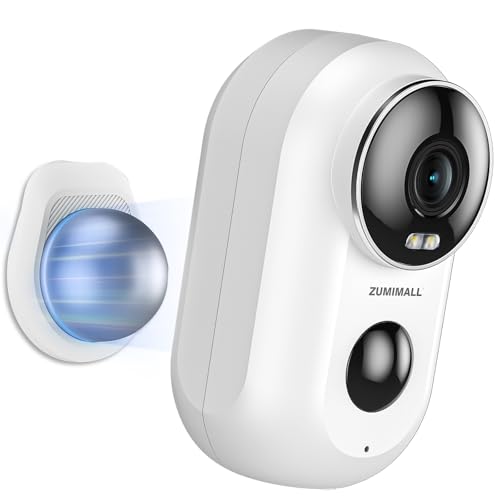
ZUMIMALL 2K Wireless Security Camera
Flexible magnetic mounting and sharp 2K video make this battery-powered camera a versatile choice for indoor or outdoor monitoring. It combines spotlight color night vision with custom AI detection, catering well to renters and homeowners who want a drill-free setup.
Pros
- Tool-free magnetic mount allows effortless placement
- Sharp 2K clarity with color night vision
- Customizable AI alerts minimize false motion notifications
- Durable IP66 weatherproof housing
- Integrated two-way audio and deterrence siren
Cons
- Lacks support for 5GHz Wi-Fi networks
- MicroSD card must be purchased separately
- Free cloud loop only records six-second clips
Vimtag 2K Dual-Band Window Camera
Mounted indoors against glass, this 2K camera lets renters and homeowners monitor the outdoors without exterior drilling or weather exposure. A 15-degree angled bracket helps minimize glass reflections, backed by subscription-free AI alerts and dual-band Wi-Fi.
Pros
- Indoor stick-on design requires no exterior drilling
- Angled bracket significantly reduces glass reflections
- Free lifetime AI alerts for people, vehicles, and pets
- Supports faster 5GHz and 2.4GHz Wi-Fi networks
Cons
- MicroSD card for local storage is not included
- Cloud storage requires a paid subscription after 30 days
blurams 2K 360° Indoor Security Camera
Designed for complete room coverage, this blurams indoor camera combines crisp 2K video with automatic motion tracking and abnormal sound alerts. It is an effective monitoring solution for pet owners and parents who want smart voice integration without mandatory subscription fees.
Pros
- Sharp 2K resolution with 360-degree automatic tracking
- Free rolling 24-hour cloud storage for motion clips
- Compatible with Alexa, Google Assistant, and IFTTT
- Built-in privacy mode and two-way audio support
Cons
- MicroSD card for local storage is sold separately
- Free cloud recordings are capped at 12 seconds
- Continuous 24/7 cloud recording requires an optional subscription
Winees M3 Pro 2K Outdoor Security Camera
Delivering crisp 2K video through a fast F1.6 aperture, the Winees M3 Pro is a practical choice for monitoring entryways and yards. Its integrated spotlight supports full color night vision, while onboard AI filters alerts specifically for people and pets.
Pros
- Sharp 2K resolution with bright aperture
- Starlight sensor enables full color night vision
- Built-in AI differentiates people from pets
- Simple installation using single screw mount
- Supports local microSD card storage
Cons
- MicroSD card is not included
- Requires continuous wired power connection
- Only supports 2.4GHz Wi-Fi bands
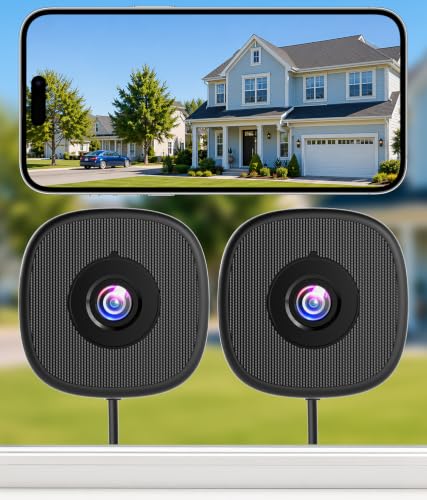
MISECU 2K Window Security Camera (2-Pack)
Designed to adhere directly to glass, this indoor camera setup monitors outdoor areas without the need for exterior drilling or weatherproofing. Clear 2K resolution, glare-reduction design, and dual-band Wi-Fi make it an accessible surveillance option for renters and homeowners alike.
Pros
- Quick drill-free indoor installation on window glass
- Supports fast and flexible dual-band Wi-Fi networks
- Clear starlight color night vision through window glass
- Offers local continuous recording via microSD card
Cons
- MicroSD storage card is not included in the box
- Free cloud storage clips are capped at 8 seconds
- Advanced AI object recognition requires an optional paid subscription
Realhide 2K Wireless Outdoor Security Camera
Equipped with dual-band Wi-Fi and full-color night vision, this compact bullet camera delivers wire-free outdoor monitoring with flexible storage choices. It is a solid pick for homeowners seeking basic perimeter coverage without mandatory subscription fees.
Pros
- Sharp 2K clarity with color night vision
- Dual-band Wi-Fi ensures flexible network compatibility
- Includes free rolling cloud option without subscriptions
- Rugged IP66 rating for outdoor weather resistance
- Compact footprint allows versatile mounting locations
Cons
- Battery endurance decreases with frequent motion triggers
- Fixed bullet housing lacks motorized pan and tilt
CINMOORE 2.5K Wireless Security Camera
The CINMOORE 2.5K Wireless Security Camera delivers crisp 2560x1440 video, versatile magnetic mounting, and subscription-free local microSD storage up to 256GB. It is a practical wire-free option for renters and homeowners seeking flexible placement with spotlight color night vision and AI person detection.
Pros
- Crisp 2.5K QHD resolution (2560x1440) provides clear daytime and spotlight-assisted nighttime detail
- Versatile mounting system with a quick-attach magnetic base, screw bracket, or flat tabletop placement
- Local video storage support via microSD up to 256GB eliminates mandatory monthly cloud subscription fees
- IP65 weather-resistant housing delivers reliable protection against rain, outdoor dust, and heat
Cons
- Advertised battery runtime of 5 to 7 days per charge requires frequent recharging cycles
- Operates exclusively on 2.4 GHz Wi-Fi frequencies and does not support 5 GHz networks
- MicroSD card for local video storage is not included and must be purchased separately
The Comprehensive Guide to Security Camera Installation Costs and DIY Alternatives
Calculating how much for security camera installation requires balancing professional contractor billing against the convenience of self-installed hardware. Professional installers handle complex tasks like running structured cabling through wall cavities, mounting junction boxes, and configuring central network video recorders. Conversely, DIY surveillance equipment eliminates third-party labor charges entirely, allowing you to allocate your budget toward camera hardware. Reviewing structural obstacles, electrical access points, and ongoing operational overhead ensures that your chosen surveillance system matches your property layout and financial plan.
Direct Cost Breakdown: Professional Labor Rates vs DIY Expenses
Professional surveillance contractors typically structure their billing around low-voltage trade rates, charging an initial dispatch fee combined with a fixed cost per camera drop. A standard residential installation requires the technician to assess entry points, identify cable paths through attics, and penetrate exterior siding. When hiring a contractor for a multi-camera hardwired system, the labor portion of the invoice routinely matches or exceeds the retail price of the cameras themselves. This professional fee structure accounts for specialized tools, commercial liability insurance, ladder safety protocols, and billable technician time on site.
Choosing a self-installed surveillance path transforms this financial equation by reducing installation labor expenses to zero. Modern wire-free and window-mounted units allow homeowners and apartment tenants to complete full perimeter deployments using standard household tools or non-destructive adhesive brackets. The total upfront cost in a DIY setup remains limited entirely to physical camera hardware, mounting brackets, and memory storage media. This fundamental difference in budget allocation lets homeowners invest in higher-resolution 2K or 4K optical sensors rather than spending hundreds on basic technician labor.
Structural and Wiring Factors That Escalate Professional Installation Fees
Exterior wall composition represents one of the primary drivers of professional installation costs. Standard wood-framed homes with vinyl siding present straightforward cable routing paths, whereas solid brick, stone, or stucco exteriors require masonry hammer drills and sealed conduit runs. Penetrating exterior building envelopes also demands heavy-duty polyurethane or silicone sealants to prevent moisture intrusion, drafts, and insect nesting behind mounting backplates. Contractors factor the risk of structural damage and specialized drill wear directly into their per-hole labor rates.
Interior building layouts create distinct routing hurdles that influence contractor hourly estimates. Multi-story homes with finished drywall ceilings prevent straightforward attic drops, forcing technicians to cut inspection hatches or route surface-mounted plastic raceways along baseboards. Attic spaces filled with blown-in insulation, narrow crawlspaces, and fire-blocking lumber within wall studs all increase the physical time required to pull structured cabling. These labor-intensive tasks explain why professional quotes for seemingly identical four-camera installations can vary dramatically between two different properties.
Power Architecture Tradeoffs: Hardwired, PoE, and Battery-Powered Deployments
Power delivery architecture directly dictates installation complexity and overall system reliability. Traditional hardwired video doorbells rely on existing low-voltage electrical circuits powered by mechanical chime transformers rated between 16V and 24V AC. Upgrading an obsolete or underpowered transformer requires working inside the main electrical panel or finding hidden junction boxes in basements. Homeowners lacking electrical diagnostic tools often hire licensed electricians to ensure transformer volt-ampere ratings sufficiently support smart doorbell cameras without causing system reboots.
Power over Ethernet systems streamline hardwired deployments by carrying electrical current and digital data across a single Cat6 network cable. For homeowners planning multi-camera PoE surveillance setups, adhering to IEEE 802.3af standards ensures that networked cameras receive up to 15.4 watts of regulated DC power directly from a centralized switch. PoE architecture avoids the expense of running high-voltage AC outlets to outdoor eaves while maintaining reliable, high-bitrate video streams.
Battery-powered cameras remove electrical infrastructure requirements entirely by utilizing high-capacity rechargeable lithium-ion cells. Units equipped with magnetic wall brackets allow users to snap the camera down in seconds for indoor USB recharging, eliminating ladder-mounted screw removal. Pairing wire-free cameras with compact photovoltaic solar panels provides a continuous trickle charge during daylight hours, minimizing manual charging maintenance throughout the year.
Surface-Mounting Realities: Masonry, Vinyl Siding, and Rental-Friendly Window Glass
Physical mounting surfaces dictate the specific hardware and mechanical techniques required for secure camera positioning. Fastening an outdoor camera to brick or mortar joints requires carbide-tipped masonry drill bits, nylon expansion anchors, and corrosion-resistant stainless steel screws. Drilling errors on brick faces can cause permanent chipping or water penetration, making correct pilot-hole sizing critical for exterior stability. Vinyl siding clips offer an alternative non-destructive mounting method, hooking beneath overlapping siding panels to secure lightweight camera brackets without puncturing the exterior envelope.
Rental properties and condominium communities frequently impose strict architectural rules against exterior wall drilling. For renters, window-mounted security cameras provide a practical surveillance alternative by capturing outdoor porch, patio, and driveway activity from safe interior window glass. Angled mounting brackets designed specifically for glass placement position the camera lens directly against the window pane to minimize optical reflection. High-performance window cameras resolve infrared night vision glare by utilizing high-aperture lenses and starlight optical sensors that capture ambient outdoor illumination without bouncing internal light reflections off the glass pane.
Network Infrastructure Demands: Bandwidth Allocation, Wi-Fi RSSI, and Cable Drops
Wireless surveillance performance depends heavily on radio frequency signal strength and available local network bandwidth. Most wireless outdoor cameras operate on the 2.4 GHz Wi-Fi spectrum because lower radio frequencies penetrate dense exterior brick, insulation, and timber siding more effectively than 5 GHz signals. Before mounting any wireless camera, measuring the Received Signal Strength Indicator (RSSI) at the physical installation point is vital. An RSSI level weaker than -65 dBm often leads to delayed push notifications, video stream buffering, and rapid battery depletion as the internal Wi-Fi radio increases transmission power.
Integrating multiple high-resolution video streams can strain home broadband connections, particularly asymmetric internet plans with limited upstream capacity. Streaming multiple 2K or 4K security feeds simultaneously requires efficient video compression algorithms like H.265 (HEVC), which cuts bitrate demands by approximately fifty percent compared to legacy H.264 formats. Homeowners monitoring expansive perimeters with motorized pan-tilt driveway monitoring units must ensure their local router can handle continuous tracking data and upstream video packets without creating network congestion for other household smart devices.
The Ongoing Total Cost of Ownership: Cloud Subscriptions vs Local Storage Media
Evaluating surveillance costs requires examining long-term data storage expenses alongside upfront hardware and installation fees. Proprietary cloud storage platforms typically charge recurring monthly or annual subscription fees per active camera to preserve event video clips. Over several years of continuous operation, these cumulative cloud subscription fees can easily surpass the original purchase price of the camera equipment. Furthermore, basic functions like person detection, pet recognition, and customizable activity zones are increasingly paywalled behind these ongoing service contracts.
Local storage architecture offers a financially predictable alternative that completely eliminates mandatory recurring subscription fees. Cameras equipped with onboard microSD card slots allow property owners to archive continuous or motion-triggered video recordings locally onto high-endurance flash memory. Selecting high-endurance cards rated with Video Speed Class 30 (V30) and UHS Speed Class 3 (U3) ensures that the memory media withstands continuous overwrite cycles and temperature fluctuations. In addition to saving money, local microSD storage safeguards user privacy by keeping sensitive personal video footage inside the local household.
Step-by-Step DIY Installation and Mounting Verification Checklist
Preparing for a self-guided security camera installation begins with pre-deployment bench testing inside your home. Connecting each camera to your mobile application and pairing it with your Wi-Fi network adjacent to the primary router confirms hardware functionality before climbing any ladders. This initial staging step allows you to update device firmware, test two-way audio clarity, and format microSD storage cards in a controlled environment. Verifying camera operation indoors prevents tedious troubleshooting while balanced on exterior ladders or working in adverse weather conditions.
Determining optimal mounting height and downward lens tilt plays a critical role in capturing actionable surveillance footage. Positioning cameras between eight and ten feet above the ground provides a balanced field of view while keeping the physical hardware safely out of arm’s reach of potential intruders. Mounting cameras too high creates steep downward viewing angles that capture only the tops of hats rather than identifiable facial features. Aligning camera placement with the international IEC EN 62676-4 DORI standard ensures that your surveillance footage serves practical forensic purposes by achieving an optical pixel density of at least 250 pixels per meter across critical entry zones.
Legal Boundaries and Privacy Considerations for Residential Surveillance
Installing exterior surveillance cameras requires strict adherence to residential privacy laws and neighbor property boundaries. Under established legal principles, individuals maintain a reasonable expectation of privacy within enclosed backyards, bedroom windows, and private living quarters. While pointing cameras toward public streets, sidewalks, and open front driveways remains legally protected, angling lenses directly into adjacent neighbor windows can trigger civil liability and nuisance disputes. Utilizing digital privacy masking features within camera firmware allows homeowners to black out sensitive neighboring property sectors while maintaining full perimeter coverage.
Audio surveillance capabilities introduce distinct regulatory compliance requirements under federal and state wiretapping statutes. Federal law under 18 U.S.C. Section 2511 permits audio recording when at least one party consents to the conversation, but numerous states enforce strict all-party consent rules. In all-party consent jurisdictions, recording private oral conversations without the explicit permission of every participant constitutes an unlawful wiretap violation. To mitigate legal risks, homeowners should check local municipal codes and consider disabling audio recording toggles on exterior cameras that capture conversations on public sidewalks or adjacent property lines.
Ultimately, answering how much for security camera installation comes down to whether your installation demands complex electrical wiring or can be solved with modern wire-free hardware. Professional installation remains valuable for multi-story homes requiring structured Cat6 cabling, conduit runs, and dedicated network video recorders. However, the rise of high-resolution battery cameras, magnetic mounting systems, and window-mounted units allows most homeowners to achieve robust property security with zero labor expenditure. Matching your equipment choices to your physical structure and technical comfort ensures an effective surveillance perimeter while keeping total project costs under control.
About the author
Rebecca Edwards is a veteran journalist and home safety expert with decades of editorial experience and more than a decade focused on home and personal security. She researches and tests security systems, smart gadgets, safety technology, and crime-related data to turn complicated topics into practical advice. Her consumer-focused approach helps families evaluate security products based on real needs rather than marketing claims alone.