
What to Look for in a Security Camera System: Practical Guide for 2026
Explore what to look for in a security camera system to balance resolution, local storage, and reliable detection across your property in November 2026.
 By John Carlsen
Updated November 15, 2026


Sorting through surveillance options often starts with resolving constant false motion alerts from swaying trees or avoiding unexpected monthly subscription charges. Property owners frequently struggle to balance sharp video resolution against home network upload bandwidth limits and local storage capacity. Understanding what to look for in a security camera system requires looking past basic marketing claims and evaluating core hardware components like optical image sensors, power delivery stability, and intelligent detection processing. Reliable perimeter monitoring depends on matching specific property layouts with appropriate field of view angles and weather-resistant enclosures.
Power delivery represents another major decision point, separating truly wire-free battery devices from continuous recording options like low-voltage wiring or Power over Ethernet. Homeowners who select battery security cameras with local storage often prioritize rapid installation, but they must balance trigger wake-up delays against the continuous capture capabilities of hardwired setups. Evaluating dynamic range handling, physical weather protection ratings, and local video archiving allows you to build a cohesive defense system without locking yourself into proprietary cloud ecosystems. Identifying your exact coverage priorities early ensures long-term property protection without recurring surprises.
| Award | Product | SSG Score About SSG ScoreThe SSG Score is our own rating from 0 to 10, based on performance, design and build, ease of use, and value. It reflects independent research and is never influenced by manufacturers, retailers, or affiliate commissions. Learn more › | |
|---|---|---|---|
| Best Overall |
GMK 4-Pack Wireless Outdoor Security Camera
|
8.6/10 | Buy |
| Best Budget |
 Vimtag 2.5K Outdoor Security Camera |
8.4/10 | Buy |
 ZOSI 1080P Hybrid 4-in-1 CCTV Bullet Camera |
8.4/10 | Buy | |
| Best Value |
 Vimtag 2.5K Indoor Outdoor Security Camera 2-Pack |
8.4/10 | Buy |
 TP-Link Tapo 1080P Solar Wire-Free Outdoor |
8.3/10 | Buy | |
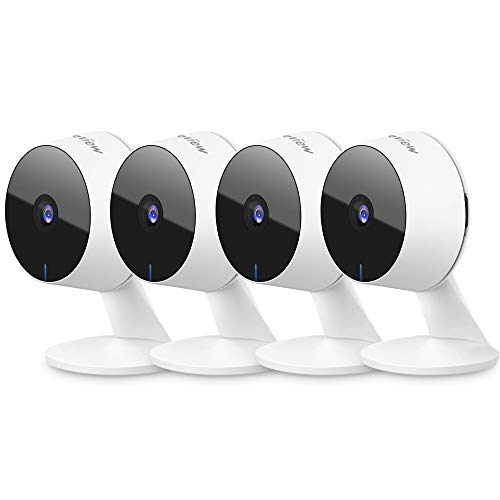 LaView 1080P Indoor Security Camera (4-Pack) |
8.0/10 | Buy | |
| Best Premium |
 Aiwixen 4-Camera Wired Security System (512GB) |
8.0/10 | Buy |
GMK 4-Pack Wireless Outdoor Security Camera
The GMK 4-Pack 2K Wireless Security Camera System provides multi-point perimeter surveillance with PIR motion sensing, integrated siren deterrence, and color night vision without mandatory monthly fees. It offers an adaptable security setup for suburban homeowners and apartment renters seeking flexible, wire-free coverage on standard 2.4 GHz Wi-Fi networks.
Pros
- Four-camera multi-point bundle covers front porches, driveways, backyards, and interior entryways out of the box
- Active deterrent hardware combines flashing white spotlights and an audible siren to warn off intruders
- Supports zero-subscription local video storage via an optional memory card slot alongside cloud backup options
- Flexible mounting design includes standard exterior wall mounts and flat freestanding bases for rental apartments
- Hybrid power capability accommodates cord-free battery operation or continuous DC plug-in power
Cons
- Restricted to 2.4 GHz Wi-Fi networks with no support for 5 GHz router bands
- Manufacturer does not publish a standardized decibel (dBA) sound rating for the built-in siren
- Requires manual unmounting for periodic battery recharging if not using continuous plug-in power
Vimtag 2.5K Outdoor Security Camera
Delivering crisp 2.5K streaming and dual-band Wi-Fi connectivity, this compact Vimtag camera suits homeowners seeking reliable indoor or outdoor surveillance with active deterrents. It pairs full-color night vision with instant motion-triggered spotlights and versatile storage options.
Pros
- High-clarity 2.5K resolution with full-color night vision
- Dual-band Wi-Fi supports both 2.4GHz and 5GHz bands
- IP66-rated housing withstands harsh weather conditions
- Generous local storage capacity up to 512GB
- Integrated spotlight and siren act as visible deterrents
Cons
- Cloud video storage requires an ongoing paid subscription
- MicroSD card for local recording is sold separately
- Requires a continuous plug-in power source
ZOSI 1080P Hybrid 4-in-1 CCTV Bullet Camera
The ZOSI 1080P Hybrid 4-in-1 bullet camera delivers reliable 2MP analog surveillance with 80-foot infrared night vision and a rugged IP66 aluminum housing. It is a practical, budget-conscious replacement or expansion camera for homeowners and property managers maintaining hardwired analog DVR systems.
Pros
- Universal 4-in-1 compatibility connects seamlessly with TVI, AHD, CVI, and standard 960H CVBS analog DVRs
- Sturdy IP66 aluminum alloy enclosure offers solid weatherproofing and physical durability
- Effective 24-LED infrared night vision covers up to 80 feet in total darkness
- Simple OSD menu allows video output mode adjustments in seconds without requiring extra software
- Cost-effective drop-in replacement for worn or damaged cameras in hardwired surveillance systems
Cons
- Requires a separate analog DVR, BNC coaxial video cable, and 12V power supply to function, as none are included
- Defaults to legacy 960H resolution out of the box and requires manual switching via the OSD menu to activate full 1080p mode
- Lacks built-in smart network capabilities, standalone Wi-Fi operation, and onboard audio recording
Vimtag 2.5K Indoor Outdoor Security Camera 2-Pack
The Vimtag 2.5K Indoor/Outdoor Security Camera 2-Pack offers 4MP video clarity, dual-band Wi-Fi flexibility, and color night vision backed by a built-in spotlight and siren. It provides a versatile, cost-effective monitoring solution for homeowners and renters seeking reliable indoor or perimeter coverage with local microSD storage support.
Pros
- Dual-band 2.4 GHz and 5 GHz Wi-Fi compatibility provides greater connection flexibility than standard 2.4 GHz-only cameras
- Solid 2.5K video resolution paired with spotlight illumination ensures clear daytime and nighttime video capture
- IP66-rated enclosure allows seamless transition between indoor nursery monitoring and exposed outdoor surveillance
- Local microSD slot enables subscription-free video storage without forcing an ongoing monthly cloud fee
- Convenient plug-and-play setup supports freestanding tabletop placement or permanent wall mounting with included screws
Cons
- MicroSD card is not included in the box and must be purchased separately for local recording
- Continuous AC power connection is required, limiting placement to areas near electrical outlets
- Advanced cloud video recording and extended alert history require an optional paid Vimtag Cloud subscription
TP-Link Tapo 1080P Solar Wire-Free Outdoor
The TP-Link Tapo 1080P security camera delivers wire-free flexibility powered by a solar panel and built-in battery, featuring full-color night vision up to 30 feet and subscription-free local storage up to 512GB. It is a practical, cost-effective solution for homeowners and renters seeking dependable perimeter surveillance without monthly fees.
Pros
- Continuous solar-assisted operation with an included 13-foot cable for flexible panel placement
- Subscription-free local video storage supporting microSD cards up to 512GB
- Free person and motion detection with customizable activity zones
- Full-color night vision up to 30 feet backed by dual integrated spotlights
- Rugged IP65-rated weather resistance against rain, dust, and snow
Cons
- Solar panel charging operates only at ambient temperatures above 32 degrees Fahrenheit
- Google Assistant live streaming is limited specifically to Chromecast and Google Nest display hardware
- Full 1080p resolution provides solid general visibility but lacks the higher pixel density of 2K or 4K surveillance systems
LaView 1080P Indoor Security Camera (4-Pack)
This four-pack of LaView wired indoor cameras delivers reliable 1080p resolution and night vision for complete multi-room coverage. It serves homeowners and pet owners looking for versatile monitoring with both local microSD and cloud recording options.
Pros
- Crisp 1080p video with 33-foot night vision
- Four-camera bundle provides broad multi-room coverage
- Supports local microSD cards up to 128GB
- Noise-canceling two-way audio for easy communication
- Accessible via mobile app and desktop web browser
Cons
- Incompatible with 5GHz Wi-Fi networks
- Requires continuous wired power connection
- Cloud storage requires subscription after 30-day trial
Aiwixen 4-Camera Wired Security System (512GB)
Equipped with four weatherproof cameras and a dedicated 512GB DVR, this wired security kit offers 24/7 continuous local recording with zero subscription fees. It delivers up to 100 feet of night vision and works as a standalone monitor setup or an app-connected remote system via router.
Pros
- Pre-installed 512GB hard drive with no monthly fees
- Rugged IP68 waterproof and weather-resistant camera housing
- Infrared night vision reaches up to 100 feet
- Customizable motion detection zones reduce false alerts
- Operates for local monitoring without an internet connection
Cons
- Requires running physical BNC cables to each camera
- Remote mobile access requires a wired router connection
- Modest 512GB drive capacity for four continuous video streams
Core Technical Considerations for Security Camera Systems
Evaluating surveillance equipment requires understanding how hardware, power delivery, and storage formats function together under everyday conditions. A successful installation balances optical clarity, detection reliability, and network bandwidth to create dependable property coverage. Selecting the right setup also means avoiding pitfalls like severe notification fatigue, obscured night footage, and unexpected recurring subscription fees.
Power Delivery Architecture and System Longevity
Power delivery dictates where you can mount cameras and how reliably they record throughout the day. Wire-free options powered by rechargeable lithium-ion batteries provide rapid, drill-free installation on porches, fences, or sheds. However, battery cameras remain asleep until motion wakes them, introducing a slight recording delay. Solar accessories can extend intervals in sunny climates, though they still rely on internal battery cells during overcast periods.
Continuous 24/7 video capture requires a reliable wired power source rather than intermittent battery reserves. Low-voltage DC plug-in adapters provide constant current for cameras, eliminating wake-up latency and missed seconds. For larger perimeter installations, a dedicated PoE security camera system delivers electrical power and network data across a single Ethernet cable. This Power over Ethernet standard reduces cable clutter and maintains reliable power over long wire runs.
Regional climate plays a critical role in determining which power architecture survives year-round weather. Lithium-ion batteries experience severe capacity drops below freezing, and onboard battery management systems disable solar charging below 32 degrees Fahrenheit. Hardwired low-voltage lines and commercial PoE installations operate across much wider thermal ranges without charging throttling. Property owners in cold northern climates often prefer hardwired connections to prevent unexpected winter shutdowns.
Video Resolution, Optical Sensors, and Dynamic Range
Resolution specifications such as 1080p, 2K, and 4K represent pixel dimensions, but physical image sensor size determines true optical clarity. A camera with a 1/2.8-inch CMOS sensor captures substantially more light and detail than a smaller 1/4-inch sensor with an identical megapixel count. Evaluating native sensor resolution ensures you obtain sharp video that preserves identifying features like clothing textures and vehicle emblems.
Lens aperture values directly influence how well a camera captures movement in low-light environments. A wide lens aperture like f/1.6 allows more photons to reach the sensor surface than a narrower f/2.0 opening, resulting in brighter nighttime footage with minimal digital grain. In addition, digital zoom merely magnifies existing pixels on your screen, which rapidly degrades clarity. If you need to monitor distant gates, look for cameras with higher native pixel densities that allow cropping without severe pixelation.
Challenging outdoor lighting requires robust dynamic range processing to prevent overexposed highlights and muddy shadows. True hardware-based Wide Dynamic Range balances multiple sensor exposures simultaneously, capturing clear subjects under covered porches against bright backgrounds. In contrast, basic digital High Dynamic Range relies on software contrast adjustments, which frequently leaves faces silhouetted against direct glare. Reliable dynamic range processing ensures that facial features remain identifiable even when visitors stand directly in front of harsh backlight.
Motion Detection Mechanisms and Alert Filtering
Accurate motion detection separates useful security alerts from endless nuisance notifications that cause user fatigue. Basic cameras utilize pixel-vector analysis, which flags motion whenever optical pixels change brightness across consecutive video frames. This primitive approach frequently triggers false alerts from passing headlights, blowing tree branches, sudden cloud shifts, or flying insects. Advanced systems incorporate passive infrared sensors that detect changes in ambient thermal radiation, ensuring that only warm, moving bodies activate the camera.
On-device artificial intelligence has transformed modern motion tracking by classifying specific physical targets in real time. Rather than routing video clips to distant cloud servers for processing, cameras equipped with onboard neural processing units identify persons, vehicles, animals, and packages locally. This edge-based processing delivers instant push alerts to your smartphone while drastically reducing reliance on external network bandwidth. Filtering notifications by target types allows homeowners to ignore neighborhood wildlife while remaining alerted to human entry.
Configurable detection parameters provide essential control over when and where cameras actively monitor. Customizable activity zones let you draw precise boundaries across your property, masking public sidewalks and neighboring driveways to eliminate accidental triggers. Many modern cameras also include privacy sleep modes and automated schedules, allowing indoor units to power down when family members arrive home. Combining intelligent detection masking with time-based scheduling keeps your alert feed meaningful and respects household privacy.
Storage Architecture, Network Bitrates, and Ownership Costs
Video recording storage architecture dictates recurring ownership costs and determines whether footage survives an internet outage. Onboard microSD storage allows cameras to record motion clips locally without requiring a monthly subscription plan. Integrating add-on security cameras for an NVR allows homeowners to store weeks of continuous footage on dedicated internal hard drives locked inside the property. Centralized local recorders eliminate recurring cloud storage fees while protecting video history from internet service disruptions.
Video compression codecs determine how efficiently recorded footage occupies drive storage and consumes upload bandwidth. Older H.264 video compression requires higher bitrates, which can congest residential Wi-Fi networks and rapidly exhaust monthly broadband data caps. Modern H.265 compression reduces file sizes and streaming bandwidth requirements by up to fifty percent without degrading optical clarity. Selecting cameras and recording hardware that support efficient compression protocols ensures smooth remote streaming and extends the recording lifespan of your storage media.
Long-term storage reliability also depends on selecting the proper physical memory media for constant write cycles. Standard consumer microSD cards quickly fail when subjected to continuous video overwriting, resulting in corrupted files and unrecorded security events. High-endurance cards built with durable flash memory are engineered specifically to withstand years of continuous surveillance writes. Verifying local storage health and formatting cards periodically prevents data loss and ensures that critical video evidence remains retrievable when needed.
Optical Field of View and Evidentiary DORI Standards
Camera field of view determines the area captured in the frame and influences optical distortion. A wide horizontal field of view between 120 and 140 degrees works well for open front yards and wide patio spaces. However, extremely wide fisheye lenses bend straight lines and compress distant details. Choosing an 80 to 90-degree lens for narrow side yards preserves fine facial details without excessive edge distortion.
The international IEC EN 62676-4 standard defines DORI levels to measure optical performance based on pixel density. Under this standard, Detection requires 25 pixels per meter to confirm human presence, while Observation requires 63 pixels per meter. Recognition demands 125 pixels per meter to identify a known person, and forensic Identification requires 250 pixels per meter. Reviewing these thresholds helps property owners position cameras close enough to entry points to capture usable evidence.
Mounting height directly affects both the camera field of view and the angle of captured faces. Installing cameras eight to ten feet above the ground balances clear facial sightlines against physical tampering risks. Mounting units too high creates a steep downward angle that captures only the tops of hats and shoulders. Angling the camera slightly downward while facing natural approach paths yields the best evidentiary results.
Night Vision Methods and Low-Light Optical Clarity
Night vision capabilities dictate how well a surveillance system performs during dark hours when most property crimes occur. Traditional infrared night vision uses 850-nanometer LEDs to illuminate dark yards, producing clear monochrome video with a faint red glow. Covert 940-nanometer infrared LEDs emit zero visible light, making them ideal for discreet indoor monitoring. An automatic physical IR-cut filter slides into place during daylight for accurate colors, then retracts in darkness to maximize infrared sensitivity.
Full-color night vision has emerged as an effective alternative to standard black-and-white infrared imaging. Cameras equipped with integrated white LED spotlights illuminate the immediate scene upon detecting motion, capturing clothing colors and vehicle paint tones. The sudden activation of bright spotlights also acts as an active physical deterrent to warn potential trespassers. Alternatively, advanced low-lux image sensors can produce color video in ambient street lighting without activating spotlights.
Improper camera placement can completely blind night vision sensors through reflective bounce-back. Pointing an infrared camera through double-pane window glass causes infrared light to reflect off the pane, creating a blinding white glare. Exterior cameras mounted too close to adjacent walls, vinyl siding, or roof soffits suffer similar optical whitewashing. Maintaining clear clearance around the camera perimeter prevents infrared reflection and keeps dark yards clearly visible.
Network Transmission Protocols and Connection Stability
Wireless security cameras rely heavily on robust network transmission to deliver push notifications and stable live streams. Most smart home cameras operate on 2.4 GHz Wi-Fi because lower-frequency radio waves penetrate exterior brick and concrete walls effectively. Dual-band cameras that support 5 GHz Wi-Fi provide higher data transfer rates with less household interference, though signals degrade faster over distances. Choosing the proper Wi-Fi band depends on the physical distance and structural obstacles between your router and camera.
Maintaining a strong received signal strength indicator, or RSSI, is crucial for continuous wireless camera operation. A wireless signal dropping below minus 65 dBm often results in delayed push notifications, stuttering video, and dropped live feeds. When battery-powered cameras struggle with weak Wi-Fi, internal radios boost transmission power, rapidly draining battery capacity within weeks. Testing Wi-Fi signal strength at the intended mounting location before drilling prevents connectivity issues and preserves battery longevity.
Analog wired security systems offer an alternative transmission method that avoids home Wi-Fi congestion entirely. Hybrid systems utilizing BNC coaxial cables transmit high-definition video signals directly from bullet cameras to a central DVR without consuming network bandwidth. Because these analog signals travel over dedicated copper wiring, they remain completely immune to wireless radio frequency interference. For property owners with congested home Wi-Fi or limited broadband speeds, hardwired coaxial systems provide dependable, closed-circuit stability.
Environmental Durability and Physical Ingress Ratings
Outdoor security cameras must endure harsh seasonal weather conditions without suffering internal moisture damage or lens fogging. Ingress Protection ratings indicate exactly how well a camera housing resists physical particulates and water penetration. An IP65 rating signifies complete dust protection and resistance to low-pressure water sprays, making it suitable for sheltered porches. For fully exposed mounting locations like backyard fences, an IP66 or IP67 rating ensures survivability against driving rain and heavy snow.
Physical housing materials also impact how well cameras withstand long-term environmental exposure and physical impacts. Aluminum alloy housings provide superior resistance to vandalism, falling branches, and ultraviolet sun degradation compared to lightweight consumer plastics. When running exterior wiring into a wall, installers should always form a physical downward drip loop below the cable penetration point. Drip loops ensure that rainwater drips off harmlessly rather than tracking directly into the mounting bracket or electrical box.
Privacy Protection, Network Security, and Legal Guidelines
Securing your camera system against unauthorized digital access is just as vital as protecting physical property lines. High-grade systems implement AES-128 or AES-256 encryption for stored video files and TLS protocols to protect data during network transit. Homeowners should always enable mandatory two-factor authentication on mobile access accounts and change default passwords immediately upon setup. Isolating security cameras on a separate guest network or dedicated IoT virtual local area network prevents compromised smart devices from exposing personal computers.
Audio recording features introduce complex legal obligations that vary significantly across different US jurisdictions. Under the federal Wiretap Act (18 U.S.C. Section 2511), intercepting oral communications where parties hold a justifiable expectation of privacy is strictly restricted. Many states follow one-party consent statutes, while others enforce strict all-party consent laws that make recording private conversations without mutual agreement unlawful. Homeowners should consult local municipal and state laws before enabling outdoor microphone recording, or disable audio recording when monitoring boundary areas.
Respecting neighborhood privacy boundaries prevents legal disputes and preserves community goodwill. While property owners generally enjoy the legal right to monitor their own curtilage and public street fronts, aiming cameras directly into neighboring bedroom windows violates common law privacy expectations. Most camera management applications feature digital privacy masking tools that allow users to black out specific sections of the field of view. Using privacy masks and positioning cameras responsibly ensures effective perimeter security while adhering to legal and ethical standards.
Selecting the right security camera system comes down to aligning your property layout with dependable power, intelligent detection, and secure video storage. Prioritizing hardwired power delivery or robust battery management, reliable local or cloud archiving, and appropriate optical field of view creates a complete surveillance footprint. Taking time to test network signal strength, configure custom activity zones, and respect surrounding privacy boundaries guarantees lasting protection. A well-designed security system provides continuous situational awareness and actionable visual evidence whenever unexpected property events occur.
About the author
John Carlsen is a home security and smart home specialist with more than a decade of experience researching and testing security technology. His expertise covers DIY security systems, security cameras, smart devices, pricing, contracts, and connected-home technology. He combines hands-on product testing with detailed research to explain strengths, limitations, ownership costs, and real-world value in straightforward terms for homeowners and renters.