
How to Hide an Outdoor Security Camera: Practical Guide for 2026
Learn %how to hide an outdoor security camera% to protect your property and prevent tampering during November 2026 with practical techniques.
 By Tyler Lacoma
Updated November 5, 2026

Securing a residential perimeter often requires monitoring high-risk areas without making surveillance hardware conspicuously obvious. While visible cameras can deter opportunistic trespassers, they are also prone to intentional vandalism, tampering, and calculated blind-spot exploitation. Property owners frequently research %how to hide an outdoor security camera% to capture candid video evidence while keeping expensive equipment protected from physical interference. Thoughtful concealment allows a surveillance device to monitor entryways, driveways, and backyard gates without drawing unwanted attention from visitors or intruders.
Disguising an outdoor camera requires a practical balance between visual concealment and optical line of sight. Bulky camera housings and mounting arms can be masked using architectural recesses, natural vegetation, or specialized enclosures, but the lens must remain unobstructed to maintain clear video and accurate motion detection. Many homeowners choose battery security cameras with local storage to eliminate conspicuous power cords while keeping recorded footage protected on internal memory cards. Managing cable paths, preserving sensor view angles, and ensuring proper weather resistance ensures that hidden surveillance remains effective through changing seasons.
| Award | Product | SSG Score About SSG ScoreThe SSG Score is our own rating from 0 to 10, based on performance, design and build, ease of use, and value. It reflects independent research and is never influenced by manufacturers, retailers, or affiliate commissions. Learn more › | |
|---|---|---|---|
| Best Overall |
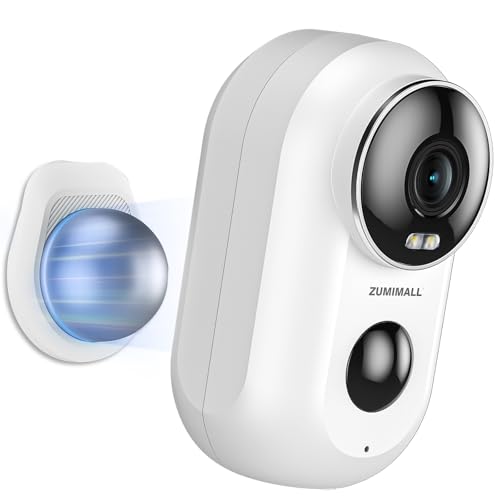
ZUMIMALL 2K Wireless Security Camera
|
9.1/10 | Buy |
| Best Budget |
 OOSSXX Flip Cover Camera Junction Box |
8.8/10 | Buy |
| Best Value |
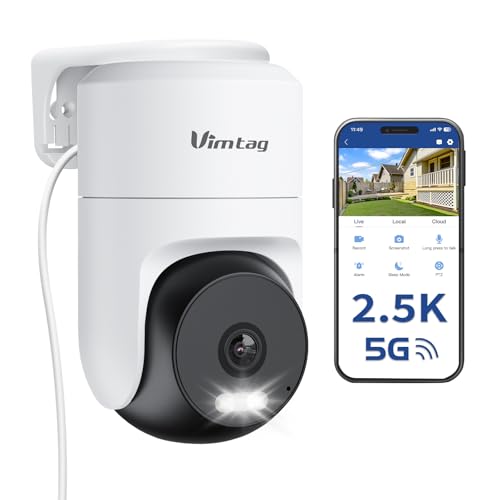 VIMTAG 2.5K Pan-Tilt Wired Outdoor Security Camera |
8.4/10 | Buy |
 Vimtag 2.5K Indoor Outdoor Security Camera 2-Pack |
8.4/10 | Buy | |
 NodeBlaz 1080p Wireless Security Camera |
8.3/10 | Buy | |
 WEILAILIFE Universal Bullet Camera Junction Box |
8.3/10 | Buy | |
| Best Premium |
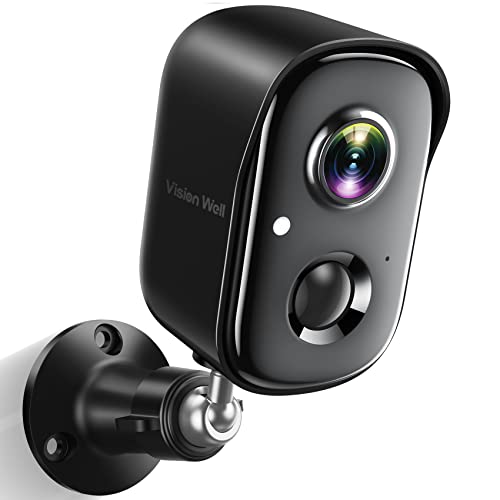 VISION WELL 2K Wireless Security Camera |
7.8/10 | Buy |
ZUMIMALL 2K Wireless Security Camera
Flexible magnetic mounting and sharp 2K video make this battery-powered camera a versatile choice for indoor or outdoor monitoring. It combines spotlight color night vision with custom AI detection, catering well to renters and homeowners who want a drill-free setup.
Pros
- Tool-free magnetic mount allows effortless placement
- Sharp 2K clarity with color night vision
- Customizable AI alerts minimize false motion notifications
- Durable IP66 weatherproof housing
- Integrated two-way audio and deterrence siren
Cons
- Lacks support for 5GHz Wi-Fi networks
- MicroSD card must be purchased separately
- Free cloud loop only records six-second clips
OOSSXX Flip Cover Camera Junction Box
Built with a flip-cover housing, the OOSSXX Security Camera Junction Box keeps wiring and connectors tucked away neatly for bullet cameras and solar panels. Its compact ABS shell and IP54 rating make it a practical choice for clean indoor or outdoor surveillance mounting.
Pros
- Convenient flip cover allows effortless cable access
- Dedicated top and bottom cable routing channels
- Compatible with popular solar panels and bullet cameras
- Compact footprint minimizes visual clutter
Cons
- Not compatible with dome cameras
- IP54 rating provides limited water resistance
- Plastic ABS construction rather than cast aluminum
VIMTAG 2.5K Pan-Tilt Wired Outdoor Security Camera
The VIMTAG 2.5K Pan/Tilt Wired Outdoor Security Camera delivers 2560x1440 QHD video, motorized 360-degree coverage, and dual-band Wi-Fi for dependable residential surveillance. It is a practical choice for homeowners and renters seeking continuous plug-in perimeter monitoring without recurring monthly cloud fees.
Pros
- Motorized 360-degree pan and 90-degree tilt with real-time motion tracking eliminates blind spots.
- Dual-band 2.4GHz and 5GHz Wi-Fi support ensures flexible and stable wireless network pairing.
- AI detection for people, pets, and vehicles functions without requiring a paid subscription.
- Generous local storage capacity supporting microSD cards up to 512GB for 24/7 continuous recording.
- IP66 weather-resistant housing withstands outdoor rain, dust, and exterior environmental exposure.
Cons
- Requires access to an electrical outlet via the 9.8-foot power cord, restricting wire-free placement.
- High digital zoom levels up to 8x crop the image rather than using optical glass magnification.
- Smart home ecosystem compatibility is limited to Amazon Alexa without Google Home or HomeKit support.
Vimtag 2.5K Indoor Outdoor Security Camera 2-Pack
The Vimtag 2.5K Indoor/Outdoor Security Camera 2-Pack offers 4MP video clarity, dual-band Wi-Fi flexibility, and color night vision backed by a built-in spotlight and siren. It provides a versatile, cost-effective monitoring solution for homeowners and renters seeking reliable indoor or perimeter coverage with local microSD storage support.
Pros
- Dual-band 2.4 GHz and 5 GHz Wi-Fi compatibility provides greater connection flexibility than standard 2.4 GHz-only cameras
- Solid 2.5K video resolution paired with spotlight illumination ensures clear daytime and nighttime video capture
- IP66-rated enclosure allows seamless transition between indoor nursery monitoring and exposed outdoor surveillance
- Local microSD slot enables subscription-free video storage without forcing an ongoing monthly cloud fee
- Convenient plug-and-play setup supports freestanding tabletop placement or permanent wall mounting with included screws
Cons
- MicroSD card is not included in the box and must be purchased separately for local recording
- Continuous AC power connection is required, limiting placement to areas near electrical outlets
- Advanced cloud video recording and extended alert history require an optional paid Vimtag Cloud subscription
NodeBlaz 1080p Wireless Security Camera
Designed for wire-free exterior monitoring, this compact camera delivers 1080p footage, color night vision up to 33 feet, and AI motion filtering. Its rechargeable battery build and IP65 rating make it well suited for homeowners and renters wanting a simple setup.
Pros
- Wire-free setup with rechargeable battery power
- Full-color night vision reaching up to 33 feet
- IP65 weather resistance for outdoor conditions
- Built-in two-way audio communication
- AI motion filtering helps reduce false alerts
Cons
- Cloud video storage requires a separate subscription
- Compatible only with 2.4 GHz Wi-Fi networks
- Resolution is capped at standard 1080p HD
WEILAILIFE Universal Bullet Camera Junction Box
Built from weatherproof aluminum, this surface-mount enclosure secures and conceals cabling for indoor or outdoor bullet cameras. It offers rear and bottom cable channels, though some setups may require drilling to fit specific hole patterns.
Pros
- Durable, corrosion-resistant aluminum construction
- Dual-entry cable management routes wires cleanly
- Ample internal space for connectors
- Includes mounting hardware for surface installation
Cons
- May require drilling to match certain camera brackets
- Tailored primarily for bullet cameras rather than dome models
- Restricted to flat surface mounting
VISION WELL 2K Wireless Security Camera
Designed for wire-free indoor or outdoor placement, this compact camera delivers crisp 2K video with both infrared and full-color night vision. Integrated AI detection alongside an active spotlight and siren makes it a practical option for homeowners seeking perimeter security without running cables.
Pros
- Sharp 2K video with full-color night vision
- Wire-free design allows easy mounting anywhere
- Built-in spotlight and siren provide active deterrence
- AI detection categorizes people, vehicles, and packages
- Durable IP65 waterproof housing for outdoor use
Cons
- Does not support 5GHz Wi-Fi networks
- MicroSD card not included with purchase
- Battery requires periodic recharging every few months
Concealing Outdoor Security Cameras for Discrete and Reliable Monitoring
Concealing an outdoor security camera requires placing the lens where it maintains an unobstructed line of sight while the camera body, mounting bracket, and power supply blend into the surrounding structure. Achieving effective covert surveillance does not mean burying a camera completely out of sight. A camera hidden without regard to lighting, motion sensors, and environmental exposure will fail to capture usable security footage. Balancing disguise with optical and wireless performance guarantees your surveillance setup delivers clear evidence when needed.
Strategic Placement Under Eaves, Soffits, and Architectural Recesses
Deep roof overhangs, soffits, and porch ceilings offer natural architectural recesses that shield cameras from view and protect them from direct precipitation. Mounting a compact camera deep inside the shadow of an eave breaks up its visual silhouette against the exterior siding. Darker camera bodies naturally vanish into shaded rafters, while white housings match painted vinyl or aluminum soffits. Positioning the device high under an eave also keeps it safely above normal eye level, making it unlikely that a passerby will notice the lens.
Mounting under an eave also provides substantial physical protection against wind-driven rain, harsh direct sunlight, and accumulating snow. Hardware like the ZUMIMALL Security Cameras Wireless Outdoor features an IP66 weatherproof rating, allowing it to withstand ambient moisture even when tucked into ventilated soffit areas. The natural overhang prevents midday sun glare from blinding the optical sensor and washing out critical details. However, installers must ensure that the soffit lip does not intrude into the upper frame of the camera’s wide-angle field of view.
Blending Hardware into Natural Landscaping and Foliage
Garden beds, dense shrubs, and ornamental trees present excellent opportunities to obscure surveillance equipment along perimeter boundaries. Placing a compact camera on a short garden stake or nestled within the branches of an evergreen shrub masks the geometric outline of the housing. Earth-toned silicone skins or matte camouflage wraps help square or cylindrical housings mimic natural mulch, bark, or stone. When ground-level placement is required, positioning the camera slightly back inside the bush prevents casual observers from spotting the device from a walkway.
Natural vegetation introduces significant operational challenges that require vigilant planning and maintenance. Windblown leaves, growing stems, and swaying branches will trigger persistent false motion alarms if they enter the camera’s detection threshold. Rapidly growing plants can also quickly cover the front glass of the lens within a few weeks during spring and summer. Trimming all foliage back at least eighteen inches from the camera face preserves an open optical path while maintaining the surrounding concealment.
Concealing Cables and Connectors with Exterior Junction Boxes
Exposed wiring is often the primary giveaway that reveals the location of an outdoor security camera to an intruder. Power cords, Ethernet cables, and solar panel leads dangling down exterior walls draw immediate attention and expose the system to intentional cutting. Using dedicated exterior mounting accessories resolves this vulnerability by housing all excess wire slack and pigtail connectors inside a sealed enclosure. Clean wire concealment not only disguises the installation but also protects delicate electronic connections from corrosion and moisture intrusion.
Weatherproof junction hardware provides a seamless base that sits flush against brick, wood, or stucco. The Universal Bullet Security Camera Mount Bracket from WEILAILIFE uses a solid aluminum enclosure with rear and bottom cable pass-through channels that keep wires completely hidden from view. Similarly, the (ABS New) Security Camera Junction Box,Security features a discreet flip-cover design that conceals solar panel wires and bullet camera connectors within an IP54 waterproof plastic housing. Routing cables directly through the rear of these boxes into the wall structure eliminates visible exterior wires entirely.
Birdhouses, Nesting Boxes, and Decorative Enclosures
Custom external enclosures such as decorative birdhouses, fake electrical utility meters, and faux exterior light fixtures offer clever camouflage for property monitoring. A standard wooden birdhouse mounted on a fence post or exterior wall can easily house a compact camera inside its hollow chamber. Drilling a precisely sized aperture that matches only the camera lens allows the device to record through the front wall while hiding the chassis completely. This approach works exceptionally well in backyards and side walkways where a functional birdhouse appears completely natural.
Enclosing electronic devices inside sealed decorative boxes creates thermal and acoustic complications that need proper management. Surveillance cameras generate internal heat during continuous operation, and enclosing them without ventilation can lead to thermal throttling or premature component failure. Small ventilation holes drilled in the bottom of the enclosure promote convective airflow while keeping moisture out. In addition, sound ports must remain unobstructed if you plan to utilize two-way audio communication or siren deterrents built into your camera.
Mitigating Lens Obstruction and Maintaining Field of View
Concealing a camera behind decorative objects or foliage often inadvertently restricts the camera’s horizontal and vertical optical coverage. Many modern outdoor units provide wide-angle lenses spanning between one hundred ten and one hundred thirty degrees to monitor expansive yards. Placing obstructions too close to the periphery of the lens will clip the recorded frame, creating extensive blind spots where intruders can move undetected. Verifying the camera’s live view on your mobile app during installation is essential to ensure the frame remains unobstructed.
Motorized surveillance units require even greater clearance to operate without mechanical interference or visual cut-off. Homeowners utilizing pan-tilt-zoom cameras for driveway coverage must account for full rotational movement when planning concealment. Enclosing a motorized camera inside a tight recess will jam the mechanical gears or restrict its panning sweep across the driveway. Ensuring adequate physical space around articulating domes or motorized housings allows the unit to track moving subjects smoothly across the entire yard.
Preserving Passive Infrared Motion Detection and Radar Range
Battery-powered cameras typically rely on passive infrared sensors to wake up the internal processor and begin recording when heat signatures move across the frame. These sensors measure subtle changes in infrared radiation and cannot detect thermal energy through solid physical materials like glass, plastic, or thick leaves. Placing a camera behind a window pane or inside a solid acrylic decorative enclosure blinds the detection sensor completely. If the thermal sensor cannot register heat differential, the camera will fail to capture event clips altogether.
Motion sensors are most responsive when warm objects cross laterally across their field of view rather than moving directly toward the lens. Positioning a disguised camera at a slight angle across an approach walkway optimizes detection sensitivity. Hardware such as the VISION WELL Security Cameras Wireless Outdoor combines wide-angle optical coverage with PIR motion detection and artificial intelligence analysis to filter out pets and vehicles. Angling the concealed mount ensures that the sensor triggers recording the moment a visitor steps onto the pathway.
Managing Night Vision, Infrared Reflection, and Integrated Spotlights
Nighttime monitoring introduces specific challenges when hiding surveillance cameras near flat surfaces, leaves, or enclosure walls. Standard night vision systems utilize 850-nanometer infrared LEDs that emit a faint red glow, which immediately exposes the camera’s location in pitch darkness. Furthermore, if the camera sits too close to an overhanging soffit, a tree branch, or the edge of an enclosure, the infrared light will bounce back into the lens. This bounce-back creates a blinding white glare that washes out the video image completely.
Disabling infrared LEDs and utilizing ambient landscape lighting or discreet spotlight modes can preserve nighttime recording clarity. Choosing battery security cameras with color night vision allows property owners to capture full-color evidentiary details under low ambient illumination without relying on glowing infrared rings. Devices like the NodeBlaz 1080P Wireless Security Camera Outdoor feature integrated color night vision capabilities that operate effectively in minimal light. If full concealment in complete darkness is critical, external infrared illuminators placed several feet away from the hidden camera draw attention away from the recording lens.
Power Delivery Architecture and Concealment Trade-offs
Selecting the right power architecture fundamentally shapes how easily an outdoor camera can be hidden on your property. Completely wire-free cameras powered by internal rechargeable lithium-ion batteries offer maximum placement flexibility. Without power cords or network cables to route, a wire-free unit can be positioned inside trees, under shed eaves, or behind patio trellis woodwork. However, battery cameras require physical access every few months for recharging, which can make frequent retrieval from elaborate hiding spots tedious.
Hardwired solutions deliver continuous power but require thoughtful cable management to avoid visual detection. Running low-voltage wiring or Power over Ethernet lines through interior walls, soffits, or protective conduit preserves a clean, tamper-resistant perimeter. Plug-in models like the VIMTAG 2.5K Pan/Tilt Wired Outdoor Security Camera provide reliable round-the-clock monitoring and local microSD recording up to 512 gigabytes. Concealing the power transformer and tucking the thin power cord into siding seams ensures stable power without compromising your covert exterior design.
Wireless Signal Integrity and Antenna Placement Through Building Materials
Hiding a camera inside dense structures or behind metal fixtures can severely degrade the device’s wireless communication with your home network. Exterior building materials such as brick, stone veneer, stucco with wire mesh, and metal siding cause significant radio frequency attenuation. Tucking a Wi-Fi camera deep inside a metal light fixture or behind thick masonry walls can drop the signal strength below acceptable operational thresholds. Low signal strength leads to delayed motion alerts, dropped video frames, and rapid battery consumption as the wireless radio continuously retries transmissions.
Maintaining reliable video feeds requires testing wireless reception at the exact installation spot prior to securing permanent mounts. Dual-band models like the VIMTAG 2.5K Cameras for Home Security support both 2.4 GHz and 5 GHz frequencies, providing flexibility between long-range structural penetration and higher transmission throughput. The 2.4 GHz band is generally better suited for traversing dense exterior building envelopes, making it ideal for concealed outdoor installations. Ensuring a minimum received signal strength indicator of -65 dBm keeps your hidden surveillance system streaming reliably without latency.
Legal Boundaries, Expectation of Privacy, and Audio Recording Compliance
Deploying hidden surveillance cameras outdoors requires careful consideration of legal guidelines and neighborhood privacy boundaries. In the United States, property owners generally have the legal right to monitor the exterior perimeter of their home where there is no reasonable expectation of privacy. However, positioning a concealed camera so that it points directly into a neighbor’s bedroom window, fenced bathroom area, or private living space violates common law privacy protections. Ensuring that your camera angles capture only your curtilage, driveway, and public street fronts avoids contentious legal disputes.
Audio surveillance carries even stricter regulatory oversight under both federal and state wiretap statutes. Federal law under 18 U.S.C. Section 2511 sets a one-party consent baseline for recording spoken conversations, but several states require all-party consent. Concealed cameras equipped with sensitive two-way audio microphones can easily pick up private conversations occurring across property lines or on public sidewalks without consent. Disabling audio recording in your camera settings or applying software privacy masks over neighboring property lines ensures your security setup remains lawful and ethically sound.
Ongoing Maintenance, Lens Cleaning, and Seasonal Inspections
Concealed cameras are frequently exposed to environmental debris, spider webs, and insect nesting that can quickly degrade image quality. Spiders are particularly attracted to the subtle warmth generated by security camera sensors and infrared illumination circuits. A single cobweb drifting in front of the lens will cause blurry daytime images and reflective blinding flare during nighttime recording. Inspecting and gently sweeping the area around your hidden camera every few weeks keeps the optical viewport spotless.
Seasonal changes also impact outdoor hardware performance and battery discharge efficiency. Cold winter temperatures reduce the effective capacity of internal lithium-ion cells and prevent solar panels from safely charging batteries below freezing. Checking weather gaskets, lubricating junction box seals, and reformatting onboard high-endurance microSD storage cards ensures ongoing system reliability. Taking time to audit your hidden surveillance system every season guarantees continuous protection and prevents unexpected equipment failures when you need security coverage most.
Concealing an outdoor camera successfully requires harmonizing physical camouflage with the core principles of optical surveillance. Whether you choose to mount a camera deep within eave shadows, route wires through sealed junction enclosures, or blend hardware into decorative garden elements, keeping the optical path unobstructed is essential. Testing motion detection ranges, verifying nighttime illumination, and auditing local privacy compliance ensures your discrete security system operates reliably year-round.
About the author
Tyler Lacoma is a smart home and home security technology expert with more than a decade of hands-on experience testing connected devices. His expertise includes security cameras, smart locks, home security systems, privacy features, smart-home compatibility, and emerging AI technology. He focuses on translating technical features into practical guidance that helps homeowners understand which security solutions truly fit their homes and everyday needs.