
How Do You Wire a Security Camera: A Complete Guide for 2026
Learn how do you wire a security camera properly in November 2026 with essential cable routing, power setup, and video connection advice.
 By Rebecca Edwards
Updated November 9, 2026

Running physical cables across a home or commercial building forms the backbone of reliable, continuous surveillance. Many homeowners find that wireless signals struggle to penetrate thick brick, concrete, or metal siding, leading to dropped frames and frustrating connection dropouts. Learning exactly how do you wire a security camera gives you total control over video quality, local recording retention, and constant power delivery. Installing hardwired infrastructure eliminates battery recharging routines and shields your system from outside radio frequency interference.
Modern installations typically rely on either analog high-definition coaxial lines or network Ethernet connections designed for low-voltage power and data transfer. Understanding the differences between all-in-one siamese BNC lines and digital Power over Ethernet standards ensures you select the right gauge, shielding, and length for your specific property layout. If you want continuous recording without bandwidth choke points, planning a dedicated PoE security camera setup offers unmatched stability compared to purely wireless battery models. Taking time to map out wire pathways, calculate voltage drop, and seal exterior wall penetrations prevents costly physical damage and keeps your property secure.
| Award | Product | SSG Score About SSG ScoreThe SSG Score is our own rating from 0 to 10, based on performance, design and build, ease of use, and value. It reflects independent research and is never influenced by manufacturers, retailers, or affiliate commissions. Learn more › | |
|---|---|---|---|
| Best Overall |
Flashmen 2-Pack 25ft All-in-One BNC Video
|
9.1/10 | Buy |
| Best Budget |
 Anlapus 60ft BNC Security Camera Cable |
8.9/10 | Buy |
| Best Value |
 Winees M3 Pro 2K Outdoor Security Camera |
8.6/10 | Buy |
 Flashmen 25ft BNC CCTV Cables, 2-Pack |
8.3/10 | Buy | |
| Best Premium |
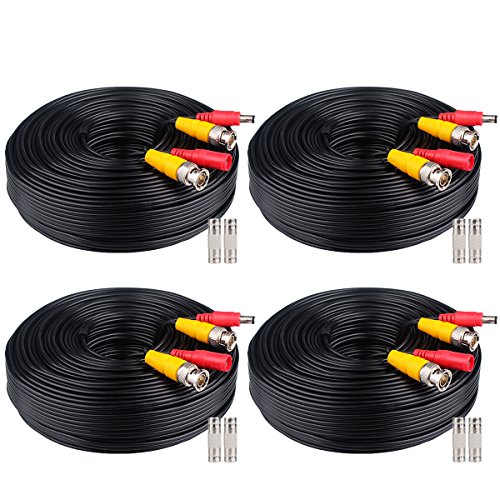 WILDHD 100ft CCTV BNC Security Camera Cable |
8.3/10 | Buy |
 Realhide 2K Wireless Outdoor Security Camera |
8.1/10 | Buy | |
 Cables Direct Online 50-Foot BNC CCTV Cable |
8.0/10 | Buy |
Flashmen 2-Pack 25ft All-in-One BNC Video
The Flashmen 2-Pack 25ft All-in-One CCTV Cables deliver pre-terminated BNC video and DC power connections designed for simple plug-and-play installation across HD-TVI, HD-CVI, HD-AHD, and analog surveillance setups. They are a practical, budget-friendly solution for homeowners extending hardwired camera runs to a central DVR without splicing wires.
Pros
- Pre-terminated BNC and DC power connectors enable quick, tool-free plug-and-play installation.
- Compatible with standard analog (700TVL to 1200TVL) and modern HD analog formats (HD-TVI, HD-CVI, HD-AHD).
- Two-pack bundle offers practical value for running or replacing cables on multiple cameras.
- Eliminates messy dual-cable runs by integrating video and power into one siamese cord.
Cons
- Fixed 25-foot length may be too short for large perimeter runs or require couplers for longer distances.
- Designed strictly for analog and coaxial BNC setups, making it incompatible with modern Ethernet PoE IP cameras.
- Does not include integrated audio RCA leads for cameras requiring separate analog microphone channels.
Anlapus 60ft BNC Security Camera Cable
The Anlapus 60-foot All-in-One CCTV Video and Power Cable simplifies hardwired security camera installations by combining coaxial video transmission and 2.1mm DC power into a single weather-resistant line. Designed for analog HD DVR setups supporting 960H up to 1080P resolution, it is a practical extension for property owners seeking stable, subscription-free surveillance coverage.
Pros
- Combines video and 2.1mm DC power into one clean 60-foot line to reduce cable clutter during DVR setup
- Broad signal support covering 960H, AHD, TVI, CVI, and CVBS analog protocols up to 1080P resolution
- Flexible PVC-45P weather-resistant jacket allows routing through interior walls or along outdoor eaves
- Supplied with a BNC-to-BNC barrel connector and a BNC-to-RCA adapter for straightforward cable extensions
Cons
- Supports video bandwidth up to 1080P (2MP) and is not rated for higher-bandwidth 4K/8MP analog systems
- Incompatible with Power over Ethernet (PoE) IP cameras or systems requiring RJ45 network cabling
- Requires cameras with standard 2.1mm DC power inputs and lacks an official direct-burial rating
Winees M3 Pro 2K Outdoor Security Camera
Delivering crisp 2K video through a fast F1.6 aperture, the Winees M3 Pro is a practical choice for monitoring entryways and yards. Its integrated spotlight supports full color night vision, while onboard AI filters alerts specifically for people and pets.
Pros
- Sharp 2K resolution with bright aperture
- Starlight sensor enables full color night vision
- Built-in AI differentiates people from pets
- Simple installation using single screw mount
- Supports local microSD card storage
Cons
- MicroSD card is not included
- Requires continuous wired power connection
- Only supports 2.4GHz Wi-Fi bands
Flashmen 25ft BNC CCTV Cables, 2-Pack
Designed for straightforward surveillance setups, this Flashmen two-pack combines video transmission and DC power into a single pre-made line. The integrated BNC and power connectors deliver plug-and-play installation for analog HD systems without requiring manual wiring.
Pros
- Combines BNC video and power into one line
- Pre-terminated ends eliminate the need for crimping tools
- Broad compatibility with standard analog HD formats
- Convenient two-pack suits multi-camera installations
Cons
- Fixed 25-foot length limits long-distance camera placement
- Incompatible with digital IP and PoE systems
- Bulky pre-made connectors require larger wall pass-through holes
WILDHD 100ft CCTV BNC Security Camera Cable
The WILDHD 4x100ft BNC Siamese cable pack delivers pre-terminated video and DC power wiring designed for analog HD DVR surveillance systems up to 5MP resolution. It provides DIY homeowners and property managers an economical, plug-and-play wiring solution bundled with BNC extension couplers and mounting clips.
Pros
- Pre-fabricated Siamese design combines video and power into a single streamlined pull
- Broad compatibility across major HD-over-coax formats up to 5MP resolution
- Generous accessory bundle with 8 female BNC extension couplers and 100 nail clips
- Gold-plated center pins on BNC male connectors help preserve signal conductivity
Cons
- Not rated for 4K / 8MP video signals or Power over Ethernet (PoE) IP camera systems
- Pre-molded connectors require larger drill holes through exterior walls than bulk unterminated cable
- Long 100-foot power runs may experience minor DC voltage drop on power-hungry cameras with heavy infrared LED arrays
Realhide 2K Wireless Outdoor Security Camera
Equipped with dual-band Wi-Fi and full-color night vision, this compact bullet camera delivers wire-free outdoor monitoring with flexible storage choices. It is a solid pick for homeowners seeking basic perimeter coverage without mandatory subscription fees.
Pros
- Sharp 2K clarity with color night vision
- Dual-band Wi-Fi ensures flexible network compatibility
- Includes free rolling cloud option without subscriptions
- Rugged IP66 rating for outdoor weather resistance
- Compact footprint allows versatile mounting locations
Cons
- Battery endurance decreases with frequent motion triggers
- Fixed bullet housing lacks motorized pan and tilt
Cables Direct Online 50-Foot BNC CCTV Cable
This all-in-one extension cable combines BNC video and power lines to simplify indoor security camera connections. Its pre-terminated design allows for immediate plug-and-play installation between compatible analog cameras and DVR units.
Pros
- Integrated video and power streamlines wire routing
- Pre-attached BNC ends offer immediate plug-and-play convenience
- Shielded design helps prevent video signal interference
- Lightweight construction is easy to manage along baseboards
Cons
- Designed primarily for indoor rather than exterior installations
- Fixed 50-foot length cannot be trimmed to size
Complete Guide to Security Camera Wiring and Installation
Wired security cameras deliver an uninterrupted stream of high-definition video directly to local storage or network recording units without the risk of wireless signal drops. Understanding how to properly wire these cameras requires matching your camera hardware to the appropriate cabling standard, calculating power delivery needs, and mapping clean physical routing pathways through your home. Whether you run traditional coaxial siamese cables for an analog DVR system or modern twisted-pair Ethernet cables for a digital network setup, following structured installation protocols prevents video interference, hardware failures, and weather-related damage. Proper planning ensures your surveillance system remains durable, tamper-resistant, and capable of operating continuously through severe weather.
Selecting Between Siamese BNC and PoE Ethernet Infrastructure
Analog surveillance platforms rely primarily on siamese coaxial cables that bundle video transmission and low-voltage direct current into a single dual-strand wire. Pre-made assemblies, such as those produced by Flashmen, Anlapus, and Cables Direct Online, integrate BNC male connectors alongside 2.1mm DC barrel power jacks for rapid plug-and-play installation. These all-in-one cables simplify routing because you only need to pull one conjoined line from the central recorder to each exterior camera location. Homeowners working with older CCTV layouts or budget-friendly analog high-definition setups frequently select these cables to avoid terminating bare wire by hand.
Digital IP systems replace dual-strand coaxial lines with Category 5e or Category 6 Ethernet cables that carry both network packets and direct current over standard eight-conductor twisted pairs. This technology, standardized under IEEE 802.3af and IEEE 802.3at Power over Ethernet protocols, eliminates the need for separate electrical wires at the camera mount. While plug-in Wi-Fi models like the winees outdoor camera transmit data wirelessly, they still require dedicated DC power cords routed to nearby electrical outlets. Fully wireless options like realhide battery cameras eliminate wiring entirely, but they sacrifice the true continuous 24/7 recording capability that hardwired infrastructure provides.
Coaxial Siamese Cable Mechanics and Analog Compatibility
Traditional RG59 siamese cable features a 75-ohm coaxial core running alongside an 18-gauge, two-conductor low-voltage power wire encased in a single outer PVC jacket. The coaxial section consists of a central copper conductor, a foam dielectric insulator, a foil shield, and a braided copper or aluminum outer ground braid. This layered shielding protects the delicate analog video signal from electromagnetic interference generated by home appliances, fluorescent lighting, and ambient radio frequencies. High-purity copper conductors maintain optimal signal strength over moderate distances, preventing ghosting, fuzzy edges, and video noise.
Modern high-definition analog formats transmit resolutions up to 5MP and 4K over physical coaxial lines using technologies like AHD, TVI, CVI, and CVBS. Premade bundles like the WILDHD 4-pack provide 100 feet of conjoined cable per run, allowing DIY installers to connect high-resolution cameras directly to compatible DVRs. Siamese cables terminate with male Bayonet Neill-Concelman (BNC) connectors that lock firmly onto camera outputs and DVR inputs with a quarter-turn twist. Female-to-female BNC barrel couplers and RCA adapters allow you to extend cable runs or interface with legacy monitors without degrading image clarity.
Power over Ethernet Standards and Network Routing
Power over Ethernet systems deliver an efficient wiring solution by combining data and electrical supply into an eight-pin RJ45 interface. The IEEE 802.3af standard supplies up to 15.4 watts of direct current at the switch port, which easily powers standard fixed bullet and dome cameras. For equipment requiring higher wattage, such as motorized pan-tilt-zoom cameras or integrated spotlight units, the IEEE 802.3at PoE+ standard delivers up to 30 watts. Selecting pure bare copper Cat6 wire over copper-clad aluminum alternatives prevents dangerous heat buildup, minimizes electrical resistance, and supports cable runs up to 328 feet.
Network IP cameras connect directly to an integrated PoE Network Video Recorder or an intermediate PoE network switch placed within your local area network. When expanding an NVR security system, running dedicated home runs from each camera back to a central switch ensures predictable bandwidth allocation. Standalone switches reduce cable clutter by aggregating several exterior camera feeds into a single uplink cable running to your central recorder. This modular layout also protects your recorder from potential electrical surges originating along exterior cable runs.
Pre-Installation Bench Testing and Tool Setup
Mounting security cameras before verifying their electrical and video connections is a common mistake that leads to unnecessary frustration. Setting up every camera, cable, power supply, and recorder port on a workbench allows you to verify hardware functionality in a controlled environment. You can confirm that each camera powers up, negotiates an IP address or analog signal, and produces clear live video before climbing a ladder. Bench testing also allows you to update device firmware and configure baseline settings while seated comfortably indoors.
Labeling both ends of your cables during bench testing saves tremendous time and confusion once wires are pulled through walls and ceilings. Using colored electrical tape or numbered cable tags helps you match the physical camera location to the specific port on your DVR or NVR. Testing each pre-made cable from your inventory confirms that neither the BNC tips nor the DC barrel jacks have internal manufacturing fractures. Essential tools to assemble at this stage include a variable-speed drill, long masonry bits, fish tape, pull string, silicone sealant, and UV-resistant cable clips.
Exterior Routing, Wall Penetrations, and Drip Loops
Mapping clean, protected cable pathways keeps wires hidden from view and shields them from physical damage and intentional tampering. Unfinished attics provide the easiest routing channel for second-story soffit mounts, allowing wires to drop vertically through interior wall cavities down to your recorder. In homes built on raised foundations, running cables through crawlspaces along floor joists provides a direct route to ground-level entry points. If surface mounting cables directly to exterior brick or siding, running wires inside rigid PVC conduit shields the insulation from ultraviolet degradation, moisture, and curious rodents.
Penetrating an exterior building envelope requires careful drilling to prevent structural water leaks and interior air drafts. Always inspect both sides of the wall or soffit before drilling to ensure you will not strike electrical conduit, plumbing pipes, or structural framing members. Drill from the exterior toward the interior using a slight upward angle so gravity naturally directs any encroaching moisture outward. Installing a physical drip loop in the cable immediately before it enters the exterior wall hole ensures rainwater drips harmlessly to the ground rather than following the wire inside.
Power Distribution, Voltage Drop, and Headroom Planning
Powering multiple analog security cameras requires deciding between individual plug-in wall transformers or a centralized multi-channel power distribution box. Individual 12V DC power adapters work well for small systems, but they quickly consume all available electrical outlets around your recording equipment. A centralized power supply box features a single AC line cord and distributes direct current across four, eight, or sixteen fused terminal outputs. These commercial-style boxes house glass fuses or self-resetting PTC circuit breakers that protect cameras from electrical overloads and short circuits.
Voltage drop represents a significant operational hurdle when running low-voltage direct current over long cable distances. Because 12-volt direct current experiences higher resistance across thin 18-gauge or 24-gauge wire strands, voltage steadily decreases as distance increases. A camera receiving a nominal 12 volts at the power supply may only receive 10.5 volts at the end of a 100-foot cable run. Providing a power supply that delivers at least twenty to thirty percent more amperage than your cameras collectively require prevents overheating and voltage instability when power-hungry infrared LED spotlights illuminate at night.
Console Termination and Resolving Common Wiring Faults
Organizing the head-end location where all cables converge prevents a tangled mess of wires and makes long-term maintenance straightforward. Terminating bulk Ethernet cables into a wall-mounted patch panel or modular keystone jack provides durable strain relief for in-wall wiring. Hybrid surveillance systems often blend centralized wired infrastructure with decentralized local storage security cameras to create redundant capture points across different property zones. When plugging BNC connectors into the rear panel of a DVR, twist each collar firmly until the locking pins engage the retaining slots securely.
Ground loops represent one of the most frustrating wiring problems encountered in residential and commercial video surveillance installations. A ground loop occurs when a camera chassis touches a conductive metal surface that has a slightly different electrical ground potential than the DVR chassis. This voltage difference induces electrical current into the coaxial shielding, producing visible horizontal rolling hum bars or washed-out video across your monitor. Installing an inexpensive BNC ground loop isolator inline between the camera cable and the recorder input immediately resolves this electrical interference.
Intermittent signal dropouts and flickering lines usually point to physical connector wear, poor crimping, or corrosion inside exterior terminal jacks. Inspecting BNC male pins confirms whether the central copper stuffer wire has bent or failed to seat deeply into the female socket. On Ethernet runs, a basic continuity cable tester quickly identifies open pairs, crossed conductors, or split pairs caused by damaged RJ45 crimps. Replacing corroded connectors and coating terminal barrels with dielectric grease protects metal contacts from oxidation caused by humid outdoor environments.
National Electrical Code Safety and Privacy Compliance
Adhering to the National Electrical Code (NEC) ensures your low-voltage security camera installation complies with residential building and fire safety rules. Class 2 low-voltage wiring standards require using cable with appropriate fire-retardant outer jackets based on where wires are routed inside the building. General-purpose CM jackets suit exposed residential runs, while CMR riser-rated jackets are mandatory when pulling wires vertically between floors. If you run cables through dropped ceilings that serve as environmental air returns, installing CMP plenum-rated cable prevents the spread of toxic fumes during a fire.
Mounting and wiring exterior cameras also requires strict adherence to residential privacy laws and reasonable expectations of privacy. Under United States privacy jurisprudence, property owners have the legal right to monitor their own curtilage, driveways, walkways, and entry perimeters. However, intentionally angling cameras to peer directly into neighboring bedroom windows, private backyards, or enclosed living areas violates tort laws and local privacy statutes. Always verify your camera field of view on your monitor after wiring is complete to ensure your coverage stays within lawful boundaries.
Audio recording features carry additional legal compliance requirements under the Federal Wiretap Act and individual state eavesdropping statutes. While federal law permits audio recording when at least one party consents, several states require all parties to consent before recording private oral communications. If your wired cameras feature integrated two-way microphones, configuring software settings to disable audio capture in sensitive areas eliminates potential legal liabilities. Taking time to audit your audio settings protects your household from inadvertent eavesdropping violations while maintaining robust perimeter security.
Completing a clean, code-compliant security camera wiring project establishes a permanent surveillance backbone that will protect your property for years to come. Taking the time to select heavy-gauge copper wiring, verify camera functions during bench testing, and properly seal all exterior wall penetrations eliminates the most common causes of system failure. Once your cables are safely secured, labeled, and connected to your central recorder, you can enjoy dependable 24/7 recording with crisp video clarity, zero battery anxiety, and complete peace of mind.
About the author
Rebecca Edwards is a veteran journalist and home safety expert with decades of editorial experience and more than a decade focused on home and personal security. She researches and tests security systems, smart gadgets, safety technology, and crime-related data to turn complicated topics into practical advice. Her consumer-focused approach helps families evaluate security products based on real needs rather than marketing claims alone.