
What Type of Security Camera Is Best for Home: Practical Guide for 2026
Learn what type of security camera is best for home based on power, range, and storage needs. Explore residential surveillance options for November 2026.
 By Rebecca Edwards
Updated November 4, 2026
Experiencing constant false alerts from shifting shadows or missing a critical delivery because of Wi-Fi lag quickly exposes the weaknesses of a generic surveillance setup. Deciding what type of security camera is best for home use requires looking closely at your specific property layout, available electrical outlets, and data retention preferences. Many homeowners start with basic wireless hardware, only to find that high-traffic entryways quickly deplete lithium-ion cells or that recurring cloud subscription fees accumulate month after month. Evaluating specialized hardware such as battery cameras with spotlight illumination can illuminate dark corners, but matching the camera hardware to the physical installation zone remains the most critical factor for reliable residential protection.
Different spaces demand distinct hardware designs, ranging from compact indoor plug-in units to weather-resistant outdoor models equipped with active deterrents. While wireless convenience offers fast installation across exterior siding, opting for battery security cameras with local storage safeguards your footage on on-device memory cards rather than locking video history behind monthly subscriptions. Achieving dependable property coverage involves balancing continuous power access, local network bandwidth, optical resolution, and intelligent motion detection. By evaluating how different camera types handle real-world lighting conditions and connectivity demands, you can build a balanced surveillance layout that keeps your living spaces secure without introducing unnecessary complexity.
| Award | Product | SSG Score About SSG ScoreThe SSG Score is our own rating from 0 to 10, based on performance, design and build, ease of use, and value. It reflects independent research and is never influenced by manufacturers, retailers, or affiliate commissions. Learn more › | |
|---|---|---|---|
| Best Overall |
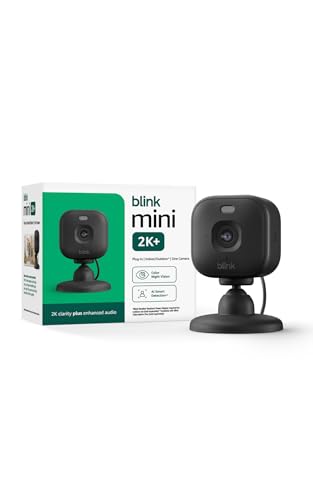
Blink Mini 2K+ Plug-In Indoor Smart Security
|
9.1/10 | Buy |
| Best Budget |
 VSMAHOME 4MP Dual-Band Security Camera |
8.9/10 | Buy |
| Best Premium |
 Fazoxo 2.5K Wireless Window Camera |
8.6/10 | Buy |
 VISION WELL 2K Wireless Security Camera |
8.3/10 | Buy | |
| Best Value |
 AOQEE G5 2K Indoor Security Camera (2-Pack) |
8.1/10 | Buy |
 ZEEPORTE 2K Indoor Security Camera |
8.0/10 | Buy | |
 GNCC 2K Indoor Pan-Tilt Security Camera |
8.0/10 | Buy |
Blink Mini 2K+ Plug-In Indoor Smart Security
The Blink Mini 2K+ is a compact plug-in indoor security camera that delivers crisp 2K video resolution, clear two-way audio with noise cancellation, and seamless Alexa compatibility. It is an ideal surveillance solution for apartment renters, pet owners, and homeowners seeking straightforward, dependable indoor monitoring.
Pros
- Sharp 2K video resolution with up to 4x zoom provides clear daytime and low-light indoor coverage.
- Upgraded two-way audio with noise cancellation makes communicating with pets or visitors clear and intelligible.
- Ultra-compact and lightweight design fits easily onto shelves or mounts to walls with the included hardware.
- Doubles as an indoor plug-in chime when paired with an optional Blink Video Doorbell.
- Plug-in AC operation ensures continuous surveillance without battery recharge cycles.
Cons
- Advanced person and vehicle AI detection features require an optional paid Blink Subscription Plan.
- Requires proximity to an electrical wall outlet, limiting placement options away from AC power.
- Exterior placement requires purchasing a separate weather-resistant power adapter.
VSMAHOME 4MP Dual-Band Security Camera
Equipped with dual-band Wi-Fi and 4MP color night vision, this compact wired camera delivers versatile monitoring for indoor rooms or outdoor perimeters. Its IP66 weatherproof housing and built-in siren provide essential deterrence without a complicated setup.
Pros
- Supports both 2.4 GHz and 5 GHz Wi-Fi networks
- IP66 weatherproof rating withstands harsh outdoor conditions
- Color night vision via integrated white LED lights
- Two-way audio and built-in siren for deterrence
Cons
- Manual angle adjustment lacks motorized pan and tilt
- Continuous power outlet required due to wired design
- MicroSD card not included and cloud requires a subscription
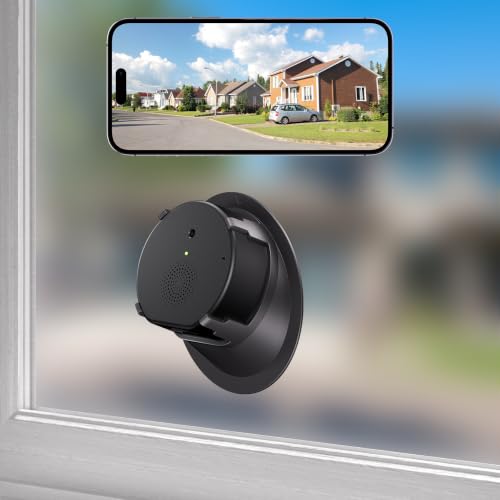
Fazoxo 2.5K Wireless Window Camera
Designed for glass-mounted home surveillance, this wire-free camera delivers 2.5K video with a helpful six-second pre-roll buffer before motion triggers. An adjustable bracket and rechargeable battery allow flexible placement on windows without running power cords.
Pros
- Sharp 2.5K resolution with wide F1.6 aperture
- Six-second pre-roll captures context before motion occurs
- Completely wire-free battery design for flexible placement
- Supports local microSD storage without mandatory monthly fees
Cons
- MicroSD card must be purchased separately
- Color night vision requires ambient light to function
- Cloud video storage requires an optional paid subscription
VISION WELL 2K Wireless Security Camera
The VISION WELL 2K Wireless Security Camera delivers flexible, wire-free surveillance for indoor or outdoor spaces with clear 2K resolution, color night vision, and on-device AI motion filtering. It is a dependable, budget-conscious choice for homeowners and renters seeking reliable entryway deterrence without mandatory monthly fees.
Pros
- Completely wire-free battery installation with included bracket and screws, making it ideal for renters and suburban homeowners.
- Sharp 2K video clarity supported by full-color night vision and a 33-foot illumination range.
- PIR motion detection paired with smart AI filtering for people, vehicles, pets, and packages.
- Local recording support on microSD cards up to 128GB to avoid mandatory monthly subscriptions.
- IP65 weather-resistant rating suitable for exterior perimeter or sheltered entryway mounting.
Cons
- Only connects to 2.4 GHz Wi-Fi networks and does not support 5 GHz frequencies.
- Designed for motion-activated event clips rather than continuous 24/7 video recording.
- MicroSD storage card is not included in the box and must be purchased separately.
AOQEE G5 2K Indoor Security Camera (2-Pack)
Designed for pet and home monitoring, this two-pack delivers 2K video resolution with 360-degree pan-and-tilt tracking. Dual-band Wi-Fi and local microSD storage make it a flexible indoor surveillance option without requiring mandatory monthly subscription fees.
Pros
- Dual-band Wi-Fi offers versatile wireless network compatibility
- Auto-tracking keeps moving pets and people in frame
- Operates normally with local storage without cloud fees
- Invisible infrared lights avoid sleep disturbances at night
Cons
- Requires continuous wired power connection to operate
- MicroSD card is not included in the package
- Alexa voice control is limited strictly to live viewing
ZEEPORTE 2K Indoor Security Camera
Delivering sharp 2K resolution and customizable activity zones, this compact wired camera works well for monitoring nurseries, pets, or living areas. It includes two-way audio, infrared night vision, and local storage without ongoing subscription fees.
Pros
- Clear 2K resolution with customizable detection zones
- Subscription-free local storage option
- Integrated two-way audio and siren
- Night vision operates up to 30 feet
Cons
- Requires a constant wired power connection
- MicroSD card sold separately
GNCC 2K Indoor Pan-Tilt Security Camera
The GNCC 2K Indoor Security Camera delivers motorized 340-degree pan and 80-degree tilt coverage with flexible dual-band Wi-Fi and 10-meter night vision. It is a practical indoor choice for apartment renters, pet owners, and parents seeking continuous local recording without mandatory subscription fees.
Pros
- Dual-band 2.4GHz and 5GHz Wi-Fi connectivity reduces network congestion and improves indoor streaming reliability.
- Motorized 340-degree pan and 80-degree tilt provide extensive room coverage with automated motion tracking.
- Supports continuous 24/7 local recording on microSD cards up to 128GB without requiring a monthly subscription.
- Quick pairing via Bluetooth streamlines the initial connection process through the Osaio mobile app.
Cons
- Accessing recorded video playback requires either purchasing a separate microSD card or paying for a cloud storage subscription.
- Designed strictly for indoor environments, lacking weatherproofing or water-ingress resistance for exterior use.
- Requires a continuous wired power source and does not feature an internal backup battery.
Matching Home Surveillance Needs to Camera Architectures
Selecting the right security camera architecture starts with understanding that no single hardware format fits every residential scenario. The ideal setup depends directly on where the camera will live, how it receives power, and where video clips are stored. An indoor nursery requires completely different optical and acoustic capabilities than an outdoor driveway exposed to freezing rain. By categorizing security cameras into functional groups, homeowners can strategically position each device to maximize coverage while avoiding common performance bottlenecks.
Plug-In Wired Indoor Cameras for Continuous Interior Monitoring
Plug-in wired indoor cameras remain the most practical solution for primary living spaces and entry foyers where an electrical outlet is accessible. Because these units draw uninterrupted alternating current through a dedicated adapter, they do not suffer from the restrictive sleep cycles common to battery hardware. Models such as the Blink Mini 2K+ (newest model) deliver sharp 2K video clarity and responsive digital zoom without battery maintenance. Continuous power also enables immediate live-view initialization, allowing you to check on family members or pets without waiting for a low-power processor to wake from standby mode.
These compact indoor devices excel at interactive communication and smart home integration. Units like the ZEEPORTE 2K Indoor Cameras for Home Security incorporate two-way audio systems with background noise suppression, making them suitable for soothing anxious pets or speaking with family. Built-in mini sirens can also be triggered directly through mobile applications to scare off intruders or interrupt unwanted pet behavior. Furthermore, compact plug-in units can integrate with voice platforms like Amazon Alexa, functioning as secondary indoor chimes or displaying live video feeds across smart displays.
Motorized Pan-Tilt Cameras for Comprehensive Room Coverage
Fixed-lens indoor cameras capture a specific viewing angle, often leaving peripheral blind spots in open-concept living rooms or expansive basements. Motorized pan-tilt cameras resolve this challenge by using internal stepper motors to sweep the lens across horizontal and vertical axes. Devices such as the AOQEE 5G Cameras for Home Security Indoor and the GNCC 2K Security Camera Indoor provide up to 340 degrees of horizontal rotation and 80 degrees of vertical tilt. This mechanical range allows a single strategically positioned camera to monitor multiple entry points and seating areas from a central shelf or ceiling mount.
Automated motion tracking is a standout capability within modern pan-tilt surveillance systems. When the camera image sensor detects significant pixel movement or a human shape entering the frame, internal tracking algorithms rotate the lens assembly to follow the subject continuously across the room. This active tracking ensures that critical events remain centered in the recording frame rather than drifting out of the field of view. When privacy is needed, integrated privacy modes can rotate the physical lens downward into the housing, physically obstructing the optical glass when residents are home.
Battery-Powered Wire-Free Cameras for Exterior Perimeter Security
Securing the exterior envelope of a home frequently involves monitoring areas where running electrical wiring is impractical or structurally prohibited. Battery-powered wire-free security cameras solve this logistical barrier by relying on integrated rechargeable lithium-ion cells. Models like the VISION WELL Security Cameras Wireless Outdoor can be mounted to vinyl siding, brick masonry, detached sheds, or perimeter fences using simple mounting brackets. Without cords to conceal or external conduits to drill, property owners can place surveillance coverage exactly where security vulnerabilities exist.
Power conservation is the governing engineering principle for all wire-free cameras. To preserve battery reserves over several months of operation, these units remain in an ultra-low-power sleep state until an integrated passive infrared (PIR) sensor detects a thermal differential caused by a moving person or vehicle. Once triggered, the internal processor boots up, activates the Wi-Fi radio, records an event clip, and transmits a push alert to the user mobile device. Homeowners must remember that freezing winter temperatures slow down lithium-ion chemistry, temporarily reducing usable capacity and preventing solar accessories from recharging until ambient warmth returns.
Specialized Window-Mounted Cameras for Non-Invasive Exterior Viewing
Apartment renters and condominium residents frequently face strict lease agreements or homeowner association bylaws that prohibit drilling holes into exterior walls. Placing a conventional security camera on an indoor windowsill pointing outside usually fails because internal infrared LEDs reflect off double-pane glass, blinding the sensor with glare. Specialized hardware like the Fazoxo 2.5K/4MP FHD Indoor Wireless Window camera addresses this issue with tailored optical components. By pairing an F1.6 wide aperture lens with specialized low-light algorithms, these cameras harvest ambient street lighting through window glass without requiring glare-inducing infrared illumination.
Another technical hurdle with window-based surveillance is the operational failure of passive infrared motion sensors through glass. Standard PIR sensors detect changes in infrared heat energy, which standard window glass blocks almost entirely. Specialized window cameras overcome this limitation by utilizing continuous pixel-luminance analysis and intelligent pre-roll buffering. The camera maintains a rolling six-second video buffer in local memory, capturing the crucial moments leading up to an event while keeping the hardware safely protected from exterior weather and vandalism.
Hardwired and Power over Ethernet Solutions for Uninterrupted Surveillance
While wireless devices dominate the consumer DIY market, property owners prioritizing commercial-grade reliability often turn toward wired infrastructure. Exploring dedicated Power over Ethernet systems reveals how professional installations handle continuous 24/7 video capture without wireless latency. Power over Ethernet (PoE) conforms to IEEE 802.3af and 802.3at networking standards, delivering direct electrical power and high-speed data transmission over a single Category 6 network cable. This hardwired connection eliminates the vulnerability of wireless signal jamming, channel congestion, and battery degradation entirely.
PoE and hardwired AC cameras connect directly to localized Network Video Recorders (NVRs) equipped with multi-terabyte surveillance-grade hard drives. Unlike battery cameras that record short, fragmented clips, hardwired systems capture continuous video streams day and night. Routing Ethernet cables through attics and crawlspaces demands initial planning and proper low-voltage termination. However, the return on investment comes in the form of absolute data reliability, zero recurring subscription fees, and an enterprise-grade security posture that functions continuously even during widespread residential internet outages.
Specialized Driveway and Perimeter Coverage with Articulating Optics
Driveways, detached workshops, and rear property borders present unique surveillance challenges due to expansive physical distances and rapid vehicular movement. Deploying pan-tilt-zoom driveway cameras allows property owners to monitor broad vehicular approaches while maintaining the ability to magnify specific identification zones. Optical zoom mechanisms physically adjust internal lens elements to narrow the field of view, magnifying distant objects without sacrificing image resolution or introducing pixelated distortion. This mechanical flexibility ensures that broad approaches and narrow entry gates receive balanced optical monitoring.
Optical performance across exterior perimeters is best understood through the international IEC EN 62676-4 DORI standard, which outlines specific pixel densities required for Detection, Observation, Recognition, and Identification. Capturing actionable forensic evidence, such as facial characteristics or legible license plate numbers, requires at least 250 pixels per meter at the target distance. Wide-angle fixed lenses disperse their pixel density across an expansive horizontal plane, often leaving distant subjects unrecognizable. Outdoor articulating cameras bridge this gap by zooming into specific access corridors while utilizing integrated spotlights and sirens to actively deter trespassers.
Local MicroSD Archiving Versus Cloud Subscription Dependencies
Video storage architecture represents one of the most significant ongoing decisions when selecting a residential camera system. Many modern Wi-Fi cameras, including options from GNCC, AOQEE, and ZEEPORTE, support onboard local storage via high-endurance microSD cards up to 128GB. Storing footage locally on the physical camera guarantees complete data privacy and completely eliminates recurring monthly subscription fees. Users can easily access, review, and export recorded motion clips directly through the companion smartphone application without paying a third party for storage space.
Selecting specialized High Endurance cards with Class 10, U3, and V30 speed ratings ensures that flash storage withstands constant read-write operations without premature memory failure. In contrast, cloud storage subscription plans offer offsite backup advantages despite their recurring fees. If an intruder steals or damages a camera, locally stored microSD footage is lost, whereas cloud-connected systems instantly upload encrypted clips to remote servers. Cloud plans also unlock advanced server-side artificial intelligence that identifies packages, distinct animal types, and specific vehicle profiles with exceptional accuracy.
Network Frequencies, Dual-Band Wi-Fi, and Bandwidth Management
Wireless security cameras rely heavily on the residential Wi-Fi network to stream live video feeds, transmit push notifications, and sync recordings. Most entry-level wireless cameras operate exclusively on the 2.4 GHz frequency band due to its superior capability to penetrate dense structural materials like exterior brick, drywall, and wooden framing. However, the 2.4 GHz spectrum is notoriously congested in suburban neighborhoods, competing with baby monitors, microwave ovens, and neighboring routers. This congestion can lead to delayed push notifications, dropped frames, and frustrating live-stream buffering.
Dual-band Wi-Fi support represents a major hardware upgrade found on advanced models like the VSMAHOME 2.5K outdoor camera and the AOQEE 5G indoor monitor. These cameras can connect to either 2.4 GHz or 5 GHz wireless networks, giving users flexibility based on device placement. The 5 GHz band offers substantially higher data throughput speeds and encounters significantly less radio interference, which makes it ideal for streaming high-bitrate 2K video streams without stutter. Modern cameras also utilize H.265 video compression, reducing required upload bitrates and file sizes by half compared to older H.264 formats.
Night Vision Technologies: Infrared Illumination Versus Color Spotlights
Low-light performance defines the true utility of any home surveillance device, as criminal activity and perimeter trespasses frequently occur under cover of darkness. Traditional night vision relies on infrared (IR) light-emitting diodes operating at an 850-nanometer wavelength. As seen on models like the ZEEPORTE 2K, arrays of 6 IR LEDs illuminate dark rooms and yards up to 30 feet away with invisible light. The camera sensor filters this infrared spectrum to produce sharp, high-contrast monochrome video that clearly depicts room layouts and subject movement without waking sleeping occupants.
While 850nm infrared delivers dependable illumination, black-and-white footage removes vital forensic details such as the color of an intruder clothing or vehicle. In response, modern outdoor cameras increasingly incorporate full-color night vision systems. Units like the VSMAHOME 2.5K utilize powerful integrated white-light LEDs and large aperture sensors that gather sufficient ambient photons to render full-color video in total darkness. Configuring cameras to switch automatically between infrared standby and spotlight color mode optimizes both tactical discretion and evidentiary clarity for exterior perimeters.
Legal Compliance, Audio Recording Statutes, and Privacy Boundaries
Deploying surveillance cameras around a residential property introduces important legal and ethical considerations that every homeowner must navigate. In the United States, video recording is generally permissible in areas where individuals lack a reasonable expectation of privacy, such as public sidewalks, front walkways, and open driveways. However, deliberately pointing a camera toward a neighbor bedroom window, fenced backyard sanctuary, or rented guest room can violate privacy torts and local nuisance ordinances. Utilizing companion software privacy masks to block out adjacent property lines helps maintain good neighborly relations while avoiding legal entanglements.
Audio recording introduces significantly stricter legal hurdles under federal and state wiretap legislation. Under the Federal Wiretap Act (18 U.S.C. § 2511), intercepting oral communications requires the consent of at least one party involved in the conversation. Furthermore, several states enforce strict all-party consent statutes, making it unlawful to record private conversations without the explicit knowledge and permission of all individuals present. Because cameras with sensitive microphone arrays can capture outdoor audio across property borders, property owners should review local statutes and consider disabling audio recording features in sensitive perimeter zones.
Practical Framework for Selecting Your Ideal Home Camera Configuration
Determining the best security camera type ultimately requires mapping specific hardware strengths to the physical layout of your home. For interior spaces, living rooms, and nursery monitoring, compact plug-in cameras or motorized pan-tilt units offer dependable continuous power, two-way audio, and blind-spot elimination without ongoing battery management. For exterior perimeters and rental properties where structural drilling is prohibited, rechargeable battery cameras and specialized window-mounted units provide vital surveillance flexibility without violating lease agreements. Meanwhile, expansive suburban properties and detached outbuildings benefit most from dedicated PoE setups or optical pan-tilt driveway monitors.
Before permanently mounting any security hardware, perform a practical bench test and wireless site survey. Power on the camera near your primary Wi-Fi router, complete the initial Bluetooth or QR-code mobile pairing, and verify that firmware updates install completely. Next, take the camera to the intended exterior mounting location and verify that the received signal strength indicator (RSSI) remains at -65 dBm or stronger to prevent streaming dropouts. Taking the time to calibrate motion sensitivity zones, establish privacy boundaries, and verify local storage health guarantees that your home surveillance investment delivers dependable peace of mind for years to come.
About the author
Rebecca Edwards is a veteran journalist and home safety expert with decades of editorial experience and more than a decade focused on home and personal security. She researches and tests security systems, smart gadgets, safety technology, and crime-related data to turn complicated topics into practical advice. Her consumer-focused approach helps families evaluate security products based on real needs rather than marketing claims alone.