
Best Door Sensor Alexa Under 25 Dollars of 2026 Top Picks
Upgrade home security with the Best Door Sensor Alexa Under 25 Dollars for November 2026. Enjoy fast Alexa alerts, custom routines, and long battery life.
 By Alina Bradford
Updated October 3, 2026


Reliable Entryway Detection for Smart Home Security
Dealing with delayed push alerts or wondering if the front door actually latched shut can keep anyone on edge at night. A reliable contact detector eliminates blind spots around entryways and triggers smart lighting the moment you walk inside. Pairing these magnetic switches with voice assistants creates automated routines without draining your wallet. That is why adding the best door sensor alexa under 25 dollars provides an accessible way to reinforce perimeter security, monitor door openings, and keep tabs on windows without paying steep subscription fees.
Careful evaluation of hardware specifications, 2.4 GHz Wi-Fi reliability, and magnetic reed switch sensitivity reveals that affordable sensors do not have to sacrifice dependability. Many property owners connect these devices alongside a reliable smart lock door setup for total entrance awareness. Low-latency Alexa integration, compact battery enclosures, and peel-and-stick adhesive pads let you secure high-traffic doorways in minutes. Investing in the Best Door Sensor Alexa Under 25 Dollars helps you build responsive smart home safeguards with minimal hassle and zero monthly charges.
| Award | Product | SSG Score About SSG ScoreThe SSG Score is our own rating from 0 to 10, based on performance, design and build, ease of use, and value. It reflects independent research and is never influenced by manufacturers, retailers, or affiliate commissions. Learn more › | |
|---|---|---|---|
| Best Overall |
Smarter Living Smart WiFi Door and Window Sensor
|
8.9/10 | Buy |
| Best Budget |
 SENCKIT Smart WiFi Door and Window Sensor 2-Pack |
8.3/10 | Buy |
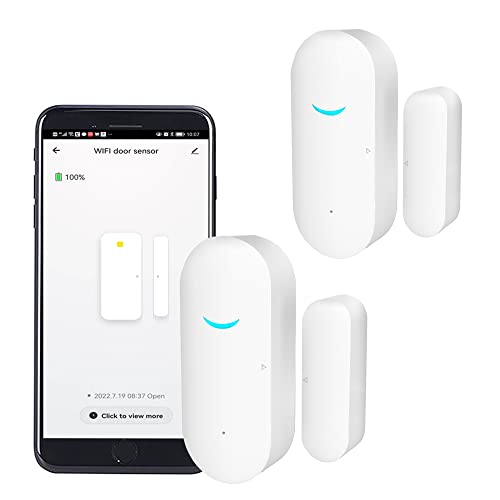 Gaoducash WiFi Door and Window Sensor 2-Pack |
8.1/10 | Buy | |
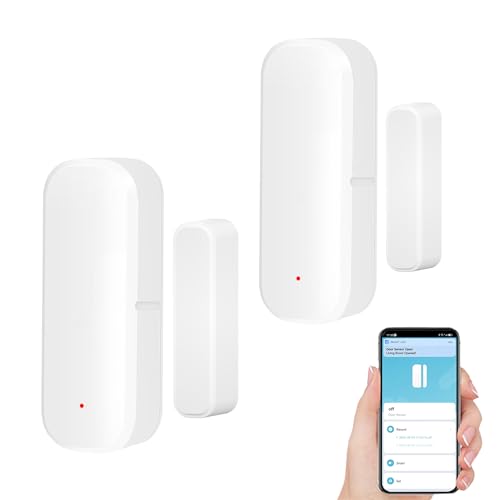 Gaoducash WiFi Smart Door and Window Sensor 2-Pack |
8.0/10 | Buy | |
| Best Premium |
 GRSICO Zigbee Smart Door Sensor 2-Pack |
8.0/10 | Buy |
Smarter Living Smart WiFi Door and Window Sensor
The Smarter Living Smart WiFi Door and Window Sensor 2-Pack provides reliable open-and-close contact sensing directly over 2.4 GHz Wi-Fi with no hub required. It is an ideal pick for renters and DIY homeowners wanting subscription-free alerts and automated lighting triggers through Alexa, SmartThings, and Smart Life.
Pros
- Operates independently on existing 2.4 GHz Wi-Fi networks without requiring extra hubs or hardware bridges
- Works natively with Smart Life, Tuya, Amazon Alexa, and Samsung SmartThings routines
- Includes standard AAA batteries out of the box with an estimated runtime of up to 12 months
- Bluetooth-assisted pairing eliminates frustrating manual network setup steps
- App push alerts and door event history logs do not require a paid subscription plan
Cons
- Requires a dedicated 2.4 GHz Wi-Fi frequency band and does not support 5 GHz networks
- Google Home integration displays sensor status but does not support triggering routine automations on state change
- Battery longevity depends heavily on Wi-Fi router signal strength and daily open-and-close frequency
SENCKIT Smart WiFi Door and Window Sensor 2-Pack
The SENCKIT WiFi Door and Window Sensor 2-Pack delivers hub-free magnetic open and close monitoring with push notifications and Smart Life routine integration. It is an accessible, budget-friendly pick for homeowners and renters who want to trigger entryway lighting or keep tabs on perimeter openings without investing in a dedicated smart home bridge.
Pros
- Operates over standalone Wi-Fi without the added cost of a dedicated bridge or hub.
- Uses widely available AAA batteries instead of specialty coin cells, with the initial sets included.
- Direct integration with the Smart Life app ecosystem allows seamless door-open lighting automations.
- Discreet physical footprint with quick, peel-and-stick adhesive installation.
Cons
- Wi-Fi battery devices wake from sleep to transmit, creating slight notification latency compared to local Zigbee or Z-Wave sensors.
- Relies on cloud services and an active internet connection for remote notifications and off-site automation triggers.
- Requires precise physical alignment between the sensor body and magnetic strip to prevent false state readings.
Gaoducash WiFi Door and Window Sensor 2-Pack
The Gaoducash WiFi Door and Window Sensor 2-Pack provides direct-to-router magnetic contact detection through Tuya and Smart Life without requiring a dedicated hardware hub. Powered by included AAA batteries with voice-assistant compatibility, it is a practical choice for renters and homeowners automating entry lighting or monitoring access points.
Pros
- Operates directly over standard Wi-Fi without needing an expensive proprietary smart home hub or bridge.
- Uses readily available AAA batteries rather than hard-to-find coin cells, simplifying ongoing maintenance.
- Tool-free 3M tape mounting protects doorframes and drywall, making it ideal for apartments and rentals.
- Integrates with popular voice platforms including Alexa and Google Assistant for quick status queries.
Cons
- Wi-Fi battery sensors can experience slight notification latency compared to local sub-GHz or Zigbee hardware.
- Lacks an outdoor ingress protection (IP) weather rating, limiting deployment strictly to dry indoor spaces.
- Requires close physical alignment between the main body and the magnetic strip to ensure accurate open/close reporting.
Gaoducash WiFi Smart Door and Window Sensor 2-Pack
The Gaoducash WiFi Door and Window Sensor 2-Pack delivers hub-free magnetic contact detection with app notifications and Alexa routine support. It is a solid choice for homeowners and renters seeking simple entryway monitoring and automatic lighting triggers.
Pros
- Zero hub required, connecting directly to 2.4 GHz Wi-Fi using Bluetooth onboarding
- Uses accessible AAA batteries rather than hard-to-find coin cells, with batteries included in the box
- Seamless scene creation in the Smart Life and Alexa apps to automate entryway lighting or smart plugs
- Generous 24-month warranty coverage provides extra long-term buying confidence
Cons
- Wi-Fi connection relies on cloud processing rather than instantaneous local mesh control
- Rated battery life of over six months requires more frequent battery replacements than ultra-low-power Zigbee sensors
- Requires a 2.4 GHz Wi-Fi network and does not support 5 GHz-only Wi-Fi bands
GRSICO Zigbee Smart Door Sensor 2-Pack
The GRSICO Zigbee Door Sensor 2-Pack delivers compact, tool-free contact sensing designed to trigger prompt lighting automations and instant open-close alerts across SmartThings, Home Assistant, Hubitat, and Alexa ecosystems. It is a practical entry-detection choice for smart home automators and families seeking responsive boundary routines without relying on high-latency cloud Wi-Fi.
Pros
- Integrates cleanly with popular Zigbee platforms including Home Assistant, Hubitat, and SmartThings
- Discreet mini footprint mounts unobtrusively on doors, windows, or pantry jambs
- Tool-free adhesive setup simplifies deployment for renters and homeowners
- Direct Zigbee mesh connection bypasses Wi-Fi network congestion for responsive routine triggering
Cons
- Requires a compatible Zigbee hub or smart coordinator to operate
- Does not support standalone Wi-Fi connectivity without an active bridge
- Proper physical alignment between sensor and magnetic contact is necessary during placement
Frequently Asked Questions
Do Wi-Fi door sensors under $25 require an external smart hub to work with Alexa?
No, Wi-Fi models connect directly to standard 2.4 GHz wireless routers without a standalone hub. Hardware links through companion apps like Smart Life or Tuya straight into Alexa skills. You can pair them directly to activate voice announcements or lighting routines. Zigbee contact sensors, however, do require a compatible Zigbee hub to communicate with smart home platforms.
How does a magnetic contact sensor differ from a PIR motion sensor?
Magnetic contact sensors detect the physical separation of a door and frame, whereas PIR motion sensors track moving infrared heat signatures. A contact sensor mounts directly on door jambs to verify whether an entryway is cracked open or fully sealed. PIR units monitor broader interior spaces or hallways for moving occupants. Using both devices together eliminates coverage blind spots across your entire living area.
Can I use the Best Door Sensor Alexa Under 25 Dollars to trigger Alexa routines and smart lighting?
Yes, Alexa routines fully support contact state changes from compatible sensors to automate smart switches, plugs, and bulbs. Opening a closet or garage door can immediately turn on overhead lights without touching a wall switch. You can also configure routines to broadcast announcements on Echo speakers during specific hours. Integrating these contacts alongside a fast keyless entry lock creates a smooth arrival routine when stepping inside.
What causes false open alerts on budget door sensors?
Misaligned magnetic contacts or loose door frames are the most common causes of false door triggers. The sensor and its paired magnet must stay within a tight gap, typically less than 15 millimeters apart, when closed. If outdoor wind rattles an exterior door, a wide magnet gap can briefly break the magnetic field and fire an erroneous alert. Ensuring the alignment arrows on both sensor pieces match properly during adhesive mounting prevents this problem.
What kind of battery life can you expect from budget Wi-Fi door sensors in 2026?
Most 2.4 GHz Wi-Fi contact sensors run for roughly 6 to 12 months on standard AAA batteries depending on daily door traffic. Because Wi-Fi radios draw more power during transmission than Zigbee or Z-Wave, frequent openings on main front doors drain cells faster than bedroom windows. Sensors from brands like Gaoducash and SENCKIT feature low-battery app alerts to warn you before cells completely deplete. Replacing depleted batteries promptly ensures uninterrupted status reporting.
Will these affordable contact sensors work on metal doors or exterior gates?
Yes, but mounting them on ferromagnetic metal surfaces may require thin non-metallic spacers. Steel doors can interfere with the internal magnetic reed switch and weaken 2.4 GHz wireless transmission ranges. Placing a thin piece of plastic or foam tape between the metal and the sensor body helps maintain proper magnetic sensitivity. For exterior gates, make sure the unit is shielded from direct rain since budget indoor sensors lack waterproof IP ratings.
About the author
Alina Bradford is a safety and security expert with more than two decades of experience researching consumer technology and personal safety. She has tested hundreds of security and safety products and brings first-responder training to her practical approach. Her expertise spans home security equipment, cameras, connected safety devices, apps, and emerging security technology, with a focus on making complex products easier for everyday consumers to understand.