
Best Door Sensor Battery for Replacement Chamberlain of 2026 Top Picks
Reliable sensor power prevents garage entry delays. Review the best door sensor battery for replacement chamberlain options for October 2026.
 By John Carlsen
Updated October 3, 2026
By John Carlsen
Updated October 3, 2026

Sudden sensor dropouts can leave an automated garage door or entryway vulnerable right when you pull into the driveway at night. A dead coin cell or lithium cell halts real-time open and close status alerts, triggering communication errors across your security network. Identifying the best door sensor battery for replacement chamberlain setups restores instant detection latency so your access control remains dependable. Reliable cell voltage prevents false obstruction warnings and keeps safety beams operating smoothly across chilly winters and hot summer afternoons.
Looking at manufacturer specifications and long-term voltage discharge curves helps identify cells built for continuous monitoring demands. While standard household accessories pull power intermittently, motion detectors and safety sensors need steady voltage to broadcast radio frequency signals without packet loss. Similar to maintaining smart sensor hardware components, matching the exact form factor ensures continuous home automation uptime. Premium 3V lithium options like the Enegitech CR123A 3V Lithium Battery and BBXSA Garage Door Opener Battery offer direct drop-in power to keep your garage security gear running uninterrupted.
| Award | Product | SSG Score About SSG ScoreThe SSG Score is our own rating from 0 to 10, based on performance, design and build, ease of use, and value. It reflects independent research and is never influenced by manufacturers, retailers, or affiliate commissions. Learn more › | |
|---|---|---|---|
| Best Overall |
Enegitech CR123A 3V Lithium Battery
|
9.2/10 | Buy |
| Best Value |
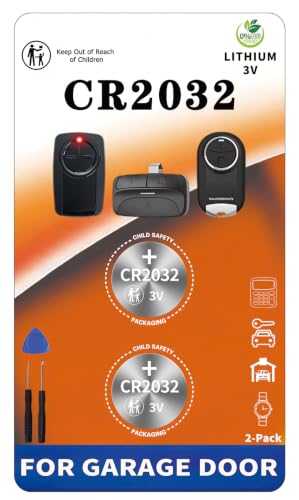 BBXSA Garage Door Opener Battery
|
8.0/10 | Buy |
Frequently Asked Questions
Which battery size does a Chamberlain door sensor typically require?
Most Chamberlain wireless door and safety sensors require either a CR2032 3V coin cell or a cylindrical CR123A 3V lithium battery depending on the model. Compact wireless door tilt sensors and remotes frequently take coin cells like the BBXSA Garage Door Opener Battery, while standalone motion detectors and alarm sensors often utilize high-capacity CR123A cells like the Enegitech CR123A 3V Lithium Battery. Always inspect your existing sensor housing before ordering the best door sensor battery for replacement chamberlain gear to ensure proper terminal alignment.
How long does a replacement battery last in a Chamberlain garage door sensor?
A quality lithium sensor battery typically delivers between one and three years of continuous service under standard household use. Factors like severe garage temperature fluctuations and high traffic cycles can accelerate battery drain on wireless transmitters. Selecting high-grade lithium chemistry with built-in PTC protection ensures consistent detection range and prevents unexpected signal drops during freezing winters.
Can a dying door sensor battery cause false obstruction warnings?
Yes, low voltage can cause erratic wireless signals that your garage opener interprets as an active obstruction. Weak batteries reduce the transmitter’s RF broadcast power, which introduces communication latency between the sensor and the main control logic board. Swapping in fresh cells resolves these ghost errors and prevents automated security lights from cycling on unnecessarily.
Are rechargeable CR123A batteries suitable for Chamberlain security and door sensors?
No, standard rechargeable lithium-ion cells should not be used in devices designed for 3V non-rechargeable lithium chemistry. Rechargeable RCR123A batteries operate at a higher nominal voltage of 3.7V, which can overload delicate sensor circuitry and trigger low-voltage cutoffs prematurely. Sticking with non-rechargeable 3V lithium chemistry protects internal contacts and aligns with manufacturer guidelines for door hardware battery replacement options.
How do I know when to replace the battery in my Chamberlain sensor in 2026?
Chamberlain wall consoles and mobile hub apps usually flash an LED indicator or push a low-battery notification when voltage drops below operating thresholds. You might also notice delayed door status updates, intermittent response from motion-activated overhead lights, or failure to report open states immediately. Installing the best door sensor battery for replacement chamberlain systems in 2026 eliminates transmission lag and maintains peak perimeter security.
Does cold weather drain garage door sensor batteries faster?
Yes, extreme cold slows the chemical reactions inside coin cells and cylindrical batteries, causing a temporary voltage drop under load. Standard alkaline cells suffer heavily in freezing temperatures, making cold-resistant lithium cells the superior choice for unheated garages. Dedicated lithium cells withstand temperature swings from sub-zero winter chills to sweltering summer heat while maintaining reliable safety sensor communication.
About the author
John Carlsen is a home security and smart home specialist with more than a decade of experience researching and testing security technology. His expertise covers DIY security systems, security cameras, smart devices, pricing, contracts, and connected-home technology. He combines hands-on product testing with detailed research to explain strengths, limitations, ownership costs, and real-world value in straightforward terms for homeowners and renters.