
Best Door Sensor Battery for Replacement of 2026 Top Picks
Power your entry sensors in October 2026. Here is the best door sensor battery for replacement to avoid dead zones and delayed security alerts.
 By Alina Bradford
Updated October 3, 2026
By Alina Bradford
Updated October 3, 2026

Dead security sensors create sudden blind spots that leave your entryways vulnerable without warning. A sluggish contact sensor or an unresponsive garage monitor usually points to voltage sag rather than a broken device. When magnetic contacts and passive infrared detectors drop off your network, swapping in the best door sensor battery for replacement restores immediate alert response across all zones. Picking cells with steady discharge curves prevents those late-night offline chimes and keeps your automation routines firing on time.
Careful analysis of battery chemistries, shelf life ratings, and real-world user feedback shows that standard coin cells and lithium cylinders handle frequent state changes differently. Pair your access points with smart lock replacement parts to maintain seamless exterior security without unexpected dropouts. Many property owners also coordinate their wireless sensors alongside a reliable smart lock door setup for total perimeter awareness. Investing in fresh, high-capacity cells ensures fast signal transmission through thick doors and heavy garage framing.
| Award | Product | SSG Score About SSG ScoreThe SSG Score is our own rating from 0 to 10, based on performance, design and build, ease of use, and value. It reflects independent research and is never influenced by manufacturers, retailers, or affiliate commissions. Learn more › | |
|---|---|---|---|
| Best Overall |
Enegitech CR123A 3V Lithium Battery
|
9.2/10 | Buy |
| Best Value |
 Garage Door Opener CR2032 Battery Replacement
|
8.4/10 | Buy |
| Best Budget |
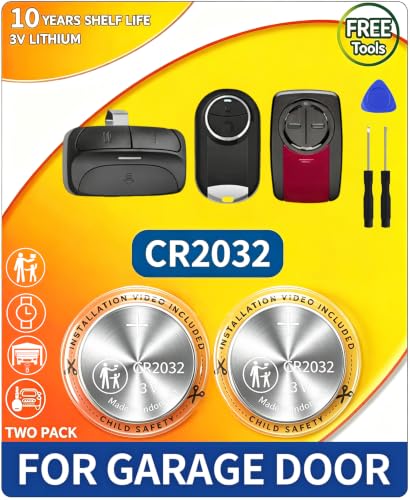 Knmipm Garage Door Opener Battery Replacement
|
8.3/10 | Buy |
 Garage Door Opener Battery Replacement CR2032
|
8.3/10 | Buy | |
| Best Premium |
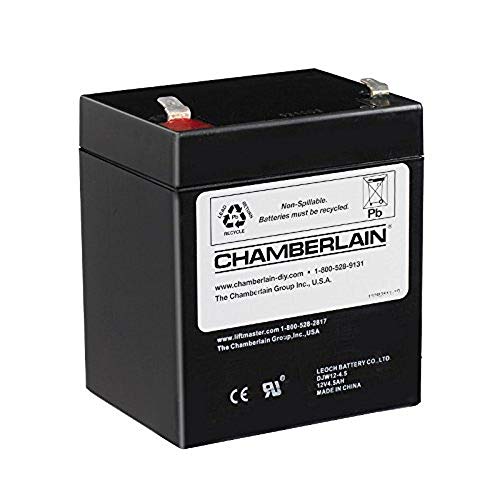 CHAMBERLAIN / LiftMaster / Craftsman 4228
|
8.3/10 | Buy |
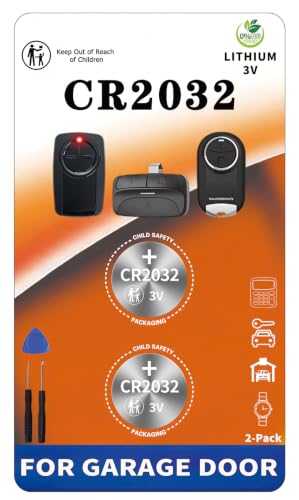 BBXSA Garage Door Opener Battery
|
8.0/10 | Buy |
Frequently Asked Questions
Which battery chemistry works best for outdoor and garage door sensors?
Lithium chemistry offers the most consistent performance for door and entry sensors exposed to shifting weather. Lithium cells like CR123A and CR2032 handle wide temperature swings far better than standard alkaline cells, preventing sudden voltage drops during cold snaps. These cells also boast shelf lives up to 10 years, ensuring long standby reliability.
How do you know when your door sensor battery needs replacement?
Delayed trigger notifications or persistent offline alerts in your smart home app indicate that your sensor voltage is dropping. Weak cells often cause intermittent connectivity before failing completely, leaving entry points unmonitored. Swapping in the best door sensor battery for replacement before the cell dies prevents false tamper signals and connection drops.
Can a dying door sensor battery trigger false open or closed states?
Yes, low voltage can cause erratic reed switch readings and delayed radio transmissions to your security hub. When battery voltage dips below the operating threshold, the internal logic board may misinterpret contact states or fail to report events. Maintaining fresh cells alongside specialized smart lock parts for doorsense calibration ensures accurate status reporting across your system.
What is the typical lifespan for door contact and motion sensor batteries?
Most wireless door and PIR sensors run between one and three years depending on daily entryway traffic. High-traffic exterior doors consume battery power much faster because the transmitter wakes up every time the magnetic seal breaks. Premium lithium options like the Enegitech CR123A provide substantial milliamp-hour capacity to maximize operational time between swaps.
Are CR2032 and CR123A batteries interchangeable in smart home security sensors?
No, CR2032 and CR123A batteries are physically and electrically distinct. While both deliver 3 volts, the CR2032 is a thin coin cell designed for slim contact frames, whereas the CR123A is a cylindrical cell packing up to 1600 mAh for high-drain PIR and smart locks. Pairing your sensors with high-efficiency access devices like an ultra fast smart lock helps keep overall energy demands balanced across your entrances.
Do rechargeable batteries work well in wireless door sensors?
Non-rechargeable lithium cells are strongly recommended over rechargeable equivalents for security equipment. Rechargeable lithium-ion batteries often operate at higher nominal voltages that can damage delicate sensor circuitry, and they experience faster self-discharge rates. High-grade disposable cells deliver steady power discharge without risking hardware malfunctions.
About the author
Alina Bradford is a safety and security expert with more than two decades of experience researching consumer technology and personal safety. She has tested hundreds of security and safety products and brings first-responder training to her practical approach. Her expertise spans home security equipment, cameras, connected safety devices, apps, and emerging security technology, with a focus on making complex products easier for everyday consumers to understand.