
Best Fast Ethernet Door Sensor Replacement of 2026 Top Hardware Picks
Upgrade your security with the Best Fast Ethernet Door Sensor Replacement in October 2026 for zero latency, fast triggers, and reliable entry detection.
 By John Carlsen
Updated October 3, 2026
By John Carlsen
Updated October 3, 2026

Delayed entry alerts and sluggish smart automation triggers can leave homes vulnerable when doors swing open. Upgrading vintage alarm lines often requires locating the best fast ethernet door sensor replacement that maintains instant response times without intermittent network drops. Hardwired reed switches and modern low-latency wireless protocols eliminate the frustrating signal lag that plagues generic Wi-Fi equipment by delivering instantaneous contact state changes. Pairing these responsive contact detectors with a compatible smart door system ensures entry chimes sound immediately and automated hallway lights turn on before anyone takes a second step.
Replacing aging magnetic contacts eliminates phantom intrusion alarms and erratic circuit breaks that wake households in the middle of the night. Recessed wired switches provide seamless, concealed protection inside door jambs, while modern Sub-G and Matter-certified hubs bridge the gap between hardwired durability and wireless flexibility. Reviewing manufacturer hardware specifications reveals that proper magnetic actuation gaps and durable copper connections prevent false open-circuit readings. A solid hardware upgrade delivers dependable entry tracking, tamper-resistant monitoring, and smooth interaction across your entire security ecosystem.
| Award | Product | SSG Score About SSG ScoreThe SSG Score is our own rating from 0 to 10, based on performance, design and build, ease of use, and value. It reflects independent research and is never influenced by manufacturers, retailers, or affiliate commissions. Learn more › | |
|---|---|---|---|
| Best Overall |
Tapo Door Sensor Starter KIT, Matter Compatible
|
9.2/10 | Buy |
| Best Budget |
 5 Sets Magnetic Door Switch RC-33 NC Recessed
|
8.6/10 | Buy |
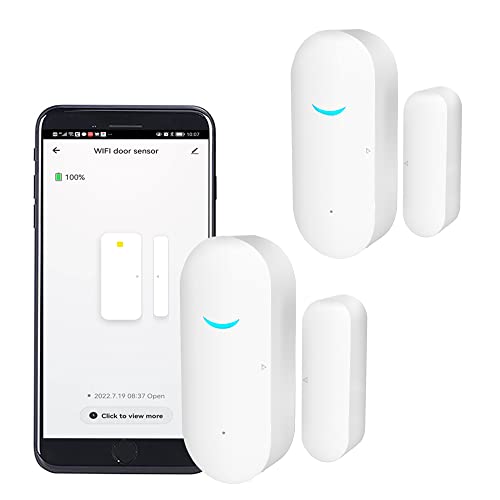 2 Pack WiFi Door Window Sensor Detector
|
8.1/10 | Buy |
Frequently Asked Questions About Door Sensors
Can hardwired Cat5 or Ethernet cabling connect to magnetic door sensors?
Yes, low-voltage magnetic reed switches easily wire to individual copper pairs inside Cat5 or Cat6 cabling. The RC-33 recessed switch uses standard 24AWG copper wiring, making it ideal for connecting to existing twisted-pair network runs tied to alarm panels. This configuration provides lightning-fast contact closure signals without battery degradation.
How does Sub-G wireless technology compare to standard Wi-Fi door sensors?
Sub-G protocol provides noticeably longer wireless transmission range and faster response times than standard 2.4 GHz Wi-Fi. Hubs like the Tapo H100 communicate with battery sensors on lower radio frequencies, cutting latency and extending battery life up to ten times longer. This prevents automation delays when syncing door entries with indoor smart lighting.
What is the actuation gap distance for reliable door contact detection?
Most magnetic contact sensors require a physical alignment gap between 15mm and 25mm to function properly. Exceeding this tolerance causes the internal reed switch to falsely report an open circuit even when the door is securely shut. Checking alignment during installation prevents false alarms and keeps door position sensing hardware operating accurately.
Do Matter-certified door sensors require a dedicated brand hub?
Yes, Matter-compatible contact sensors using proprietary Sub-G or Thread networks require their designated hardware bridge to connect to your central ecosystem. Once paired with the hub, the sensors broadcast door open and close triggers directly to Apple Home, Alexa, or Google Home. This integration lets you coordinate entry routines with a reliable smart door setup without vendor lock-in.
How long do batteries last in wireless door and window sensors?
Standard wireless contact sensors powered by AAA batteries typically last around one full year under normal residential use. Devices utilizing low-power sub-gigahertz frequencies can operate even longer because they avoid high-drain Wi-Fi handshakes. Companion mobile apps push automatic low-power alerts when voltage drops, ensuring continuous security coverage.
What is the difference between normally closed and normally open door switches?
Normally closed switches complete the electrical circuit when the door is closed and the magnet rests near the sensor. When an intruder opens the door, the circuit breaks, instantly tripping the security alarm loop even if wires are cut. Most commercial and residential alarm systems rely on normally closed contacts for fail-safe physical security.
About the author
John Carlsen is a home security and smart home specialist with more than a decade of experience researching and testing security technology. His expertise covers DIY security systems, security cameras, smart devices, pricing, contracts, and connected-home technology. He combines hands-on product testing with detailed research to explain strengths, limitations, ownership costs, and real-world value in straightforward terms for homeowners and renters.