
Best Long Range Door Sensor Replacement of 2026 Picks for Reliable Coverage
Secure distant entries in October 2026 with the best long range door sensor replacement to stop dropped signals and delayed home alerts.
 By Tyler Lacoma
Updated October 3, 2026
By Tyler Lacoma
Updated October 3, 2026

Thick masonry walls, metal frames, and distant detached garages often cause standard contact sensors to drop offline without warning. Dropped wireless links leave perimeter entryways unprotected, resulting in missed door notifications right when you need reliable entry logs. Evaluating manufacturer wireless range ratings, terminal contact resistance, and enclosure battery specs highlights the need for dedicated hardware that penetrates structural barriers without draining power. Investing in the best long range door sensor replacement ensures that your perimeter triggers chime immediately, whether you monitor a backyard shed, side gate, or workshop doorway. Integrating these extended-reach units alongside DoorSense security components creates a dependable perimeter monitoring network across the entire property.
Modern wireless units now achieve open-air transmission distances between 500 and 650 feet, while recessed magnetic switches provide zero-battery hardwired reliability over continuous copper wire runs. Dual-side magnetic orientation, integrated bypass buttons, and adjustable chime receivers help eliminate setup headaches and delayed alerts. Upgrading to a dependable long range door sensor replacement keeps your automated notifications instant, so you won’t struggle with dropped connections during daily household traffic.
| Award | Product | SSG Score About SSG ScoreThe SSG Score is our own rating from 0 to 10, based on performance, design and build, ease of use, and value. It reflects independent research and is never influenced by manufacturers, retailers, or affiliate commissions. Learn more › | |
|---|---|---|---|
| Best Overall |
eufy Security Entry Sensor E20
|
9.1/10 | Buy |
| Best Budget |
 Magnetic Door Switch RC-33 NC Recessed Wired
|
8.9/10 | Buy |
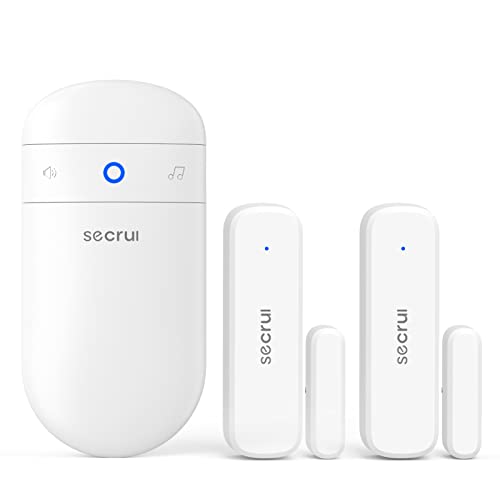 Door Chime When Door Opens
|
8.9/10 | Buy |
Frequently Asked Questions
How far can a wireless door sensor transmit through interior walls?
Direct Answer: Most wireless units operate reliably through two to three standard drywall partitions, though range decreases noticeably through brick or concrete. While open-air specifications reach up to 500 or 656 feet, dense building materials typically cut transmission distance down by half or more. Proper placement away from large metal appliances helps maintain a clear radio frequency path to your base station or indoor chime receiver.
Can I replace a failed wireless sensor with a wired recessed magnetic contact switch?
Direct Answer: Yes, provided your security alarm panel supports hardwired input zones or you connect it to a hardwired-to-wireless translator module. Recessed magnetic contacts operate via normally closed loop circuits with no internal batteries, delivering dependable performance across long copper wire runs. Pairing reliable wired contacts alongside reliable smart lock door systems ensures complete entry protection without regular maintenance worries.
What causes a long range door sensor to drop offline intermittently?
Direct Answer: Weak battery voltage and excessive gap spacing between the magnet and internal reed switch cause most communication dropouts and erratic triggers. If the physical actuation gap exceeds the 15-to-25 mm specification, regular vibrations or seasonal door warping can break the magnetic contact. Swapping in fresh high-capacity lithium cells and confirming proper magnet alignment quickly restores stable perimeter monitoring.
Do long range entry sensors require an internet connection or smart home hub?
Direct Answer: Standalone chime systems do not require internet access, but smart automation sensors rely on an active hub or gateway. Systems featuring plug-in audio receivers communicate via direct sub-GHz radio frequencies between the transmitter and indoor chime. However, if you want push notifications sent to your smartphone or wish to automate security lighting, a dedicated base station connected to your home router is necessary.
How does a bypass button work on an entry contact sensor?
Direct Answer: A physical bypass button temporarily disarms an individual contact sensor so you can open the door without triggering the main alarm siren. The rest of your security system and adjacent entryway monitors remain fully armed and active during this temporary window. Once the door closes again, the bypass resets automatically to restore continuous perimeter detection without manual app intervention.
About the author
Tyler Lacoma is a smart home and home security technology expert with more than a decade of hands-on experience testing connected devices. His expertise includes security cameras, smart locks, home security systems, privacy features, smart-home compatibility, and emerging AI technology. He focuses on translating technical features into practical guidance that helps homeowners understand which security solutions truly fit their homes and everyday needs.