
Best Risco Door Sensor Battery of 2026 Top Hardware Picks
Prevent dead entry sensors with the best risco door sensor battery updated for October 2026 to keep smart security hardware and motion alarms online.
 By John R. Delaney
Updated October 3, 2026
By John R. Delaney
Updated October 3, 2026

Nerve-racking battery dropouts in door contacts leave perimeter defenses vulnerable right when you expect seamless security. A sudden offline alert from an entryway transmitter disrupts automated routines, silencing critical arrival chimes and triggering false supervision warnings across your control panel. Selecting the best risco door sensor battery demands a close look at discharge curves, shelf stability, and cold-weather resistance to keep wireless transmitters firing instantly every time an exterior hatch swings open. High-drain transmitters paired with standard cells often suffer premature voltage collapse, creating annoying communication lags across your wireless setup.
Reliable cell chemistries provide steady operating voltage across hundreds of daily open-and-close cycles. Evaluating manufacturer discharge ratings, safety PTC circuit protection, and terminal contacts helps prevent terminal corrosion inside delicate sensor housings. Much like servicing smart lock replacement hardware to protect internal electronics, pairing your perimeter alarms with high-capacity lithium cells prevents phantom low-battery chimes. The following hardware options and dedicated entry motion detectors deliver stable power and rapid response to maintain rock-solid entryway protection.
| Award | Product | SSG Score About SSG ScoreThe SSG Score is our own rating from 0 to 10, based on performance, design and build, ease of use, and value. It reflects independent research and is never influenced by manufacturers, retailers, or affiliate commissions. Learn more › | |
|---|---|---|---|
| Best Overall |
Enegitech CR123A 3V Lithium Battery
|
9.2/10 | Buy |
| Best Budget |
 CR2032 Battery Compatible with 2nd Gen. Ring Alarm
|
8.8/10 | Buy |
| Best Premium |
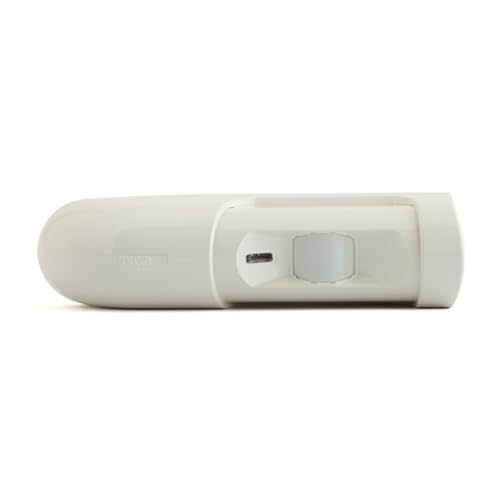 RISCO Group RK-700PRP IrexPlus Request to Exit PIR
|
8.1/10 | Buy |
| Best Value |
 MENGQI-CONTROL Request to Exit PIR Motion Sensor
|
7.8/10 | Buy |
Frequently Asked Questions
How often should you replace a wireless door contact sensor battery?
Most wireless door contacts operate between two and five years before requiring a fresh cell. High-traffic front entries will deplete cells faster than rarely opened basement windows due to frequent radio transmissions. Installing high-capacity lithium cells like CR123A 3V or coin-style CR2032 units ensures reliable standby power and reduces annoying panel trouble beeps. Checking battery levels annually through your security panel app prevents unexpected system disconnects.
What battery type powers wireless entry transmitters and motion sensors?
Security transmitters typically use CR123A 3V lithium cylinders or CR2032 coin cells depending on sensor casing size. Bulky wireless motion detectors and long-range magnetic switches often rely on 1600 mAh CR123A cells for deeper power reserves, while slimline window contacts utilize flat coin batteries. Checking your device manual ensures proper voltage matching before swapping cells. Much like aligning calibrated door contact sensors on custom doorways, clean battery fitment prevents loose contacts and voltage drop.
Why does an entry sensor report low battery right after installing a replacement?
Security panels require an active trigger event or tamper cycle to clear previous low-voltage error flags. Opening and closing the protected door several times forces the transmitter to send updated supervisory packets to the hub. If the alert persists, inspecting the internal contact prongs for oxidation or slight bending ensures firm mechanical pressure against the cell terminals. Using verified 3V non-rechargeable lithium chemistry also prevents immediate voltage dips caused by incompatible rechargeable cells.
Can freezing outdoor temperatures drain door sensor batteries faster?
Yes, sub-zero cold significantly slows the chemical reactions inside lithium cells and temporarily lowers operational voltage output. Standard consumer batteries lose effective capacity rapidly in unheated garages, exterior sheds, or drafty entryways during deep winter freezes. Quality lithium cells designed with internal PTC protection and wide operating temperature ranges handle severe thermal swings far better than alkaline alternatives. Positioning sensors flush against insulated frames also helps buffer sensitive components from harsh drafts.
Does a request to exit PIR motion sensor require battery replacements?
No, commercial request-to-exit PIR detectors and microwave door sensors run on hardwired low-voltage power rather than standalone batteries. Units such as the RISCO Group RK-700PRP or 24G microwave sensors draw continuous 12V or 24V DC current from an access control power supply to drive internal relay timers and buzzers. These hardwired motion sensors eliminate battery maintenance entirely while ensuring constant detection across busy commercial entryways. Always verify whether your specific entryway hardware utilizes low-voltage line power or self-contained lithium batteries.
How do you prevent false offline notifications on security door sensors in 2026?
Maintaining solid RF signal strength and installing the best risco door sensor battery prevents intermittent supervision failures between transmitters and your alarm panel. Radio interference, thick masonry walls, or sagging terminal springs can mimic low-battery conditions by dropping periodic handshake signals. Regularly testing sensor range and wiping terminal contacts clean during battery swaps keeps wireless communication channels stable throughout 2026.
About the author
John R. Delaney is a veteran technology editor and product reviewer specializing in home security, smart home devices, and wireless networking. With extensive experience evaluating connected security systems, cameras, smart locks, sensors, and networking equipment, he brings a practical testing mindset to consumer technology. His work emphasizes usability, performance, connectivity, and long-term value for homeowners building reliable smart security systems.