
Can a Security Camera See Through a Window: Practical Guide for 2026
Can a security camera see through a window? Learn how glass affects night vision, motion sensors, and daytime clarity in this November 2026 guide.
 By John Carlsen
Updated November 20, 2026


Drilling holes through exterior siding or running cabling along soffits is not always an option, especially for apartment renters or homeowners facing strict community guidelines. Placing an indoor monitoring device on an interior sill seems like the easiest workaround, but homeowners frequently ask: can a security camera see through a window without ruining image quality? The simple reality is that glass presents distinct physical obstacles, including daytime surface reflections, severe nighttime infrared bounce-back, and the failure of traditional thermal motion sensors. While standard indoor hardware frequently struggles in this position, purpose-built window models and specialized low-light sensors allow property owners to maintain clear surveillance over porches, driveways, and sidewalks.
Understanding how light behaves through modern double-pane and Low-E glass helps prevent blurry recordings, notification blind spots, and washed-out nighttime footage. Some homeowners pair window-facing setups with exterior ambient floodlights or separate battery security cameras with color night vision to keep perimeter views sharp after dark. By addressing lens positioning, disabling internal illumination, and selecting cameras equipped with edge-based computer vision rather than passive thermal triggers, you can effectively monitor outside activity while keeping your equipment safe from weather and tampering indoors.
| Award | Product | SSG Score About SSG ScoreThe SSG Score is our own rating from 0 to 10, based on performance, design and build, ease of use, and value. It reflects independent research and is never influenced by manufacturers, retailers, or affiliate commissions. Learn more › | |
|---|---|---|---|
| Best Overall |
ANYQOO 2K 3MP Window Security Camera
|
9.2/10 | Buy |
| Best Premium |
 LongPlus SafeView 3K Window Camera (2-Pack) |
9.1/10 | Buy |
| Best Budget |
 LongPlus 3K Safeview Window Camera |
8.8/10 | Buy |
| Best Value |
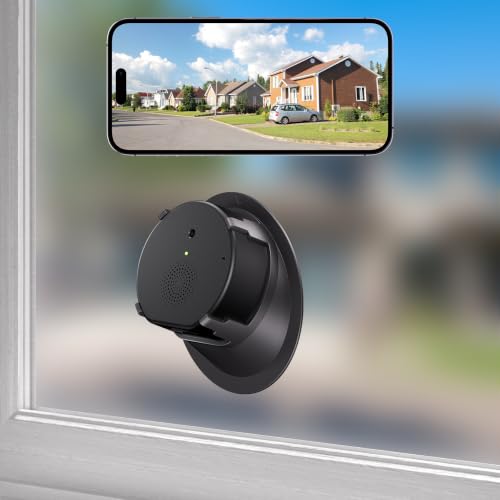 Fazoxo 2.5K Wireless Window Camera |
8.6/10 | Buy |
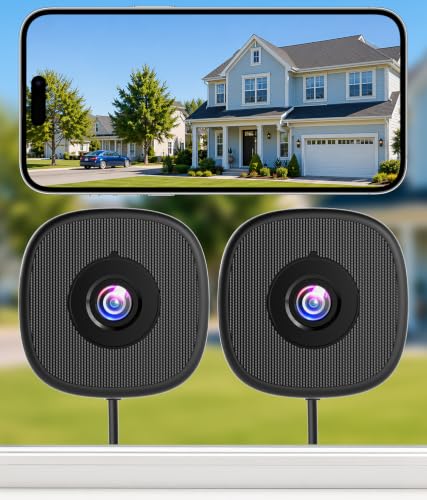 MISECU 2K Window Security Camera (2-Pack) |
8.3/10 | Buy | |
 Girafit 3MP 2K Window Camera |
8.1/10 | Buy | |
 WYZE Window Camera: Anti-Glare Indoor Security |
7.8/10 | Buy |
ANYQOO 2K 3MP Window Security Camera
Engineered specifically to shoot through glass without glare, this compact indoor camera delivers sharp 2K color footage day and night. Its tool-free adhesive mount and AI person detection make it a practical monitoring option for apartments and rental homes.
Pros
- Starlight sensor delivers full-color night footage through glass
- Anti-reflection build prevents window glare and washouts
- Dual-band Wi-Fi supports 2.4GHz and 5GHz connections
- Tool-free adhesive setup is rental and apartment friendly
Cons
- MicroSD card must be purchased separately
- Requires continuous tethered USB power to operate
- Relies on digital zoom rather than optical zoom
LongPlus SafeView 3K Window Camera (2-Pack)
Designed for peel-and-stick placement on glass surfaces, this dual-pack delivers 3K video with anti-glare technology to monitor outdoors from inside your home. It features dual-band Wi-Fi, AI-driven vehicle and person alerts, and continuous 24/7 recording options.
Pros
- Crisp 3K resolution through interior window glass
- Hassle-free magnetic sticker setup without drilling
- Reliable dual-band Wi-Fi support
- Accurate AI detection for people and cars
- Supports continuous 24/7 video recording
Cons
- MicroSD card not included for local storage
- Cloud storage requires an ongoing paid subscription
LongPlus 3K Safeview Window Camera
Designed for drill-free mounting directly onto glass, the LongPlus Safeview delivers crisp 3K surveillance with anti-glare optics and AI color night vision. It is a practical indoor-to-outdoor monitoring solution for renters and apartment dwellers who cannot install outdoor fixtures.
Pros
- Clear 3K resolution with anti-glare optics through glass
- F1.0 aperture produces vivid full-color night vision
- Tool-free magnetic mount requires no drilling or exterior wiring
- Smart AI reliably distinguishes people and vehicles
- Supports dual-band Wi-Fi and up to 512GB local storage
Cons
- MicroSD card for local storage is not included
- Placement is restricted to window panes and smooth glass
Fazoxo 2.5K Wireless Window Camera
Designed for glass-mounted home surveillance, this wire-free camera delivers 2.5K video with a helpful six-second pre-roll buffer before motion triggers. An adjustable bracket and rechargeable battery allow flexible placement on windows without running power cords.
Pros
- Sharp 2.5K resolution with wide F1.6 aperture
- Six-second pre-roll captures context before motion occurs
- Completely wire-free battery design for flexible placement
- Supports local microSD storage without mandatory monthly fees
Cons
- MicroSD card must be purchased separately
- Color night vision requires ambient light to function
- Cloud video storage requires an optional paid subscription
MISECU 2K Window Security Camera (2-Pack)
Designed to adhere directly to glass, this indoor camera setup monitors outdoor areas without the need for exterior drilling or weatherproofing. Clear 2K resolution, glare-reduction design, and dual-band Wi-Fi make it an accessible surveillance option for renters and homeowners alike.
Pros
- Quick drill-free indoor installation on window glass
- Supports fast and flexible dual-band Wi-Fi networks
- Clear starlight color night vision through window glass
- Offers local continuous recording via microSD card
Cons
- MicroSD storage card is not included in the box
- Free cloud storage clips are capped at 8 seconds
- Advanced AI object recognition requires an optional paid subscription
Girafit 3MP 2K Window Camera
Designed for fast glass mounting, the Girafit 3MP Window Camera delivers 2K video clarity with dual-band Wi-Fi support. It is a solid choice for homeowners and renters seeking color night vision and continuous recording without running complicated wiring.
Pros
- Dual-band 2.4GHz and 5GHz Wi-Fi support
- Clear 3MP 2K video with color night vision
- Simple peel-and-stick installation process
- Flexible 24/7 recording via SD card or cloud
Cons
- Designed strictly for indoor window use
- Adhesive mount makes quick repositioning difficult
WYZE Window Camera: Anti-Glare Indoor Security
The WYZE Window Camera is a compact indoor security camera designed to monitor the outdoors through window glass without glare, utilizing an f1.0 aperture lens and BSI sensor for color night vision. It offers subscription-free 24/7 continuous local recording via microSD, making it a practical option for apartment renters and homeowners seeking drill-free exterior surveillance.
Pros
- Flush window-mounting design eliminates interior glass reflection and glare issues
- Upgraded f1.0 lens and BSI sensor allow full-color night vision from ambient exterior lighting
- Continuous 24/7 local recording supported via microSD cards up to 512GB without monthly fees
- Quick Bluetooth pairing and included 10-foot power cable simplify interior positioning
- Works natively with Amazon Alexa, Google Assistant, and IFTTT automations
Cons
- Advanced AI recognition for people, pets, vehicles, and packages requires an optional cloud subscription
- Surveillance viewing angles are restricted to available indoor window placements
- MicroSD card for local video storage is sold separately
The Physics and Practical Realities of Window-Based Surveillance
A security camera can see through a window during the daytime, but achieving clear footage requires specific adjustments to handle reflections, lighting, and glass thickness. Standard indoor cameras pointed out a window often fail completely once the sun sets due to infrared bounce-back blinding the lens. Furthermore, traditional thermal motion sensors cannot penetrate glass, leaving your system blind to activity on the porch or driveway. Understanding these optical and mechanical hurdles allows you to position hardware correctly, capture sharp evidence, and avoid the common pitfalls that plague window-mounted security setups.
Optical Obstacles: Daytime Glare, Reflections, and Window Coatings
Glass is not completely transparent because every pane reflects a portion of incoming light back toward its source. When a camera sits behind an untreated window, interior room light bounces off the inner surface of the pane, creating an annoying mirror effect in your recorded footage. This reflection washes out contrast and makes details like license plates or facial features difficult to discern, particularly when the interior room is brighter than the outdoor scene. Glare also increases dramatically whenever the sun shines directly into the window from low morning or afternoon angles.
Modern double-pane and triple-pane windows introduce additional optical complexity due to microscopic Low-E (low-emissivity) metallic coatings. These metal oxide coatings reflect infrared energy to improve residential insulation, but they can also tint footage, create double ghosting artifacts, or slightly blur distant objects. Reflections from the secondary outer pane can be particularly stubborn because they sit several millimeters away from the lens. Angling the camera flat against the pane or using dedicated anti-reflection collars significantly cuts down these optical distortions, ensuring clean daytime video.
The Nighttime Infrared Problem: Why Traditional IR Fails Behind Glass
Nighttime monitoring through glass creates the biggest technical challenge for standard indoor surveillance hardware. Most security cameras rely on built-in infrared (IR) light-emitting diodes, typically emitting light at the 850-nanometer or 940-nanometer wavelengths, to illuminate dark environments. While invisible to the human eye, this infrared light behaves like a bright flashlight beam pointed directly at a mirror when aimed at glass. The high reflectivity of modern window glass prevents the beam from traveling into the yard.
The glass pane immediately reflects the infrared beam directly back into the camera lens, overloading the CMOS image sensor. This reflection creates a massive white glare ring that completely washes out the frame, leaving the outdoor yard pitch black and invisible. Automatic exposure controls then dial down sensor sensitivity to compensate for the glare, making exterior shadows even darker. To make a camera see through a window at night, you must either turn off the internal IR LEDs entirely or deploy a camera specifically designed with non-reflective window mounting hardware.
Starlight Sensors and Large Apertures for Ambient Light Capture
Turning off infrared LEDs means the camera must depend entirely on available ambient light to construct a nighttime image. Fortunately, modern sensor technology overcomes this limitation by using ultra-sensitive starlight sensors and wide optical apertures. Specialized window units, such as the WYZE Window Camera with an f/1.0 aperture lens and BSI sensor, or the Fazoxo wireless camera with an f/1.6 aperture, draw in significantly more ambient illumination than conventional lenses. These physical optics allow the sensor to capture usable light that older camera generations would miss completely.
These large apertures gather faint illumination from municipal streetlights, porch fixtures, or landscape lights to produce full-color nighttime video without activating reflective internal IR beams. Advanced image processing algorithms, like ChroMax AI color night vision, further balance exposure across high-contrast shadows. If your driveway or yard has decent exterior lighting, a starlight-equipped camera mounted flush to your glass will capture crisp, usable color footage throughout the night. Even modest exterior porch fixtures provide sufficient illumination for these high-gain sensors to resolve moving subjects.
Motion Detection Mechanics: Why PIR Sensors Fail Through Glass
Physical motion detection is another major hurdle when aiming a camera through a glass barrier. Many budget battery cameras rely on passive infrared (PIR) sensors, which detect changes in thermal energy radiated by moving warm bodies like humans and vehicles. However, residential window glass acts as an opaque thermal barrier, absorbing and blocking the mid-to-far infrared wavelengths that PIR sensors need to function. The sensor sees the glass pane temperature rather than the thermal heat signature of an approaching person.
As a result, a PIR-based camera placed behind a closed window will rarely trigger an alert when an intruder walks across your porch. Window surveillance requires cameras that use optical pixel-change analysis or on-device computer vision algorithms processed by an integrated neural processing unit. Models from LongPlus and ANYQOO utilize smart AI person and vehicle detection, analyzing video frame differences directly rather than relying on thermal radiation to identify threats accurately. This ensures that movement outside the glass reliably wakes the system and initiates recording.
Mitigating False Alerts and Notification Fatigue
Optical pixel detection solves the PIR trigger problem, but it can introduce its own set of complications. Traditional pixel-based motion sensing flags any change in lighting or pixel values, meaning that headlights sweeping across your ceiling, raindrops running down the pane, or tree shadows blowing in the wind can trigger endless alerts. This frequent cycling leads to severe notification fatigue, tempting homeowners to mute notifications or ignore alerts entirely. High sensitivity settings also cause continuous event clips that fill up local storage media prematurely.
Customizable motion activity zones and edge-based AI classification mitigate these false motion triggers. By drawing custom detection masks that exclude public sidewalks or swaying bushes, you focus the camera processing strictly on your front walkway or driveway. Smart AI filters out non-human movement, ensuring your phone receives notifications only when a person or vehicle crosses into designated boundaries. Fine-tuning these sensitivity thresholds prevents outdoor environmental noise from generating unnecessary smartphone alerts.
Audio and Two-Way Communication Boundaries
Two-way talk is a standard feature on most residential security cameras, but window placement essentially renders audio tools ineffective. Sealed, multi-pane window assemblies are designed to provide acoustic insulation, blocking airborne sound transmission between the inside and outside environments. When you speak through the camera app, your voice broadcasts into your living room rather than to the delivery driver standing outside your front door. The physical glass barrier prevents outdoor visitors from hearing two-way speaker output clearly.
Similarly, the camera microphone will primarily pick up indoor conversations, appliance humming, or television noise rather than outdoor footsteps. While high-gain microphones might faintly record loud exterior noises like sirens or barking dogs, conversational speech will be heavily muffled. Echo cancellation features can also struggle when acoustic energy reflects off the surrounding window frame. If two-way audio communication is a priority for visitor interaction, installing an exterior video doorbell remains a far more practical solution.
Mounting Strategies to Eliminate Interior Reflection
Positioning is the single most critical factor determining whether a window camera produces crisp surveillance or an unusable reflection of your living room. The front lens element must sit as close to the glass pane as possible to prevent light from slipping between the lens and the window. Dedicated window cameras include specialized adhesive brackets, hook-and-loop mounting stickers, or magnetic plates that hold the lens flat against the glass surface. This direct contact seals the optical path and blocks stray indoor illumination.
If ambient indoor light still leaks around the edges of the housing, it creates ghost reflections that degrade nighttime contrast. You can eliminate this bleed by adding a silicone lens hood or dark mounting shroud around the perimeter of the bracket. Keeping the room behind the camera as dim as possible at night further ensures the sensor focuses entirely on the exterior environment. Turning off indoor accent lights or drawing nearby curtains prevents interior glare from washing out your outdoor security feed.
Power Delivery, Continuous Recording, and Local Storage
Window-mounted surveillance offers a distinct advantage regarding continuous power availability. Because the device sits indoors, you can connect it directly to standard household AC wall outlets using long USB cables, bypassing the recharging cycles required by outdoor battery systems. Continuous power delivery enables true 24/7 continuous video recording (CVR), ensuring that you capture the moments leading up to an incident rather than relying solely on delayed motion clips. You never need to worry about climbing ladders in freezing weather to swap depleted battery packs.
Recording continuously around the clock requires reliable local storage architecture to prevent bandwidth congestion. Cameras equipped with high-endurance microSD card slots, supporting capacities from 128GB up to 512GB, allow you to store days or weeks of high-resolution video locally without paying recurring monthly cloud subscription fees. Users evaluating exterior alternatives often compare these setups with dedicated battery cameras with local storage to balance interior convenience against flexible outdoor mounting angles. Local storage also ensures recording continuity even if your internet service experiences an unexpected outage.
Battery-operated window cameras also exist, such as the Fazoxo wireless model, which uses a pre-roll buffer to record the six seconds prior to motion confirmation. This buffer mitigates the typical wake-up lag seen in battery hardware without tethering the unit to a nearby power outlet. Lower standby frame rates conserve power until full motion triggers activate high-definition recording. However, hardwired USB connections remain the gold standard for high-frame-rate continuous security monitoring through window glass.
Wi-Fi Signal Stability and Low-E Glass Attenuation
Placing your security camera inside the home provides immediate wireless networking advantages. Indoor placement eliminates the signal degradation caused by thick exterior brick, stone, or stucco walls, allowing the device to maintain a strong Received Signal Strength Indicator (RSSI) connection to your home router. Dual-band Wi-Fi capabilities supporting both 2.4 GHz and 5 GHz networks allow faster data throughput for streaming 2K or 3K video streams. Lower latency ensures instant live-view streaming and rapid alert transmission to your mobile device.
Homeowners should note that Low-E window coatings can sometimes act as subtle radio-frequency attenuators. While this rarely affects the camera connection to an indoor access point, it can reduce signal strength if the camera attempts to link with an outdoor Wi-Fi extender or mesh node located on a detached garage. Keeping your wireless router centrally located ensures smooth live-stream handshakes and rapid push notifications. Connecting over the 5 GHz band also avoids congestion from neighboring 2.4 GHz networks in dense apartment complexes.
Legal Boundaries and Privacy Expectations
Aiming a surveillance camera out of a residential window requires an understanding of privacy laws. Under US legal principles and Fourth Amendment jurisprudence, individuals have a reduced expectation of privacy in public spaces like streets, sidewalks, and open driveways. However, positioning a window camera so that it peers directly into a neighbor’s interior living space or fenced backyard can violate reasonable expectations of privacy and invite civil liability. Software privacy masks can digitally block sensitive neighboring areas from view while preserving coverage over your entryway.
Audio recording introduces additional legal considerations governed by federal law (18 U.S.C. § 2511) and state-level eavesdropping statutes. While federal law requires only one-party consent to record conversations, several states enforce strict all-party (two-party) consent rules. Because window-mounted cameras often capture muffled ambient audio rather than intelligible speech, many homeowners choose to disable audio recording entirely within the device settings to eliminate legal friction and protect indoor household privacy. Disabling audio recording avoids accidental interception of private household conversations.
Window Cameras vs. Dedicated Exterior Systems
Window cameras are an outstanding, non-destructive surveillance solution for apartment renters, dorm residents, and rental properties where drilling into exterior building envelopes is strictly prohibited. They install in minutes using adhesive brackets, require zero ladder climbing, and remain completely sheltered from driving rain, freezing ice, and physical tampering. Devices placed safely indoors also avoid the harsh temperature swings that degrade lithium battery cells during northern winter freezes. For entry-level porch or driveway monitoring, a properly configured window camera delivers reliable situational awareness at minimal setup effort.
Despite these benefits, indoor window units cannot fully replace comprehensive outdoor coverage on larger properties. Fixed window angles limit your field of view, creating blind spots along exterior walls and foundational corners. When you need active perimeter deterrence, wide-angle panning, integrated spotlight sirens, or direct two-way talk, pairing window units with exterior hardware like pan-tilt-zoom cameras for driveway monitoring provides far more robust physical property protection. Outdoor units also provide superior viewing angles unconstrained by window frame placement.
Balancing these tradeoffs comes down to your property layout, mounting limitations, and surveillance objectives. By pairing wide-aperture lenses with optical AI motion filtering and eliminating interior light bleed, you can successfully monitor your exterior perimeter through a window without compromising image clarity or dealing with washed-out nighttime footage. Verifying your camera view after dark and adjusting mounting shields ensures your window-based surveillance remains dependable around the clock.
About the author
John Carlsen is a home security and smart home specialist with more than a decade of experience researching and testing security technology. His expertise covers DIY security systems, security cameras, smart devices, pricing, contracts, and connected-home technology. He combines hands-on product testing with detailed research to explain strengths, limitations, ownership costs, and real-world value in straightforward terms for homeowners and renters.