
Can I Put a Security Camera Outside My House? Rules and Setup Guide for 2026
Check if can i put a security camera outside my house legally in November 2026, covering property lines, audio consent laws, and exterior mounting.
 By Alina Bradford
Updated November 21, 2026

Homeowners often wonder where personal property rights end and neighbor privacy concerns begin when planning exterior surveillance. When asking can i put a security camera outside my house, the short answer is almost always yes, provided your equipment captures areas visible from public space and stays focused on your own property boundaries. Outdoor surveillance acts as an effective deterrent against porch package theft, trespassing, and property damage. However, mounting cameras on exterior walls requires careful attention to viewing angles, local municipal codes, and state audio recording laws. Homeowners who install battery security cameras with local storage often appreciate the independence from monthly fees, but they must still position equipment responsibly.
Exterior installations also introduce technical hurdles that indoor security setups rarely encounter, such as driving rain, extreme temperature swings, and signal attenuation through exterior stucco or brick. Balancing personal protection with neighborhood privacy requires understanding both hardware capabilities and legal boundaries. Modern cameras feature customizable detection zones, physical privacy masks, and adjustable audio settings designed to prevent unnecessary community friction. Taking the time to survey your perimeter, verify Wi-Fi coverage, and confirm local regulations ensures your outdoor system remains reliable, respectful, and legally sound.
| Award | Product | SSG Score About SSG ScoreThe SSG Score is our own rating from 0 to 10, based on performance, design and build, ease of use, and value. It reflects independent research and is never influenced by manufacturers, retailers, or affiliate commissions. Learn more › | |
|---|---|---|---|
| Best Overall |
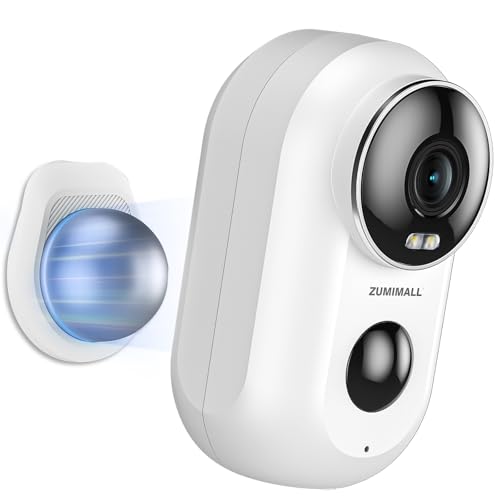
ZUMIMALL 2K Wireless Security Camera
|
9.1/10 | Buy |
| Best Premium |
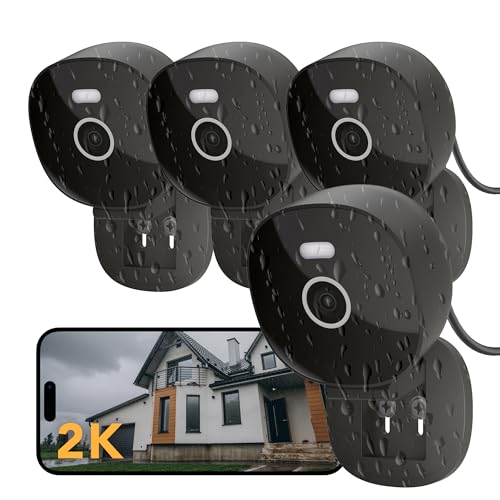 FAMVIVA 2K Wired Security Camera (4-Pack) |
9.1/10 | Buy |
| Best Budget |
 VSMAHOME 2K Indoor/Outdoor Security Camera |
8.8/10 | Buy |
| Best Value |
 HITELLARCAM 2K Wireless Outdoor Security Camera |
8.8/10 | Buy |
 Vimtag 2.5K Outdoor Security Camera |
8.4/10 | Buy | |
 Vimtag 2.5K Indoor Outdoor Security Camera 2-Pack |
8.4/10 | Buy | |
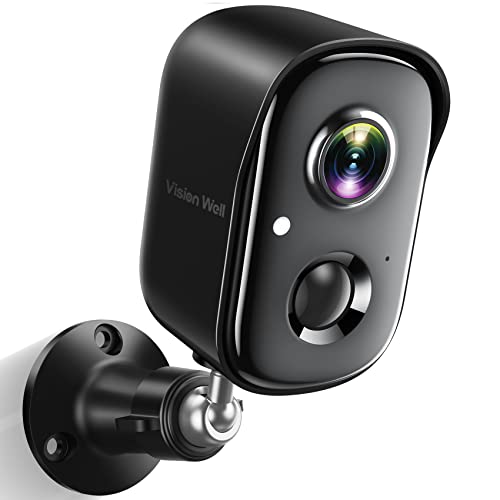 VISION WELL 2K Wireless Security Camera |
7.8/10 | Buy |
ZUMIMALL 2K Wireless Security Camera
Flexible magnetic mounting and sharp 2K video make this battery-powered camera a versatile choice for indoor or outdoor monitoring. It combines spotlight color night vision with custom AI detection, catering well to renters and homeowners who want a drill-free setup.
Pros
- Tool-free magnetic mount allows effortless placement
- Sharp 2K clarity with color night vision
- Customizable AI alerts minimize false motion notifications
- Durable IP66 weatherproof housing
- Integrated two-way audio and deterrence siren
Cons
- Lacks support for 5GHz Wi-Fi networks
- MicroSD card must be purchased separately
- Free cloud loop only records six-second clips
FAMVIVA 2K Wired Security Camera (4-Pack)
This four-camera kit provides sharp 2K monitoring with color night vision and IP65 weather resistance for indoor or outdoor coverage. Integrated spotlights and sirens add active deterrence, though each unit requires a nearby power outlet.
Pros
- Crisp 2K video clarity with full-color night vision
- Integrated spotlight and siren deter potential intruders
- IP65 weatherproofing withstands rain and snow
- Seamless integration with Alexa and Google Home displays
Cons
- Requires a continuous wired outlet connection to operate
- MicroSD card must be purchased separately for local storage
VSMAHOME 2K Indoor/Outdoor Security Camera
Designed for flexible whole-home monitoring, this VSMAHOME camera pairs sharp 2K resolution with color night vision and two-way talk. It offers dependable 24/7 coverage for homeowners who need versatile surveillance inside the nursery or outside on the porch.
Pros
- Sharp 2K video clarity with color night vision
- IP66 weatherproofing protects against rain and dust
- Supports continuous local recording up to 128GB
- Two-way talk enables easy remote communication
- Quick and straightforward setup out of the box
Cons
- MicroSD card is not included in the package
- Requires access to an outlet via 6.56-foot cord
- Outdoor placement works best under sheltered eaves
HITELLARCAM 2K Wireless Outdoor Security Camera
The HITELLARCAM 2K wireless outdoor security camera provides wire-free surveillance featuring dual-band Wi-Fi, full-color night vision, and flexible storage via a microSD slot or free SD-quality cloud tier. It serves as an accessible option for suburban homeowners or renters seeking budget-friendly entryway and perimeter coverage without mandatory monthly fees.
Pros
- Dual-band 2.4GHz and 5GHz Wi-Fi support provides flexible home network integration
- Free SD-quality cloud storage option provides clip access without mandatory subscription fees
- Onboard microSD card slot supports up to 256GB for zero-monthly-cost local video storage
- IP66 weather-resistant construction withstands exposure to outdoor rain and dust
- Integrated LED spotlights enable full-color night recording and visual deterrence
Cons
- Free cloud storage tier is limited to standard-definition playback unless upgraded to a paid plan
- MicroSD card is not included with the camera and must be purchased separately
- Battery runtime varies significantly based on trigger frequency, live-view streaming, and cold temperatures
Vimtag 2.5K Outdoor Security Camera
Delivering crisp 2.5K streaming and dual-band Wi-Fi connectivity, this compact Vimtag camera suits homeowners seeking reliable indoor or outdoor surveillance with active deterrents. It pairs full-color night vision with instant motion-triggered spotlights and versatile storage options.
Pros
- High-clarity 2.5K resolution with full-color night vision
- Dual-band Wi-Fi supports both 2.4GHz and 5GHz bands
- IP66-rated housing withstands harsh weather conditions
- Generous local storage capacity up to 512GB
- Integrated spotlight and siren act as visible deterrents
Cons
- Cloud video storage requires an ongoing paid subscription
- MicroSD card for local recording is sold separately
- Requires a continuous plug-in power source
Vimtag 2.5K Indoor Outdoor Security Camera 2-Pack
The Vimtag 2.5K Indoor/Outdoor Security Camera 2-Pack offers 4MP video clarity, dual-band Wi-Fi flexibility, and color night vision backed by a built-in spotlight and siren. It provides a versatile, cost-effective monitoring solution for homeowners and renters seeking reliable indoor or perimeter coverage with local microSD storage support.
Pros
- Dual-band 2.4 GHz and 5 GHz Wi-Fi compatibility provides greater connection flexibility than standard 2.4 GHz-only cameras
- Solid 2.5K video resolution paired with spotlight illumination ensures clear daytime and nighttime video capture
- IP66-rated enclosure allows seamless transition between indoor nursery monitoring and exposed outdoor surveillance
- Local microSD slot enables subscription-free video storage without forcing an ongoing monthly cloud fee
- Convenient plug-and-play setup supports freestanding tabletop placement or permanent wall mounting with included screws
Cons
- MicroSD card is not included in the box and must be purchased separately for local recording
- Continuous AC power connection is required, limiting placement to areas near electrical outlets
- Advanced cloud video recording and extended alert history require an optional paid Vimtag Cloud subscription
VISION WELL 2K Wireless Security Camera
Designed for wire-free indoor or outdoor placement, this compact camera delivers crisp 2K video with both infrared and full-color night vision. Integrated AI detection alongside an active spotlight and siren makes it a practical option for homeowners seeking perimeter security without running cables.
Pros
- Sharp 2K video with full-color night vision
- Wire-free design allows easy mounting anywhere
- Built-in spotlight and siren provide active deterrence
- AI detection categorizes people, vehicles, and packages
- Durable IP65 waterproof housing for outdoor use
Cons
- Does not support 5GHz Wi-Fi networks
- MicroSD card not included with purchase
- Battery requires periodic recharging every few months
Legal Rules, Property Boundaries, and Technical Considerations for Outdoor Cameras
Installing exterior surveillance is fully legal across the United States under common law property rights, provided the cameras monitor areas where individuals have no reasonable expectation of privacy. You can freely mount cameras on exterior siding, porches, garages, or fence lines to oversee your driveway, front yard, and entry doors. The primary legal boundaries arise when a camera lens directly peers into spaces where a neighbor expects seclusion, such as an interior bedroom or a shielded bathroom window. Approaching your installation with an understanding of privacy torts, audio eavesdropping statutes, and physical hardware requirements ensures effective security without creating neighborhood conflict.
Understanding Reasonable Expectation of Privacy and Property Lines
The legal doctrine of a reasonable expectation of privacy governs residential surveillance under common law torts and Fourth Amendment legal principles. While the Fourth Amendment formally restricts government searches, civil courts apply similar privacy standards when evaluating disputes between private homeowners. Areas visible from a public street, sidewalk, or open driveway carry no legal expectation of privacy. Consequently, if your camera captures an open front yard or a public roadway that anyone passing by can see, courts routinely consider that footage legally permissible.
Serious civil liabilities emerge when a homeowner deliberately directs an outdoor camera toward inherently private neighboring spaces. Pointing a high-resolution lens through a neighbor’s bedroom window or over a high privacy fence into an intimate backyard patio can trigger lawsuits for invasion of privacy. Many jurisdictions recognize the civil tort of intrusion upon seclusion, which penalizes intentional intrusions that a reasonable person would find highly offensive. Homeowners should aim lenses downward toward their own curtilage and utilize software privacy masking to block out adjacent private windows.
Modern security software provides practical digital tools to help property owners maintain strict neighborhood boundaries. Many outdoor cameras allow users to establish blacked-out digital privacy masks that permanently block designated rectangular portions of the video frame from live views and recorded clips. Utilizing software privacy masking guarantees that sensitive adjacent windows remain unrecorded even if the camera maintains a wide field of view. Taking these proactive configuration steps protects neighbor relationships and demonstrates good faith in the event of any property line disagreements.
Federal and State Audio Recording Laws
Audio recording introduces far stricter statutory hurdles than capturing silent video footage. Federal wiretap law under 18 U.S.C. § 2511 prohibits the interception of oral communications where individuals possess a justified expectation that their conversations are not subject to interception. While public sidewalks rarely support such expectations, private side yards, backyard seating spaces, and entryway alcoves often do. Capturing clear audio conversations between neighbors across a fence line can inadvertently expose homeowners to civil wiretap complaints.
State statutes complicate audio surveillance further by establishing distinct consent requirements across different jurisdictions. Roughly thirty-five states follow one-party consent rules, allowing audio recording if at least one participant in the conversation agrees to be recorded. However, around a dozen states enforce all-party consent laws, requiring every individual in a recorded conversation to give explicit consent. If an outdoor camera records an ambient conversation between two visitors without their knowledge, it may violate state eavesdropping regulations in all-party jurisdictions.
Homeowners can easily mitigate audio surveillance risks by auditing their camera companion applications. Most manufacturers include an audio toggle switch in the device settings menu that disables microphone recording while keeping video feeds fully operational. Disabling the microphone eliminates potential wiretap exposure entirely while preserving full optical monitoring of exterior access points. If you choose to retain audio recording for doorway interactions, posting clear signage indicating that audio and video surveillance are active provides helpful legal notice to visitors.
Navigating HOA Guidelines, Tenant Agreements, and Rental Restrictions
Homeowners associations and condominium boards frequently impose aesthetic and structural rules that override general municipal allowances. HOA covenants, conditions, and restrictions often dictate where exterior hardware may be mounted, what color camera housing is acceptable, and whether wires can run visibly along exterior trim. Installing an unapproved camera that projects prominently from an exterior wall can result in association fines or demands for immediate removal. Reviewing association bylaws before drilling holes into exterior brick or siding prevents costly compliance disputes.
Tenants living in single-family rental homes or apartment complexes face contractual lease agreements that generally forbid structural alterations. Drilling holes through exterior building envelopes, siding, or window casings can violate lease agreements and lead to security deposit deductions. Renters can maintain property security by utilizing non-destructive mounting solutions such as magnetic brackets, heavy-duty outdoor adhesive pads, or gutter clamp mounts. Devices equipped with magnetic mounting plates allow rapid removal for battery recharging without causing any physical wall damage.
Apartment corridors and shared residential breezeways present unique privacy challenges for tenants deploying cameras. Because hallways function as shared interior common areas, pointing a camera directly across an interior corridor into an opposite unit door can provoke privacy complaints from neighbors. In shared living environments, positioning cameras close to your immediate door frame with steep downward angles keeps detection tightly confined to your doorway. Consulting with your property manager before installing exterior equipment ensures your setup respects both community rules and lease obligations.
Selecting the Right Power Delivery Architecture
Choosing the correct power architecture determines how reliably your camera operates during severe weather and power events. Completely wire-free cameras powered by internal rechargeable lithium-ion batteries provide unmatched installation flexibility because they require no exterior power outlets or cabling. These battery units excel in locations where running electrical wiring is cost-prohibitive, such as detached fence lines, garden sheds, or rental doorways. However, battery cameras must enter low-power sleep states between events, which means they record only when motion triggers the sensor rather than providing continuous 24/7 video.
Cold winter weather poses a significant physical constraint on battery-powered outdoor cameras. Standard lithium-ion battery cells experience slowed chemical reactions in sub-freezing temperatures, which causes rapid voltage drops and temporary capacity loss. Furthermore, internal battery management systems halt incoming charging current below 32 degrees Fahrenheit to prevent internal cell damage. Homeowners who install battery security cameras with color night vision must account for increased power consumption when spotlights activate, especially during cold winter months.
Continuous 24/7 surveillance requires a hardwired power delivery system that never depends on battery replenishment. Plug-in AC cameras connect directly to standard outdoor electrical outlets, while professional installations often use Power over Ethernet architecture. Installing wired PoE security camera systems allows a single Cat6 network cable to transmit both electrical power and video data over distances exceeding three hundred feet. Hardwired systems support constant video buffering, zero sleep-to-wake recording latency, and continuous timeline playback that battery systems cannot match.
Weatherproofing and Ingress Protection Standards
Exterior cameras must withstand continuous exposure to rain, snow, ultraviolet sunlight, and airborne dust particles. International Ingress Protection ratings define the exact physical enclosure resistance of outdoor electronic hardware. An IP65 rating signifies that the housing is completely dust-tight and capable of resisting low-pressure water jets projected from any angle. Hardware carrying an IP66 rating provides enhanced protection against heavy seas and powerful water jets, making it suitable for unshaded walls exposed to driving rainstorms.
Physical placement beneath architectural features significantly extends the operational lifespan of exterior cameras. Mounting equipment directly beneath roof overhangs, eaves, or porch soffits shields camera lenses from direct rainwater spots and intense overhead sun glare. Water droplets on an optical lens can severely distort recorded footage, while direct sun exposure can cause internal thermal shutdown during peak summer heat. Installing cameras in sheltered locations also preserves rubber weather gaskets and prevents moisture from creeping into microSD card slots or charging ports.
When installing wired cameras that pass cables through exterior walls, creating a physical drip loop is essential. A drip loop is a downward curved dip in the cable positioned just below the wall penetration point. Gravity causes rainwater running along the exterior wire to gather at the bottom of the loop and drip harmlessly to the ground rather than following the cable inside your home. Sealing the exterior drill hole with exterior-grade silicone caulk prevents moisture intrusion, dry rot, and insect infiltration into your wall cavities.
Optical Placement, Mounting Heights, and DORI Standards
Mounting height directly dictates whether recorded footage provides actionable forensic evidence or merely decorative security clips. The recommended mounting height for residential outdoor cameras sits between eight and ten feet above finished grade. Positioning a camera at this height keeps the hardware safely out of reach from casual vandalism or physical tampering while maintaining an optimal facial identification angle. Mounting a camera higher than ten feet creates a steep downward angle that captures only the tops of heads and hats, rendering facial recognition virtually impossible.
Security professionals evaluate optical performance using the international IEC EN 62676-4 DORI standard, which outlines specific pixel density thresholds for surveillance video. The DORI framework defines four distinct levels of visual clarity: Detection at 25 pixels per meter, Observation at 63 pixels per meter, Recognition at 125 pixels per meter, and Identification at 250 pixels per meter. While a wide-angle 2K or 2.5K lens can detect motion across a large driveway, positive forensic identification of an unknown face requires sufficient pixel density that diminishes rapidly beyond twenty feet.
Camera orientation relative to the sun is another critical factor that impacts daytime image clarity. Pointing a camera directly toward the east or west exposes the image sensor to intense sunrise or sunset glare, which can completely wash out foreground subjects. Modern cameras utilize wide dynamic range and high dynamic range algorithms to balance bright skies and dark entry shadows. However, physically angling the lens downward and away from direct horizons remains the most reliable method for preserving usable facial contrast throughout the day.
Wi-Fi Signal Transmission and Network Bandwidth Management
Wireless outdoor cameras rely on radio frequency signals that must penetrate thick exterior building materials. Most residential outdoor cameras operate on the 2.4 GHz wireless frequency band because longer radio waves penetrate exterior brick, wood siding, and drywall better than higher frequencies. However, the 2.4 GHz spectrum is notoriously crowded with household interference from microwave ovens, Bluetooth accessories, and neighboring routers. Dual-band cameras supporting both 2.4 GHz and 5 GHz bands offer greater throughput and reduced congestion if the camera sits close to an exterior access point.
Exterior wall materials cause dramatic radio signal attenuation that degrades live streaming and causes missed recording triggers. Heavy building envelopes constructed from brick, stone, concrete, or wire-lath stucco can weaken Wi-Fi signals by more than twenty decibels. Before permanently securing mounting brackets to exterior walls, homeowners should check the received signal strength indicator using the camera companion mobile application. An RSSI measurement between -30 dBm and -60 dBm indicates excellent connection quality, whereas values worse than -70 dBm often cause choppy video and frequent connection dropouts.
Bandwidth consumption across multiple high-resolution cameras can congest home broadband upload channels. A continuous 2K video stream utilizing older H.264 compression can consume significant upstream bandwidth during active periods. Modern cameras employing H.265 compression cut required bitrates roughly in half without sacrificing optical clarity, helping preserve bandwidth across crowded residential networks. Homeowners with asymmetric internet plans featuring limited upload speeds should consider motion-activated recording or local storage architectures to keep home networks running smoothly.
Storage Architectures: Local MicroSD Cards Versus Cloud Services
Deciding where your video recordings reside affects both your ongoing ownership costs and overall data privacy. Cloud storage plans upload encrypted event clips to remote vendor servers, making your footage immediately accessible from anywhere via smartphone apps. The central advantage of offsite cloud storage is physical theft resilience; if an intruder steals or smashes your exterior camera, your recorded event footage remains securely archived online. However, cloud plans typically require recurring monthly subscriptions that multiply quickly across multi-camera installations.
Onboard local storage using high-endurance microSD cards provides a completely subscription-free alternative for budget-conscious homeowners. Inserting a microSD card into your camera allows the device to record event clips or continuous loop video directly to internal flash memory. High-endurance cards rated with Class 10, UHS Speed Class 3, and Video Speed Class 30 designations are built specifically to endure continuous read-write cycles in extreme exterior temperature conditions. The main trade-off with local storage is that physical theft of the camera results in the total loss of all onboard footage unless backed up locally.
Network dropouts highlight another crucial operational difference between local and cloud storage models. When home broadband service fails, cloud-dependent cameras immediately lose their ability to record or archive video clips. Conversely, cameras equipped with onboard microSD cards continue recording motion events locally throughout an internet outage, provided the device retains electrical power. Once internet connectivity is restored, homeowners can review the stored local recordings through the mobile app without missing any critical property activity.
Calibrating Motion Zones and AI Detection to Prevent Nuisance Alerts
Notification fatigue is one of the most common frustrations experienced by new outdoor security camera owners. Basic optical motion detection triggers whenever pixels change luminance, resulting in constant false alerts from swaying tree branches, shifting cloud shadows, or passing insect swarms. Hardware passive infrared sensors improve detection accuracy by monitoring thermal radiation differentials across split zones, waking the camera only when warm moving bodies enter the detection perimeter.
Modern edge-based artificial intelligence significantly refines notification accuracy by analyzing captured shapes on the camera itself. Onboard neural processing units identify distinct visual signatures for people, vehicles, domestic pets, and delivered packages while discarding environmental movement. Combining AI detection with customizable activity zones allows homeowners to exclude busy public sidewalks and road traffic from the active trigger map. Filtering out peripheral movement prevents your smartphone from buzzing every time a vehicle drives down your residential street.
Integrating automated deterrence features such as white spotlights and acoustic sirens adds active perimeter defense to passive recording. When an unauthorized person enters your driveway during late-night hours, motion-activated spotlights immediately illuminate the subject and switch the camera into vivid color night vision. Simultaneously activating an audible siren or using two-way talk to announce that the property is monitored effectively turns away potential trespassers before any property damage occurs. Testing these automated deterrence tools during daytime hours ensures they activate accurately without causing unnecessary neighborhood disturbances.
Securing the exterior perimeter of your home is a lawful and practical measure that provides immense peace of mind when approached with care. By orienting lenses away from private neighbor spaces, turning off audio recording where state wiretap statutes require, and choosing reliable weather-rated hardware, you create a robust home defense system that respects community boundaries. Taking time to test your Wi-Fi signal at the mounting location, dialing in motion detection zones, and establishing a dependable storage setup will keep your home protected around the clock.
About the author
Alina Bradford is a safety and security expert with more than two decades of experience researching consumer technology and personal safety. She has tested hundreds of security and safety products and brings first-responder training to her practical approach. Her expertise spans home security equipment, cameras, connected safety devices, apps, and emerging security technology, with a focus on making complex products easier for everyday consumers to understand.