
How to Hide Security Camera Outdoor: Practical Guide for 2026
Learn how to hide security camera outdoor techniques safely in November 2026 to maintain clear video coverage, preserve Wi-Fi signals, and respect neighborhood privacy.
 By Tyler Lacoma
Updated November 20, 2026

Property owners frequently face a delicate balance between home surveillance visibility and covert perimeter monitoring. When cameras stand out prominently, intruders may attempt to disable them, knock them down, or actively exploit blind spots outside the lens field of view. Mastering how to hide security camera outdoor environments enables homeowners to capture unbiased event footage while protecting physical equipment from intentional vandalism. Achieving effective concealment requires careful planning to prevent accidental obstruction of optical glass, thermal motion sensors, or wireless transmission antennas.
Hiding outdoor hardware is not simply a matter of tucking a camera behind dense garden shrubs or beneath exterior roof shingles. Improper placement can easily cause severe night vision glare, ruined motion alerts, and severe Wi-Fi signal attenuation across exterior masonry walls. Property owners seeking reliable surveillance often deploy wire-free security cameras with local storage to eliminate exposed wiring that gives away covert installations. Balancing optical clarity, electrical power delivery, and regulatory compliance ensures your concealed outdoor surveillance delivers actionable security without creating unexpected operational headaches.
| Award | Product | SSG Score About SSG ScoreThe SSG Score is our own rating from 0 to 10, based on performance, design and build, ease of use, and value. It reflects independent research and is never influenced by manufacturers, retailers, or affiliate commissions. Learn more › | |
|---|---|---|---|
| Best Overall |
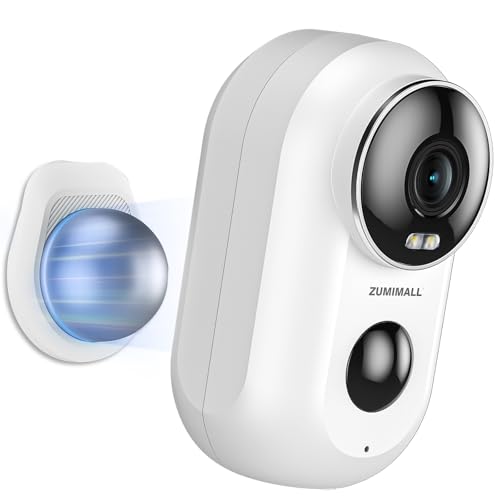
ZUMIMALL 2K Wireless Security Camera
|
9.1/10 | Buy |
| Best Budget |
 QOKBZQ 1080P Mini WiFi Camera (2 Pack) |
8.9/10 | Buy |
| Best Value |
 VIMTAG 2.5K Pan-Tilt Wired Outdoor Security Camera |
8.4/10 | Buy |
| Best Premium |
 Vimtag 2.5K Indoor Outdoor Security Camera 2-Pack |
8.4/10 | Buy |
 NodeBlaz 1080p Wireless Security Camera |
8.3/10 | Buy | |
 BNT TC-W2 Dummy Security Camera (2-Pack) |
8.0/10 | Buy | |
 Guardhouse 1080P Mini Security Camera |
7.8/10 | Buy |
ZUMIMALL 2K Wireless Security Camera
Flexible magnetic mounting and sharp 2K video make this battery-powered camera a versatile choice for indoor or outdoor monitoring. It combines spotlight color night vision with custom AI detection, catering well to renters and homeowners who want a drill-free setup.
Pros
- Tool-free magnetic mount allows effortless placement
- Sharp 2K clarity with color night vision
- Customizable AI alerts minimize false motion notifications
- Durable IP66 weatherproof housing
- Integrated two-way audio and deterrence siren
Cons
- Lacks support for 5GHz Wi-Fi networks
- MicroSD card must be purchased separately
- Free cloud loop only records six-second clips
QOKBZQ 1080P Mini WiFi Camera (2 Pack)
Designed for discreet home monitoring, this compact two-camera set delivers 1080p video with wide-angle coverage. Continuous around-the-clock recording and remote viewing via iOS or Android allow seamless tracking of pets, nurseries, or living areas.
Pros
- Compact black casing blends easily into home spaces
- Full 1080p resolution provides clear video playback
- Wide-angle lens captures broader room coverage
- Supports round-the-clock continuous video recording
- Two-pack bundle expands multi-room coverage
Cons
- Requires companion mobile app for remote viewing
- Available only in black finish
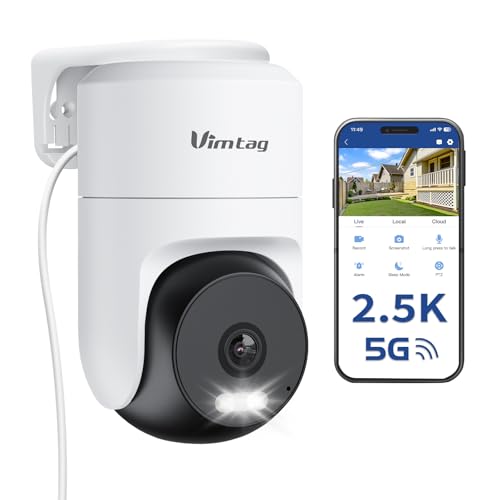
VIMTAG 2.5K Pan-Tilt Wired Outdoor Security Camera
The VIMTAG 2.5K Pan/Tilt Wired Outdoor Security Camera delivers 2560x1440 QHD video, motorized 360-degree coverage, and dual-band Wi-Fi for dependable residential surveillance. It is a practical choice for homeowners and renters seeking continuous plug-in perimeter monitoring without recurring monthly cloud fees.
Pros
- Motorized 360-degree pan and 90-degree tilt with real-time motion tracking eliminates blind spots.
- Dual-band 2.4GHz and 5GHz Wi-Fi support ensures flexible and stable wireless network pairing.
- AI detection for people, pets, and vehicles functions without requiring a paid subscription.
- Generous local storage capacity supporting microSD cards up to 512GB for 24/7 continuous recording.
- IP66 weather-resistant housing withstands outdoor rain, dust, and exterior environmental exposure.
Cons
- Requires access to an electrical outlet via the 9.8-foot power cord, restricting wire-free placement.
- High digital zoom levels up to 8x crop the image rather than using optical glass magnification.
- Smart home ecosystem compatibility is limited to Amazon Alexa without Google Home or HomeKit support.
Vimtag 2.5K Indoor Outdoor Security Camera 2-Pack
The Vimtag 2.5K Indoor/Outdoor Security Camera 2-Pack offers 4MP video clarity, dual-band Wi-Fi flexibility, and color night vision backed by a built-in spotlight and siren. It provides a versatile, cost-effective monitoring solution for homeowners and renters seeking reliable indoor or perimeter coverage with local microSD storage support.
Pros
- Dual-band 2.4 GHz and 5 GHz Wi-Fi compatibility provides greater connection flexibility than standard 2.4 GHz-only cameras
- Solid 2.5K video resolution paired with spotlight illumination ensures clear daytime and nighttime video capture
- IP66-rated enclosure allows seamless transition between indoor nursery monitoring and exposed outdoor surveillance
- Local microSD slot enables subscription-free video storage without forcing an ongoing monthly cloud fee
- Convenient plug-and-play setup supports freestanding tabletop placement or permanent wall mounting with included screws
Cons
- MicroSD card is not included in the box and must be purchased separately for local recording
- Continuous AC power connection is required, limiting placement to areas near electrical outlets
- Advanced cloud video recording and extended alert history require an optional paid Vimtag Cloud subscription
NodeBlaz 1080p Wireless Security Camera
Designed for wire-free exterior monitoring, this compact camera delivers 1080p footage, color night vision up to 33 feet, and AI motion filtering. Its rechargeable battery build and IP65 rating make it well suited for homeowners and renters wanting a simple setup.
Pros
- Wire-free setup with rechargeable battery power
- Full-color night vision reaching up to 33 feet
- IP65 weather resistance for outdoor conditions
- Built-in two-way audio communication
- AI motion filtering helps reduce false alerts
Cons
- Cloud video storage requires a separate subscription
- Compatible only with 2.4 GHz Wi-Fi networks
- Resolution is capped at standard 1080p HD
BNT TC-W2 Dummy Security Camera (2-Pack)
These wire-free simulation units provide a practical visual deterrent with an automatic red night LED and included warning decals. Suitable for indoor or outdoor mounting, they expand apparent surveillance coverage without complex wiring.
Pros
- Simple wire-free mounting on walls or ceilings
- Automatic night light enhances realistic appearance
- Suitable for indoor and outdoor placement
- Includes mounting screws and warning stickers
Cons
- Does not record video or capture footage
- Requires AA batteries that are not included
- Lacks motorized pan or tilt movement
Guardhouse 1080P Mini Security Camera
Measuring just over an inch cubed, this magnetic mini camera provides discreet 1080p monitoring with automated motion alerts and 30-foot infrared night vision. It is well-suited for users wanting a cord-free, easily movable camera that stores footage locally without recurring subscription fees.
Pros
- Ultra-compact footprint fits easily into tight spaces
- Magnetic base provides flexible, tool-free mounting
- Local video storage avoids ongoing subscription fees
- Infrared night vision covers up to 30 feet
Cons
- Fixed field of view lacks motorized pan or tilt
- Resolution tops out at standard 1080p
Concealing Outdoor Security Cameras: Core Principles and Methods
Successfully hiding an outdoor security camera requires understanding how camera hardware interacts with the surrounding physical environment. A camera cannot function as an effective security barrier if its lens is obstructed, its thermal sensors are blinded, or its wireless transmitter cannot reach the local network. Disguising surveillance equipment demands an engineering approach that prioritizes optical line of sight, proper thermal convection, and radio frequency clarity. By approaching concealment through deliberate positioning and technical optimization, property owners can build a discreet monitoring perimeter that reliably captures crucial forensic evidence.
Architectural Hiding Spots: Soffits, Gutters, and Siding
Deep roof overhangs, eaves, and architectural soffits provide exceptional natural recesses for tucking away compact security cameras. Mounting a camera flush against a dark fascia board or tucked under an exterior eave shades the casing from direct sun glare while concealing its silhouette from casual observation. The natural shadows cast by rooflines make dark-colored casings particularly difficult to spot from the driveway or curb. In addition, roof eaves offer critical overhead shelter from heavy rainfall, snow accumulation, and direct ultraviolet solar degradation.
Gutter mounting brackets offer another subtle attachment point that eliminates the need to drill holes directly into exterior siding. Clamping a small camera to the upper lip of a gutter channel positions the lens at an advantageous downward angle for capturing entryway traffic. However, installers must ensure that the camera housing sits far enough below the roof edge so that falling leaves and overflowing gutter runoff do not coat the front glass element. Running low-profile cables along siding seams or behind downspouts helps maintain the covert appearance while securing power delivery.
Natural Camouflage: Foliage, Planters, and Trellises
Decorative landscaping, dense ivy, and porch planter boxes present versatile camouflage opportunities for property owners seeking to blend surveillance gear into outdoor living areas. Nestling a dark, compact camera inside a suspended flower basket or among evergreen shrubbery breaks up the geometric lines of consumer electronics. Artificial plants or dense potted greenery positioned near front steps provide excellent choke-point coverage without raising the suspicions of delivery couriers or approaching guests. The varied textures and organic shadows within vegetation help conceal both the camera body and small mounting brackets.
Relying on living foliage introduces several ongoing physical challenges that require diligent garden management. Fast-growing branches and fluttering leaves can drift directly across the lens path, creating chronic false motion triggers and obscuring critical sightlines. Wet foliage also acts as an aggressive RF barrier, absorbing 2.4 GHz wireless signals and degrading connectivity back to your home router. Homeowners who integrate cameras into decorative landscaping must regularly prune surrounding foliage to preserve a clean optical window and ensure continuous air circulation around the housing.
Everyday Objects and Disguised Enclosures: Birdhouses and Fixtures
Modifying functional backyard items into specialized enclosures remains one of the most effective strategies for covert perimeter monitoring. Wooden birdhouses, hollow decorative yard stones, and outdoor wall lanterns can readily accommodate miniature camera modules without drawing unwanted attention. When converting a birdhouse into a camera enclosure, drilling an aperture barely larger than the optical lens keeps the hardware hidden while retaining full forward vision. Painting the interior backing plate matte black further prevents internal reflections and stops the camera outline from being visible through the opening.
Thermal management inside enclosed everyday objects requires careful attention to prevent camera overheating during warm summer months. Compact electronic cameras generate passive internal heat, especially when recording high-resolution video or operating onboard wireless transmitters. Any customized housing must include discreet bottom ventilation ports or angled weep holes that allow heat to escape while preventing rain ingress. Furthermore, sealed enclosures must never block access to mounting screws, reset toggles, or memory card slots needed for routine maintenance.
The Decoy Strategy: Pairing Visible Dummy Units with Hidden Cameras
One of the most sophisticated security techniques involves pairing an obvious, visible decoy with a genuinely hidden camera. Mounting a prominent dummy bullet or dome camera directly over a garage door or front porch immediately draws the eyes of potential intruders. Trespassers who notice a visible camera will frequently adjust their hats, lower their heads, or alter their approach path to evade that specific visual cone. While attempting to bypass the obvious decoy, they often walk straight into the optical frame of a secondary concealed unit hidden at chest level.
Simulated cameras with active flashing LED indicators provide an affordable deterrent when deployed in open view across perimeter walls. Meanwhile, a covert companion unit, such as compact battery cameras featuring color night vision, silently captures high-resolution footage from an unexpected vantage point. This layered arrangement ensures that if a vandal tampers with or sprays paint over the decoy, the hidden camera preserves uninterrupted forensic evidence of the act. The dual approach maximizes psychological deterrence while maintaining covert recording integrity.
Maintaining Passive Infrared and Optical AI Detection
Effective concealment must never compromise the sensor mechanisms that wake your camera and record security events. Most wireless outdoor cameras rely on passive infrared (PIR) sensors that detect changes in thermal radiation caused by moving bodies. Placing a camera behind standard window glass or inside a transparent acrylic enclosure completely blinds the PIR sensor, as glass blocks far-infrared thermal wavelengths. To ensure motion detection functions reliably, the PIR window on the camera faceplate must have an unobstructed, direct line of sight to the monitoring area.
Modern surveillance platforms frequently augment thermal hardware with on-device artificial intelligence that classifies humans, vehicles, and pets. These computer vision algorithms require sharp edge contrast and uninhibited pixel density to recognize human facial silhouettes and body contours. If camouflage leaves, camouflage netting, or enclosure borders infringe upon the outer edges of the frame, the detection engine may misclassify subjects or drop event recordings. Installers should fine-tune detection sensitivity and establish digital activity masks after positioning camouflage materials to avoid notification fatigue.
Preventing Infrared Night Vision Glare and Halo Reflection
Nighttime surveillance introduces severe optical hurdles when security cameras are placed inside tight recesses or dense foliage. Most consumer cameras incorporate 850-nanometer infrared LEDs that illuminate the dark environment, which emit a faint red glow that can betray a hidden camera. More critically, if foliage, birdhouse walls, or soffit overhangs sit too close to the lens, the invisible infrared light bounces backward into the camera aperture. This severe reflection blinds the image sensor, creating a washed-out white haze that completely obscures the target background.
Mitigating infrared bounce-back requires maintaining at least eighteen inches of clear clearance around the camera perimeter. Alternatively, turning off the internal infrared emitters entirely and deploying an independent, standalone infrared illuminator mounted several feet away keeps the camera dark and undetectable. For locations requiring full-color evening capture without illuminating overt spotlights, choosing wide-aperture optics or installing low-voltage exterior landscape lighting provides ambient illumination. This external lighting allows the camera to record identifiable facial details without triggering blinding internal reflection loops.
Preserving Wi-Fi Radio Signal and Antenna Performance
Hiding an outdoor camera frequently places the device near materials that severely degrade wireless connectivity. Dense building materials such as brick veneer, concrete foundation blocks, metal rain gutters, and aluminum siding cause severe radio frequency attenuation. Placing a camera inside a metal enclosure or behind a dense metallic downspout can act as a partial Faraday cage, cutting the received signal strength indicator (RSSI) below acceptable operational thresholds. When RSSI drops below minus sixty-five decibels, cameras suffer from extreme live-view latency, dropped video frames, and rapid battery depletion.
Maintaining strong wireless connectivity requires testing network performance before permanently securing the concealed camera mount. If the disguised location suffers from weak signal strength, repositioning your indoor router or adding an exterior-rated wireless access point can restore throughput. High-traffic areas requiring continuous coverage, such as long driveways, may benefit from specialized hardware like pan-tilt driveway cameras or dedicated external directional antennas that punch through dense building envelopes. Never sacrifice basic network stability solely to tuck a camera into an unreachable, signal-dead structural crevice.
Power Management and Weatherproofing in Concealed Locations
Power delivery represents one of the most visible telltales of an outdoor camera installation. Running bright white electrical cords down an exterior wall immediately signals the presence of a security device to anyone scanning the property. Wire-free battery models eliminate this giveaway, but they introduce the challenge of maintaining battery capacity inside difficult-to-reach hiding spots. If a camera is concealed high in a gutter or behind a trellis, climbing a ladder every few weeks for recharging quickly becomes an exhausting chore.
Integrating miniature solar harvesting panels offers continuous operating power, but solar panels themselves cannot be concealed in darkness. Savvy homeowners mount small solar panels on a sun-drenched roof plane or garage corner, running thin, color-matched low-voltage wiring down to the hidden camera location. Regardless of how the camera is powered, ensuring ingress protection integrity remains vital. Exterior enclosures must maintain an IP65 or IP66 weatherproof seal, and any custom openings must feature silicone drip loops to prevent rainwater from migrating into sensitive electronic connectors.
Legal Compliance: Audio Consent Laws and Neighbor Privacy
While concealing cameras on your private property is generally legal, residential surveillance must adhere to established statutory boundaries. In the United States, citizens possess a constitutional and common-law reasonable expectation of privacy in specific residential areas. Pointing a hidden camera toward a neighbor’s bedroom windows, fenced backyard patio, or private bathroom constitutes an unlawful invasion of privacy under state tort laws. Responsible camera concealment involves aiming lenses strictly at your own property lines, public access paths, driveways, and primary entryway choke points.
Audio surveillance carries even stricter regulatory constraints that carry potential criminal liabilities. Federal wiretap law under 18 U.S.C. § 2511, along with individual state eavesdropping statutes, regulates the interception of oral communications. Several states enforce all-party consent rules, meaning recording private conversations without the explicit knowledge and permission of all participants is illegal. If your hidden camera features an active microphone, disabling audio recording in the management software or consulting local legal counsel ensures that your covert video collection remains fully compliant with regional statutes.
Systematic Testing, Calibration, and Post-Installation Verification
Once a camera is physically concealed, conducting a thorough verification routine ensures that surveillance performance matches your security expectations. Begin by walking through the target detection zone at varying speeds during both bright midday sunlight and complete evening darkness. Check the recorded video stream to confirm that the lens provides sufficient pixel density to identify human subjects rather than merely detecting movement. Referencing the IEC 62676-4 DORI standard helps verify whether your chosen concealment distance allows for adequate optical recognition and identification.
Finally, audit the system for environmental stability over several days of real-world exposure. Monitor the camera activity log to ensure that shifting sun patterns, fluttering tree shadows, and passing roadway vehicles do not trigger endless nuisance notifications. Verify that local microSD storage or network streaming archives reliably without buffer drops or corrupted files during network fluctuations. By systematically testing optical angles, signal strength, and detection thresholds, you can establish an outdoor surveillance setup that stays completely hidden while delivering uncompromising perimeter protection.
About the author
Tyler Lacoma is a smart home and home security technology expert with more than a decade of hands-on experience testing connected devices. His expertise includes security cameras, smart locks, home security systems, privacy features, smart-home compatibility, and emerging AI technology. He focuses on translating technical features into practical guidance that helps homeowners understand which security solutions truly fit their homes and everyday needs.