
How to Repair a Cut Security Camera Wire: Practical Repair and Splicing Guide for 2026
Accidental line cuts can take down your surveillance feed instantly. Learn how to repair a cut security camera wire effectively in November 2026 to restore power and video.
 By Tyler Lacoma
Updated November 17, 2026
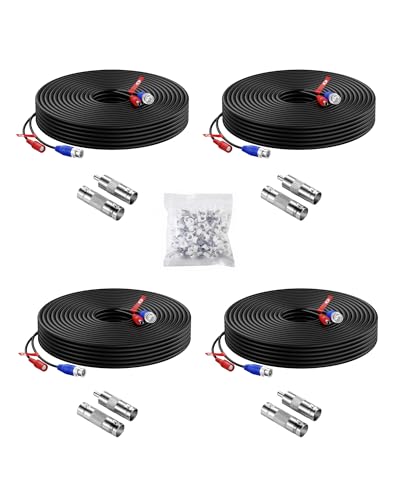

Accidental impacts from lawn mowers, hedge trimmers, burrowing rodents, or harsh weather can unexpectedly sever an exterior surveillance cable, taking an essential monitoring zone completely offline. When a security camera suddenly loses its feed, many property owners assume the optical sensor or internal electronics suffered catastrophic failure. In most residential and light commercial installations, physical conductor damage along the cable run is the primary culprit behind unexplained video signal loss. Knowing how to repair a cut security camera wire allows you to restore power and video continuity rapidly without replacing intact camera hardware. Whether your setup relies on analog Siamese coaxial lines or modern network cables found on PoE security camera systems, identifying the underlying wire architecture is the essential first step toward a successful repair.
Repairing surveillance lines properly requires meticulous attention to electrical resistance, signal impedance, and exterior moisture protection. A hasty electrical tape patch on an outdoor run almost always invites water infiltration, triggering galvanic corrosion, ground loops, and persistent video flickering. Contemporary high-definition analog formats such as TVI and AHD, as well as digital IP video streams, depend on clean signal pathways to avoid frame drops and voltage starvation. By applying proper mechanical splicing, crimping techniques, and waterproof heat-shrink insulation, you can restore continuous 24/7 video monitoring across your property. Taking the time to execute a reliable, weather-sealed splice protects your central recorder from electrical shorts while preserving vital forensic evidence.
| Award | Product | SSG Score About SSG ScoreThe SSG Score is our own rating from 0 to 10, based on performance, design and build, ease of use, and value. It reflects independent research and is never influenced by manufacturers, retailers, or affiliate commissions. Learn more › | |
|---|---|---|---|
| Best Overall |
Anlapus 60ft CCTV Video Power Cable (4-Pack)
|
9.2/10 | Buy |
| Best Value |
 Flashmen 2-Pack 25ft All-in-One BNC Video |
9.1/10 | Buy |
| Best Premium |
 WILDHD 100ft 20AWG 4K BNC Siamese Security Camera |
9.1/10 | Buy |
| Best Budget |
 Flashmen 25ft BNC CCTV Cables, 2-Pack |
8.3/10 | Buy |
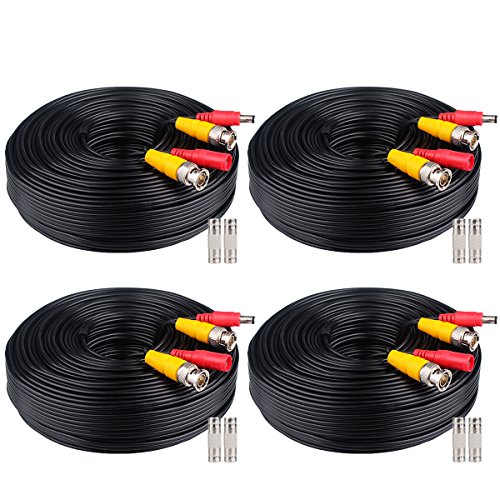 WILDHD 100ft CCTV BNC Security Camera Cable |
8.3/10 | Buy | |
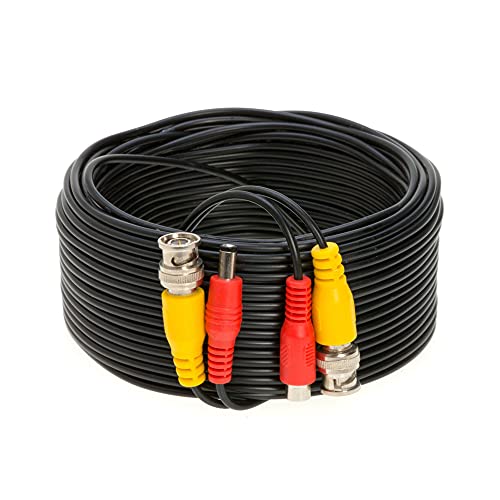 Cables Direct Online 50-Foot BNC CCTV Cable |
8.0/10 | Buy |
Anlapus 60ft CCTV Video Power Cable (4-Pack)
This four-pack of 60-foot Siamese cables simplifies multi-camera setups by routing video and power through a single line for analog surveillance systems. Outfitted with weatherproof PVC jackets and a bundle of adapters and clips, it provides a practical wiring solution for residential DVR installations.
Pros
- All-in-one design simplifies running camera power and video
- Weatherproof construction handles outdoor exposure and wall runs
- Supplied with BNC connectors and mounting clips
- Broad support across common analog DVR formats
Cons
- Caps resolution support at 1080p
- Compatible only with 2.1mm DC power jacks
- Fixed 60-foot length requires couplers for longer runs
Flashmen 2-Pack 25ft All-in-One BNC Video
The Flashmen 2-Pack 25ft All-in-One CCTV Cables deliver pre-terminated BNC video and DC power connections designed for simple plug-and-play installation across HD-TVI, HD-CVI, HD-AHD, and analog surveillance setups. They are a practical, budget-friendly solution for homeowners extending hardwired camera runs to a central DVR without splicing wires.
Pros
- Pre-terminated BNC and DC power connectors enable quick, tool-free plug-and-play installation.
- Compatible with standard analog (700TVL to 1200TVL) and modern HD analog formats (HD-TVI, HD-CVI, HD-AHD).
- Two-pack bundle offers practical value for running or replacing cables on multiple cameras.
- Eliminates messy dual-cable runs by integrating video and power into one siamese cord.
Cons
- Fixed 25-foot length may be too short for large perimeter runs or require couplers for longer distances.
- Designed strictly for analog and coaxial BNC setups, making it incompatible with modern Ethernet PoE IP cameras.
- Does not include integrated audio RCA leads for cameras requiring separate analog microphone channels.
WILDHD 100ft 20AWG 4K BNC Siamese Security Camera
The WILDHD 100ft 20AWG BNC Siamese Cable provides combined 4K/8MP video and DC power transmission, featuring thick 20-gauge copper wiring to reduce voltage drop over long runs. It is an economical pick for homeowners and installers running or extending hardwired analog HD DVR surveillance systems.
Pros
- Thicker 20AWG copper construction handles higher-draw cameras and power supplies better than thin 26AWG cables.
- Supports up to 8MP 4K analog video transmission across AHD, TVI, CVI, and SDI formats without image degradation.
- Comes pre-terminated with BNC video and DC power connectors plus two female couplers and 50 mounting clips.
- Siamese dual-cord configuration simplifies routing along baseboards, attics, soffits, and crawlspaces.
Cons
- Fixed 100-foot prefabricated length cannot be easily shortened without manual cutting, stripping, and re-crimping BNC connectors.
- Standard BNC and DC coaxial format is strictly designed for analog DVR systems and cannot connect directly to PoE RJ45 network equipment.
- Lacks a published industrial IP ingress rating, so exterior runs through open weather benefit from conduit or protective tucking under eaves.
Flashmen 25ft BNC CCTV Cables, 2-Pack
Designed for straightforward surveillance setups, this Flashmen two-pack combines video transmission and DC power into a single pre-made line. The integrated BNC and power connectors deliver plug-and-play installation for analog HD systems without requiring manual wiring.
Pros
- Combines BNC video and power into one line
- Pre-terminated ends eliminate the need for crimping tools
- Broad compatibility with standard analog HD formats
- Convenient two-pack suits multi-camera installations
Cons
- Fixed 25-foot length limits long-distance camera placement
- Incompatible with digital IP and PoE systems
- Bulky pre-made connectors require larger wall pass-through holes
WILDHD 100ft CCTV BNC Security Camera Cable
The WILDHD 4x100ft BNC Siamese cable pack delivers pre-terminated video and DC power wiring designed for analog HD DVR surveillance systems up to 5MP resolution. It provides DIY homeowners and property managers an economical, plug-and-play wiring solution bundled with BNC extension couplers and mounting clips.
Pros
- Pre-fabricated Siamese design combines video and power into a single streamlined pull
- Broad compatibility across major HD-over-coax formats up to 5MP resolution
- Generous accessory bundle with 8 female BNC extension couplers and 100 nail clips
- Gold-plated center pins on BNC male connectors help preserve signal conductivity
Cons
- Not rated for 4K / 8MP video signals or Power over Ethernet (PoE) IP camera systems
- Pre-molded connectors require larger drill holes through exterior walls than bulk unterminated cable
- Long 100-foot power runs may experience minor DC voltage drop on power-hungry cameras with heavy infrared LED arrays
Cables Direct Online 50-Foot BNC CCTV Cable
This all-in-one extension cable combines BNC video and power lines to simplify indoor security camera connections. Its pre-terminated design allows for immediate plug-and-play installation between compatible analog cameras and DVR units.
Pros
- Integrated video and power streamlines wire routing
- Pre-attached BNC ends offer immediate plug-and-play convenience
- Shielded design helps prevent video signal interference
- Lightweight construction is easy to manage along baseboards
Cons
- Designed primarily for indoor rather than exterior installations
- Fixed 50-foot length cannot be trimmed to size
Technical Splicing Protocols and Restoration Methods for Cut Camera Cabling
A severed security camera wire presents physical and electrical challenges that require methodical troubleshooting. Different surveillance technologies rely on distinct transmission physics, so repair methods suited for direct current will ruin high-frequency digital network signals. Before stripping insulation, determine your exact cable construction to decide whether an inline splice or total replacement is best. Restoring the circuit properly preserves video fidelity and guarantees steady electrical delivery to features like infrared night vision spotlights.
Identifying Cable Anatomy: RG59 Siamese Coaxial vs. Twisted Pair Network Cables
Traditional analog surveillance systems rely heavily on Siamese coaxial cabling, which joins two lines under a single outer jacket. The video portion uses RG59 coaxial cable featuring a copper center conductor, dielectric insulation, and a braided shielding mesh. Running parallel to the video line is a two-conductor zip cord, typically 18AWG or 20AWG, dedicated to supplying low-voltage power. Because these internal lines perform separate functions, you must handle the video shielding and power conductors using distinct techniques.
Modern IP surveillance setups utilize balanced twisted-pair network cabling, commonly designated as Cat5e or Cat6. Inside the outer jacket, eight color-coded copper conductors are grouped into four tightly twisted pairs. Power over Ethernet standards deliver operating voltage and digital video packets across these copper pairs simultaneously. The precise twist rate of each pair cancels out electromagnetic interference and prevents signal crosstalk. Splicing network cables requires preserving these physical twists to avoid degrading data throughput.
Repairing coaxial cable differs fundamentally from fixing twisted-pair data wiring due to signal impedance constraints. An RG59 video transmission line requires a consistent 75-ohm characteristic impedance throughout its length to prevent signal reflections and ghosting artifacts. In contrast, Cat5e and Cat6 network cables operate at a nominal 100-ohm impedance and transmit high-frequency digital pulses. Simply twisting severed conductors together with wire nuts disrupts impedance continuity, causing packet drops in IP setups and severe image distortion on analog DVR systems.
Essential Diagnostic Tools and Electrical Safety Protocols
Working on surveillance wiring begins with electrical safety precautions to prevent equipment damage or unexpected component failure. Always disconnect the power supply from the wall outlet or turn off the corresponding channel on your power distribution box before handling bare conductors. Low-voltage 12V DC lines can short out if positive and negative conductors touch, potentially blowing fuses or damaging camera boards. For PoE setups, unplug the network cable from the switch or NVR port to stop active power delivery.
Specialized tools ensure your splice maintains mechanical strength and electrical conductivity over years of outdoor exposure. You will need a multi-gauge wire stripper, a coaxial rotary stripper, sharp wire cutters, and a digital multimeter for testing. For network lines, an RJ45 crimping tool with matching modular connectors and an inline punch-down tool are standard requirements. A heat gun and dual-wall adhesive-lined heat-shrink tubing are equally vital for creating watertight seals over completed splices.
A digital multimeter plays an indispensable role in verifying circuit integrity before and after you execute the physical repair. Setting the multimeter to continuity mode allows you to check whether conductors have suffered unseen stretching damage along the run. Snagged lines often stretch internal copper cores until they break inside intact outer jackets several feet away. Measuring resistance between positive, negative, and ground shielding confirms that no short circuits exist before reconnecting sensitive recording hardware.
Splicing Coaxial BNC Video and Low-Voltage DC Conductors
To repair a severed Siamese cable, strip away two inches of the outer PVC jacket on both sides to expose the isolated lines. Carefully separate the two-wire DC power pair from the shielded coaxial video cable without nicking inner insulation. Strip roughly three-eighths of an inch of insulation from the positive and negative power conductors. Stagger the cut lengths of the two power wires so the resulting splices do not sit directly adjacent to one another.
Joining low-voltage DC power conductors requires mechanical durability and low electrical resistance to prevent voltage drop over long runs. Slide a narrow piece of adhesive-lined heat-shrink tubing over each wire before joining the stripped ends using an insulated crimp butt connector. Solder the intertwined copper strands using rosin-core solder to create an oxygen-free electrical bond with minimal resistance. Slide the heat-shrink tubing over the soldered joint and heat it until the internal sealant flows from the ends.
Never attempt to twist and tape the center conductor and outer braided shield of a coaxial video cable together by hand. Twisting coaxial shielding degrades the ground plane and allows radio frequency interference to bleed directly into the video feed. Hand-twisted center pins also introduce high resistance, which degrades high-definition analog formats like 1080p and 4K TVI or AHD streams. The only reliable field repair method for cut coaxial video involves terminating both severed ends with professional BNC connectors.
Use a rotary coaxial stripper to prepare the raw ends, exposing the central copper core, dielectric layer, and folded braided shield. Crimp or compress a standard 75-ohm BNC male connector onto each freshly prepared coaxial cable end. Connect the two newly terminated ends using a high-quality BNC female-to-female barrel coupler to re-establish continuous signal transmission. High-purity copper core connectors and gold-plated pins reduce insertion loss and maintain clear video transmission across extended monitoring distances.
Repairing Severed Cat5e and Cat6 Power over Ethernet Lines
Repairing an Ethernet camera line demands far greater precision than handling standard low-voltage power wire. The twisted structure inside network cabling must remain intact to maintain differential signaling performance and noise rejection. Stripping more than half an inch of pair twists introduces impedance anomalies and high near-end crosstalk, which causes network interfaces to drop packets or downgrade connection speed. Consequently, hand-twisting eight individual network conductors together is never an acceptable repair method for IP surveillance hardware.
The most straightforward field method for restoring a severed Cat5e or Cat6 line uses two RJ45 connectors joined by an inline coupler. Strip back approximately one inch of the outer jacket on both sides, untwist the pairs just enough to arrange them, and terminate them using the standard TIA/EIA-568B pinout. Inspect the wire sequence carefully through transparent connector housings before crimping to avoid crossed pairs. Once both ends have modular plugs attached, plug them into an IP67-rated waterproof RJ45 inline coupler housing.
An alternative professional repair technique utilizes a shielded junction box equipped with dual Insulation Displacement Contact punch-down blocks. These compact junction boards allow you to press each colored conductor into an individual metal slot that slices through insulation to make gas-tight electrical contact. Punch-down junction boxes preserve original pair twists up to the point of termination, resulting in lower signal attenuation than modular plug assemblies. The small plastic housing can be permanently mounted inside a wall cavity or exterior enclosure.
When dealing with PoE systems, the repair joint must safely handle direct current alongside high-speed data transmission. Power over Ethernet protocols push substantial electrical energy across thin conductors, meaning loose connections will generate localized heat and voltage drop. A poor connection often allows data streaming during daylight but causes the camera to reboot the moment infrared night vision illuminators turn on. If you are adding cameras to an NVR system or fixing lines on an existing recorder, maintaining low-resistance contacts is vital.
Weatherproofing and Moisture-Sealing Exterior Splices
Exterior surveillance lines endure continuous exposure to rain, high humidity, freezing frost, and intense solar ultraviolet radiation. Moisture is the most destructive threat to a repaired camera cable because water easily enters microscopic gaps through capillary action. Once water penetrates an outer jacket, it wicks along stranded copper conductors, turning bright metal into brittle green copper oxide. Oxidized copper exhibits dramatically increased electrical resistance, attenuating video signals and choking off operating power within a matter of weeks.
Standard PVC electrical tape is entirely inadequate for long-term weatherproofing because its adhesive dries out and unravels under sunlight and thermal cycling. A durable weather seal requires a multi-layer approach utilizing self-amalgamating silicone tape as the primary barrier. Stretch the self-vulcanizing tape to roughly twice its relaxed length while wrapping it tightly over the splice in overlapping layers. Within minutes, the tape fuses chemically to itself, forming a solid, seamless rubber boot that prevents water entry even under wind-driven rain.
For maximum protection against physical impact and environmental damage, house all spliced connectors inside an IP66-rated exterior junction box. Secure the entry and exit holes with liquid-tight cable compression glands matched to the outer diameter of your cabling. Always form a physical drip loop in the wire directly beneath the junction box entry point. A drip loop forces rainwater running down the vertical cable to drip harmlessly from the curve rather than tracking into the rubber cable gland.
Diagnostic Verification and System Testing Post-Repair
Before reconnecting your repaired camera cable to an active recorder or power source, perform a comprehensive bench multimeter audit. Set your digital multimeter to measure resistance and test between the positive power conductor and the negative shield or ground wire. The meter should display an open circuit reading, confirming there is no internal short between conductors that could damage power supplies. Next, test continuity from end to end on each individual wire to ensure electrical resistance remains under a couple of ohms.
Once electrical continuity is confirmed, reconnect the camera to the recording system and monitor the live video feed closely. Look for common analog visual artifacts like rolling horizontal hum bars, high-frequency wavy lines, or ghosting along sharp object outlines. On IP camera networks, log into the switch or NVR management console to verify that the port establishes a full-duplex link without packet loss. Rapidly flickering images or dropped network packets indicate poor impedance matching or high contact resistance at the splice point.
Final testing must evaluate camera performance under maximum electrical load conditions to verify that voltage delivery remains stable. Cover the camera lens with a dark cloth to trigger the ambient light sensor, forcing the mechanical IR-cut filter and infrared LED array to activate. Listen for the distinct physical click of the filter and check the display to confirm the camera stays powered without rebooting. If the video cuts out the instant infrared lights engage, the splice point is introducing excessive resistance and causing unacceptable voltage drop.
Evaluating Complete Cable Replacement vs. Inline Splicing
While an inline splice successfully restores connectivity in many scenarios, there are practical limits to how many splices a single cable run can tolerate. Each physical splice introduces a small amount of signal attenuation, mechanical weakness, and potential moisture ingress risk along the run. If a cable has suffered rodent chewing across multiple sections or sustained severe tensile stretching from falling tree limbs, repairing individual breaks becomes counterproductive. In such instances, pulling a fresh, unbroken cable represents a far more dependable solution for perimeter security.
Pre-fabricated all-in-one surveillance cables provide a durable and straightforward alternative to complex field splicing when an entire run must be replaced. High-quality pre-made assemblies incorporate heavy 20AWG solid copper power conductors and gold-plated BNC connectors molded directly to the cable jacket. These factory-molded terminations eliminate field assembly errors, resist vibration, and ensure optimal 75-ohm impedance matching for high-resolution video streams up to 4K resolution. Replacing a compromised line with an uninterrupted run removes hidden failure points behind walls and beneath exterior eaves.
When replacing a damaged line through finished walls or tight conduit, you can frequently use the old wire as an installation guide. Securely tape the end of your fresh replacement cable to the clean end of the damaged wire using overlapping layers of electrical tape to form a smooth cone. Gently pull the damaged cable from the opposite end, drawing the new wire through wall cavities and conduit bends without opening drywall. Once the new line is in place, secure it with exterior cable clips every eighteen inches to prevent sagging.
Summary of Best Practices for Surveillance Wire Maintenance
Executing an effective wire repair requires patience, appropriate mechanical connectors, and strict adherence to moisture-proofing standards. By using BNC compression fittings on coaxial lines and maintaining tight conductor twists on network cables, you protect signal integrity and prevent video loss. Always avoid relying solely on electrical tape, choosing instead to seal outdoor joints inside rated junction boxes with vulcanizing silicone tape. Verifying power delivery under active night vision loads guarantees that your surveillance system will operate continuously without dropping offline when security matters most.
Proactive physical protection prevents future line cuts and extends the operational lifespan of all residential and commercial security wiring. Route exposed outdoor cables through rigid PVC or metal conduit wherever lines run close to the ground, landscaping beds, or accessible fence lines. Keeping cables out of reach of gardening tools and wildlife ensures unbroken perimeter monitoring and eliminates recurring diagnostic headaches. Regular seasonal inspections of exterior cable clips, drip loops, and junction box seals will keep your entire surveillance network functioning reliably year-round.
About the author
Tyler Lacoma is a smart home and home security technology expert with more than a decade of hands-on experience testing connected devices. His expertise includes security cameras, smart locks, home security systems, privacy features, smart-home compatibility, and emerging AI technology. He focuses on translating technical features into practical guidance that helps homeowners understand which security solutions truly fit their homes and everyday needs.