
Is There A Security Camera That Doesn’t Need Wifi? Practical Options for 2026
Learn how Is There A Security Camera That Doesn't Need Wifi answers remote surveillance needs with cellular LTE and local memory cards in November 2026.
 By Rebecca Edwards
Updated November 4, 2026
Securing a remote perimeter, construction job site, or rural barn often exposes a fundamental limitation of standard consumer surveillance: the complete absence of a home wireless network. Property owners frequently find themselves asking Is There A Security Camera That Doesn’t Need Wifi when they need continuous monitoring across pastures, detached garages, or vacation properties located far beyond the reach of residential routers. Traditional wireless models rely heavily on broadband access for cloud clip synchronization, live viewing, and instant push alerts. Without adequate radio coverage or internet access, standard smart cameras fail to stream video and often cease functioning entirely.
Fortunately, modern surveillance engineering provides distinct operational architectures specifically built to operate without a home network link. Cellular LTE surveillance hardware utilizes mobile data carriers to transmit footage from remote jobsites, while self-contained devices record continuously to onboard solid-state storage. Property owners exploring battery security cameras with local storage can preserve high-definition video evidence during broadband outages without paying recurring cloud fees. Selecting the right non-Wi-Fi camera depends on whether you require remote real-time notifications over mobile networks or closed-loop onboard video archiving.
| Award | Product | SSG Score About SSG ScoreThe SSG Score is our own rating from 0 to 10, based on performance, design and build, ease of use, and value. It reflects independent research and is never influenced by manufacturers, retailers, or affiliate commissions. Learn more › | |
|---|---|---|---|
| Best Overall |
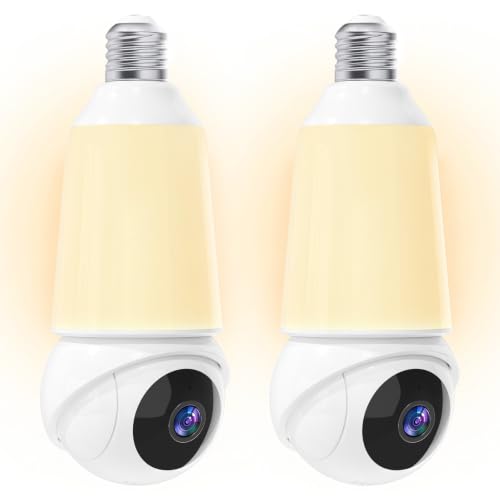
WESECUU 2K Light Bulb Security Camera
|
9.1/10 | Buy |
| Best Budget |
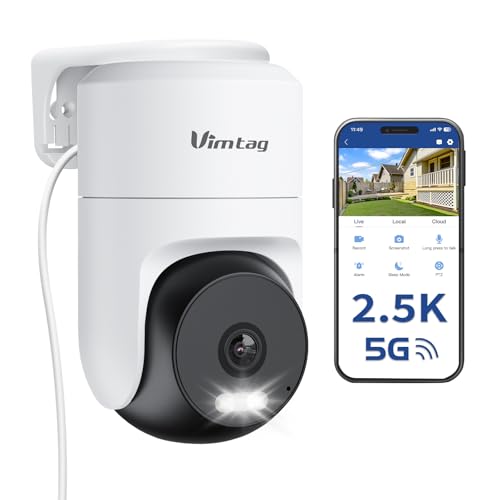 VIMTAG 2.5K Pan-Tilt Wired Outdoor Security Camera |
8.4/10 | Buy |
| Best Value |
 Lybuorze 4G LTE Cellular Solar Security Camera |
8.3/10 | Buy |
 ZEEPORTE 2K Indoor Security Camera |
8.0/10 | Buy | |
 MaxiViz 2K Wireless Security Camera |
7.8/10 | Buy | |
 LIWAN 2K 4G LTE Cellular Security Camera |
7.8/10 | Buy | |
| Best Premium |
 SensForge 2.5K Indoor Pan-Tilt Camera |
7.8/10 | Buy |
WESECUU 2K Light Bulb Security Camera
Screwing directly into a standard E27 socket, this dual-band camera pairs a 2K sensor with an integrated 1000-lumen light to illuminate and monitor entryways. It offers motorized 355-degree pan tracking, two-way audio, and color night vision for users seeking wire-free installation.
Pros
- Supports both 2.4GHz and 5GHz Wi-Fi networks
- Bright 1000-lumen integrated illumination
- Installs directly into standard E27 light sockets
- Local microSD storage supported up to 128GB
Cons
- Cloud video storage requires a paid subscription
- Requires continuous power to the light socket
- Relies on the third-party EseeCloud mobile app
VIMTAG 2.5K Pan-Tilt Wired Outdoor Security Camera
The VIMTAG 2.5K Pan/Tilt Wired Outdoor Security Camera delivers 2560x1440 QHD video, motorized 360-degree coverage, and dual-band Wi-Fi for dependable residential surveillance. It is a practical choice for homeowners and renters seeking continuous plug-in perimeter monitoring without recurring monthly cloud fees.
Pros
- Motorized 360-degree pan and 90-degree tilt with real-time motion tracking eliminates blind spots.
- Dual-band 2.4GHz and 5GHz Wi-Fi support ensures flexible and stable wireless network pairing.
- AI detection for people, pets, and vehicles functions without requiring a paid subscription.
- Generous local storage capacity supporting microSD cards up to 512GB for 24/7 continuous recording.
- IP66 weather-resistant housing withstands outdoor rain, dust, and exterior environmental exposure.
Cons
- Requires access to an electrical outlet via the 9.8-foot power cord, restricting wire-free placement.
- High digital zoom levels up to 8x crop the image rather than using optical glass magnification.
- Smart home ecosystem compatibility is limited to Amazon Alexa without Google Home or HomeKit support.
Lybuorze 4G LTE Cellular Solar Security Camera
Built for off-grid properties lacking Wi-Fi or electrical wiring, the Lybuorze 4G LTE solar security camera delivers wire-free 4MP pan-tilt coverage and full-color night vision via cellular networks. It is a dependable monitoring choice for contractors, farmers, and rural property owners needing standalone perimeter protection.
Pros
- Operates entirely independent of Wi-Fi networks using 4G LTE cellular data coverage
- Continuous solar charging paired with an internal rechargeable battery eliminates power cabling
- Wide rotational coverage with 355-degree pan, 90-degree tilt, and 4MP visual clarity
- Full-color night vision provides clear after-dark visibility across remote perimeters
- MicroSD card slot supports up to 256GB of local event storage
Cons
- Requires an active cellular data plan renewal once the included 150MB trial data is depleted
- Does not support Wi-Fi network connectivity, restricting remote access strictly to cellular data
- Uses motion-triggered event recording rather than 24/7 continuous video streaming to conserve battery power
ZEEPORTE 2K Indoor Security Camera
Delivering sharp 2K resolution and customizable activity zones, this compact wired camera works well for monitoring nurseries, pets, or living areas. It includes two-way audio, infrared night vision, and local storage without ongoing subscription fees.
Pros
- Clear 2K resolution with customizable detection zones
- Subscription-free local storage option
- Integrated two-way audio and siren
- Night vision operates up to 30 feet
Cons
- Requires a constant wired power connection
- MicroSD card sold separately
MaxiViz 2K Wireless Security Camera
Designed for flexible home monitoring, this compact MaxiViz camera delivers sharp 2K resolution with spotlight-assisted color night vision and AI object detection. Its battery-powered, wire-free design and IP66 casing allow for quick mounting anywhere indoors or out.
Pros
- Crisp 2K resolution with color night vision
- AI detection reduces false alerts from background motion
- Wire-free design allows fast and flexible placement
- Built-in siren and two-way audio for active deterrence
Cons
- MicroSD card must be purchased separately
- Battery requires recharging every 1 to 3 months
- Only supports 2.4GHz Wi-Fi networks
LIWAN 2K 4G LTE Cellular Security Camera
Designed for remote acreage without internet access, this cellular camera connects over 4G LTE networks and recharges via an integrated solar panel. It provides wide 2K pan and tilt visual coverage with two-way audio, making it a practical choice for farms, ranches, and off-grid properties.
Pros
- Functions entirely without an existing WiFi connection
- Solar charging eliminates routine trips to recharge batteries
- Pan and tilt functionality covers extensive property angles
- Provides full-color 2K recording even in dark environments
- Rugged IP66 rating protects against dust and rain
Cons
- Requires a paid cellular data subscription after the trial
- MicroSD card for local video storage is not included
SensForge 2.5K Indoor Pan-Tilt Camera
Delivering 2.5K video with full 360-degree pan-tilt coverage, this indoor camera includes local 64GB storage without mandatory monthly fees. It suits pet owners and households in North America seeking reliable dual-band connectivity.
Pros
- Includes a pre-installed 64GB microSD card
- Supports both 2.4GHz and 5GHz Wi-Fi bands
- Full 360-degree horizontal pan and tilt coverage
- Built-in AI detects both humans and pets
Cons
- Mobile app is restricted to US and Canada only
- Not suitable for monitoring through window glass
- Advanced AI text summaries require optional paid subscription
Understanding Non-Wi-Fi Security Camera Technologies
Surveillance hardware does not require an active home Wi-Fi network to provide reliable property protection. Property owners can deploy dedicated cellular cameras, hardwired Power over Ethernet systems, or standalone local recording devices that function independently of a residential router. The ideal equipment configuration depends on whether the monitored site requires real-time remote smartphone notifications or strictly local evidentiary archiving. Understanding how each transmission and storage method operates ensures that your security setup meets both property conditions and operational expectations.
Standard consumer smart cameras rely on wireless routers to exchange video packets with cloud servers and mobile devices. When wireless internet is unavailable, non-Wi-Fi cameras maintain operation through alternative cellular pathways, physical network cables, or onboard microcontrollers. Cellular cameras use telecommunication towers to stream video, while closed-circuit systems use dedicated Ethernet cabling to send continuous streams directly to a recorder. Meanwhile, self-contained cameras equipped with local memory cards write motion events directly to solid-state storage without broadcasting data across local wireless bands.
Cellular 4G LTE Cameras for Off-Grid Surveillance
Cellular security cameras provide a practical surveillance solution for remote locations lacking broadband internet access and electrical utility lines. These units utilize integrated 4G LTE modems to connect directly with nationwide telecommunications networks such as AT&T, Verizon, and T-Mobile. Dedicated off-grid hardware, including the Lybuorze 4G LTE Cellular Solar Security Camera and the LIWAN 4G LTE Cellular Security Camera, comes equipped with pre-installed SIM cards to deliver live video streams and push alerts directly to your phone. Because these devices bypass home routers entirely, they deliver reliable coverage across rural pastures, jobsites, and detached workshops.
Operating a cellular security camera involves specific network data management practices. Video streaming and remote viewing consume data allowances provided through cellular service plans that renew on a monthly or annual billing cycle. Users can review live feeds, receive push alerts when movement occurs, and access remotely stored clips directly through dedicated mobile applications. However, continuous video streaming over cellular networks can rapidly consume monthly data caps, which makes motion-activated event recording the standard operational mode for off-grid cellular hardware.
Physical power delivery on cellular cameras is typically handled through integrated solar panels paired with high-capacity lithium-ion battery packs. The internal rechargeable batteries provide consistent power overnight, while an external or integrated photovoltaic panel replenishes the charge during daylight hours. High ingress protection ratings, such as IP66 weatherproof housings, protect sensitive internal modem electronics and optical components against heavy rain, windblown dust, and snow. This self-sustaining hardware configuration allows property owners to mount cameras on utility poles, trees, or exterior fence posts without running extension cords or network cabling.
Hardwired Power over Ethernet and Closed-Circuit Systems
Property owners who need continuous recording without relying on wireless signals frequently turn to hardwired closed-circuit architectures. Dedicated Power over Ethernet systems utilize standard Category 6 Ethernet cables to deliver electrical power and digital data across a single physical wire. These systems route camera feeds directly into a local network video recorder, creating an entirely self-contained local area network that does not depend on an active internet connection. Exploring dedicated Power over Ethernet camera systems reveals how wired infrastructure avoids wireless channel congestion, radio interference, and Wi-Fi signal dropouts.
A major technical advantage of closed-circuit NVR architecture is complete isolation from broadband network failures. Even if your internet service provider suffers an extended outage, hardwired cameras continue streaming video feeds directly to the centralized storage unit without losing footage. The network video recorder contains high-capacity surveillance hard drives designed specifically for continuous read-and-write cycles over years of continuous operation. Users can connect an HDMI monitor directly to the recorder to view live multi-camera feeds and conduct forensic investigations locally without internet access.
Integrating additional cameras into an existing hardwired system is straightforward when the hardware complies with open industry transmission standards like ONVIF Profile S or RTSP streaming protocols. Installing add-on cameras for NVR setups allows property owners to expand perimeter monitoring coverage around garages, side yards, and basements while keeping all video traffic confined to local copper cables. Because wired systems do not transmit video across radio frequencies, they remain immune to Wi-Fi deauthentication attacks and wireless signal jamming devices sometimes utilized by intruders.
Standalone Local Recording and MicroSD Storage Architecture
Standalone cameras equipped with onboard memory card slots offer a compact method for recording surveillance footage without Wi-Fi connectivity. Many standard cameras, including models from VIMTAG and SensForge, feature onboard microSD card expansion supporting storage capacities ranging from 64GB up to 512GB. When configured to record locally, the camera encodes video streams and writes the data directly to the installed flash memory card whenever motion is detected. This design allows the hardware to function as a self-contained digital video recorder that preserves incident footage even when completely disconnected from a home network.
Selecting the appropriate memory card format is essential for maintaining reliable long-term recording on local storage security cameras. Continuous recording and frequent motion event overwrites place substantial write stress on flash memory cells, which can lead to premature storage corruption on standard consumer memory cards. Property owners should choose high-endurance cards rated with UHS Speed Class 3 (U3) and Video Speed Class 30 (V30) specifications to handle sustained high-bitrate video streams. High-endurance microSD cards utilize specialized flash controller firmware that evenly distributes data across memory blocks, preventing bad sectors and extending hardware operational longevity.
Local memory card storage operates on an automatic circular loop recording architecture once internal capacity is reached. When the microSD card fills up, the camera controller automatically overwrites the oldest unlocked video clips with new footage to prevent recording interruptions. The main operational limitation of standalone local recording without network connectivity is the inability to receive real-time push alerts on your phone. To review captured video, users must physically retrieve the memory card and insert it into a computer, or temporarily connect a mobile device to the camera via a local direct wireless hotspot.
Environmental Durability and Off-Grid Power Sizing
Operating security cameras in outdoor environments without access to AC wall power requires careful planning of battery capacities and solar recharging dynamics. Solar-assisted cellular cameras rely on high-efficiency monocrystalline solar panels that produce steady direct current during daylight hours. However, solar recharging efficiency fluctuates significantly based on seasonal sun angles, cloud cover, and regional temperature extremes. Positioning solar panels facing true south at an angle that matches your local latitude helps optimize solar irradiance capture throughout shifting winter and summer seasons.
Ambient temperature plays a crucial role in the electrochemical performance of rechargeable lithium-ion battery cells used in wire-free cameras. When outdoor temperatures drop below freezing, internal battery resistance increases, which temporarily reduces the available milliamp-hour capacity and causes faster voltage depletion. Furthermore, modern battery management systems intentionally prevent charging cycles when cell temperatures drop below 32 degrees Fahrenheit to prevent internal lithium plating damage. In harsh northern winter climates, mounting cameras in locations sheltered from prevailing winds and ensuring solar panels remain free of snow accumulation is critical for uninterrupted operation.
Physical weather resistance ratings determine how effectively camera enclosures protect sensitive optics, modems, and power circuitry from the elements. Look for cameras bearing an Ingress Protection rating of IP65 or IP66, which signifies complete sealing against windblown dust and resistance to powerful pressurized water jets. Exterior camera housings also require UV-stabilized polycarbonate or aluminum alloy construction to prevent thermal degradation and brittle cracking from long-term solar exposure. Ensuring that all cable penetrations feature downward drip loops prevents rainwater from running along cables directly into rubberized weather seals.
Motion Detection Mechanics and On-Device Processing
Security cameras operating without cloud connectivity rely entirely on localized motion detection sensors and edge-based processors to identify security events. Most battery-powered and cellular cameras utilize passive infrared sensors that detect moving thermal radiation differentials across distinct optical detection zones. Passive infrared sensors remain in an ultra-low-power sleep state until an object emitting body heat passes across the sensor field, which wakes the camera processor within milliseconds. This thermal sensing architecture dramatically conserves battery reserves compared to continuous optical pixel analysis.
Modern cameras frequently augment passive infrared hardware with onboard neural processing units capable of executing lightweight artificial intelligence computer vision models. Rather than sending video frames to external cloud servers for person and vehicle identification, edge AI chips analyze shape vectors directly on the camera hardware. This edge processing allows cameras like the Lybuorze 4G LTE model or the SensForge pan-tilt unit to distinguish humans from blowing tree branches, pets, or insects without cloud connectivity. Filtering out nuisance triggers locally prevents unnecessary recording events, saves memory card storage space, and conserves valuable cellular data bandwidth.
Optical Sensor Clarity and Forensic Evidentiary Standards
Resolving critical security details without network-assisted image enhancements requires quality optical sensors and calibrated image signal processors. Video resolutions ranging from 2K Quad HD up to 4MP provide sufficient pixel density to capture facial features, clothing characteristics, and vehicle license plates. Standardizing video evaluation against the international IEC EN 62676-4 DORI standard helps property owners assess real-world optical utility across specific distances. Under this standard, cameras require 25 pixels per meter for general detection, 63 pixels per meter for observation, 125 pixels per meter for recognition, and 250 pixels per meter for legal forensic identification.
Low-light image capture presents significant challenges for off-grid and non-Wi-Fi cameras operating in unlit rural or commercial environments. Infrared night vision uses 850-nanometer LED emitters to illuminate dark areas with invisible light, producing clear monochrome images without revealing the camera position. Alternatively, cameras equipped with motion-activated white-light LED spotlights and large sensor apertures can capture full-color night vision, aiding in the identification of suspect clothing colors and vehicle finishes. Utilizing wide dynamic range processing balances harsh spotlight illumination against deep shadow backgrounds, preventing blown-out faces when subjects approach the camera.
Residential Privacy Boundaries and Surveillance Compliance
Deploying surveillance hardware on residential or commercial property requires careful adherence to federal, state, and local privacy regulations. In the United States, citizens maintain a reasonable expectation of privacy in designated private living areas, such as bathrooms, bedrooms, and enclosed interior living quarters. Outdoor cameras should be positioned carefully to record only your own property perimeter, driveways, and entry gates, avoiding direct sightlines into neighbor windows, private backyards, or patio enclosures. Implementing software privacy masks or adjusting camera mounting angles prevents accidental recording of neighboring properties and helps avoid legal privacy disputes.
Audio recording features present distinct legal considerations that differ significantly from video capture across various state jurisdictions. Federal wiretap law under 18 U.S.C. Section 2511 sets a baseline standard, while individual states enforce either one-party or all-party consent rules regarding the recording of oral communications. In all-party consent states, capturing audio conversations without the express consent of every participant can lead to severe civil liability or statutory criminal penalties. Property owners deploying cameras equipped with two-way talk microphones should verify whether their state requires all-party consent and disable onboard audio recording toggles whenever necessary to remain fully compliant with local surveillance laws.
Verifying the operation of your non-Wi-Fi camera system prior to final mounting saves time and prevents installation errors. Conduct an initial bench test near your primary workstation to confirm that the cellular SIM card connects properly or that the microSD card formats cleanly. Review test video files to check date and time stamp accuracy, motion detection sensitivity levels, and lens focus before climbing ladders to secure outdoor mounting brackets. Taking these preparatory verification steps ensures that your non-Wi-Fi security camera operates reliably as a durable, autonomous guardian for your property.
About the author
Rebecca Edwards is a veteran journalist and home safety expert with decades of editorial experience and more than a decade focused on home and personal security. She researches and tests security systems, smart gadgets, safety technology, and crime-related data to turn complicated topics into practical advice. Her consumer-focused approach helps families evaluate security products based on real needs rather than marketing claims alone.