
What Is Poe for Security Camera: Practical Guide for 2026
Understanding what is poe for security camera systems ensures continuous recording, reliable power delivery, and subscription-free local storage throughout November 2026.
 By Rachel Cericola
Updated November 21, 2026


Running dedicated power cables alongside separate data lines often complicates outdoor surveillance installations. Traditional wireless cameras can struggle with thick exterior walls or frequent battery recharges, leaving gaps in property monitoring during critical moments. Understanding what is poe for security camera provides property owners with a reliable, streamlined alternative. By combining direct electrical current and network transmission into a single Ethernet run, Power over Ethernet eliminates the clutter of wall adapters and ensures a consistent wired data link for continuous recording.
Many residential security architectures rely on this wired standard to deliver continuous video recording without choking home Wi-Fi bandwidth. Whether you plan to deploy standalone IP cameras or expand into a dedicated PoE security camera system, this networking method removes the vulnerability of wireless dropouts and dead batteries. High-definition streams, two-way audio, and on-device artificial intelligence detection all benefit from this stable wired foundation. Exploring how this architecture works helps homeowners make informed infrastructure decisions before drilling exterior penetrations or pulling cables through attic crawl spaces.
| Award | Product | SSG Score About SSG ScoreThe SSG Score is our own rating from 0 to 10, based on performance, design and build, ease of use, and value. It reflects independent research and is never influenced by manufacturers, retailers, or affiliate commissions. Learn more › | |
|---|---|---|---|
| Best Overall |
Reolink RLC-520A 5MP PoE Dome Camera
|
9.2/10 | Buy |
| Best Premium |
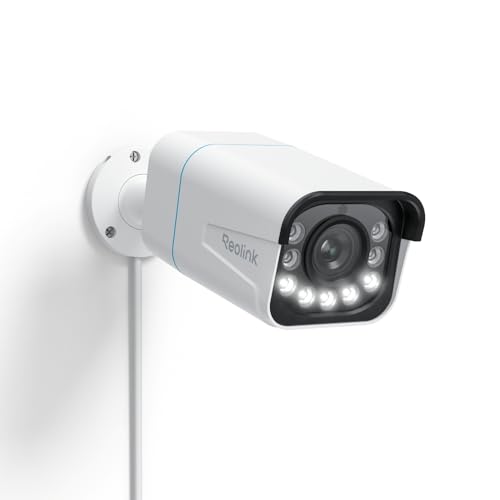 Reolink RLC-811A 4K 5X Zoom PoE Camera |
9.2/10 | Buy |
 Reolink 5MP 8-Channel PoE Home Security Camera |
9.2/10 | Buy | |
| Best Budget |
 CQH 4MP PoE Bullet Security Camera |
8.9/10 | Buy |
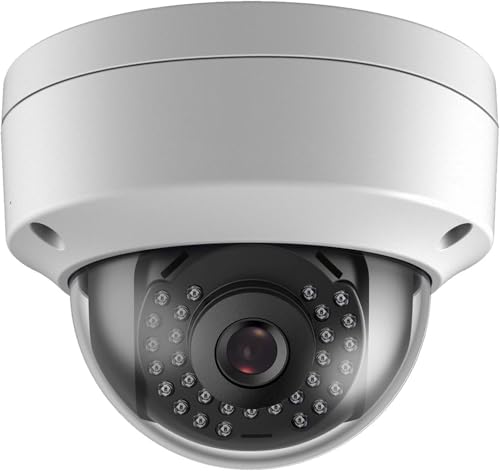 Real HD 4MP PoE IP Dome Security Camera |
8.9/10 | Buy | |
| Best Value |
 Reolink RLC-510A 5MP PoE Security Camera |
8.6/10 | Buy |
 Anpviz U Series 5MP PoE Turret Camera |
8.0/10 | Buy |
Reolink RLC-520A 5MP PoE Dome Camera
Delivering crisp 5MP video and built-in audio over a single Ethernet cable, the Reolink RLC-520A provides reliable outdoor surveillance with onboard smart detection for people, vehicles, and animals. It is a practical wired solution for homeowners seeking local or NVR storage without ongoing subscription fees.
Pros
- Sharp 2560x1920 resolution with clear ambient audio
- Accurate on-device AI reduces false alert triggers
- Streamlined single-cable PoE connection
- Versatile local storage choices without required monthly fees
Cons
- Power adapter or PoE injector is not included
- MicroSD card must be purchased separately
- Time-lapse recording requires the Reolink app
Reolink RLC-811A 4K 5X Zoom PoE Camera
Delivering sharp 8MP video with a 5X optical zoom lens, this outdoor camera brings high-detail perimeter monitoring without mandatory subscription fees. Integrated spotlights, an audible siren, and on-device vehicle and person detection make it a capable choice for hardwired surveillance setups.
Pros
- Sharp 4K resolution with lossless optical zoom
- No monthly subscription required for smart alerts
- Full-color night vision using built-in spotlights
- Flexible storage options up to 512GB microSD card
Cons
- PoE injector or power adapter sold separately
- Included one-meter Ethernet cable is only for evaluation
- Substantial size and weight requires sturdy mounting
Reolink 5MP 8-Channel PoE Home Security Camera
The Reolink RLK8-520D4-5MP is an 8-channel Power over Ethernet surveillance system featuring 5MP cameras, smart person and vehicle filtering, and an integrated 2TB hard drive. It is an ideal match for homeowners seeking reliable, continuous perimeter monitoring without recurring monthly cloud fees.
Pros
- High-definition 5MP resolution provides crisp image clarity across driveways, yards, and entryways
- Plug-and-play PoE cabling streamlines installation by combining power and video transmission into one run
- Local 2TB hard drive delivers continuous 24/7 video recording without mandatory monthly storage fees
- Built-in AI filters out false motion events by accurately identifying people, animals, and vehicles
- Infrared night vision provides up to 100 feet of illumination in pitch-black settings
Cons
- Requires physical network cable routing through attics, crawlspaces, or walls from each camera back to the central NVR
- Features listen-only audio capture via integrated microphones rather than interactive two-way voice talk
- Full animal and vehicle smart detection features require ensuring the system is updated to the latest firmware release
CQH 4MP PoE Bullet Security Camera
Delivering 4MP video resolution with a 110-degree field of view, this outdoor bullet camera provides dependable perimeter monitoring through a single Ethernet connection. Its rugged IP66 metal housing and ONVIF protocol support make it a solid addition to existing wired surveillance systems.
Pros
- Single-cable PoE setup simplifies installation
- Wide 110-degree viewing angle minimizes blind spots
- Durable IP66 metal housing resists extreme weather
- Efficient H.265+ compression conserves hard drive space
- Works with third-party ONVIF-compliant NVRs
Cons
- DC 12V power adapter is not included
- Fixed lens does not offer optical zoom
- Requires wired cabling without Wi-Fi support
Real HD 4MP PoE IP Dome Security Camera
The Real HD 4MP PoE IP Vandal Dome Camera delivers sharp 2560x1440 video at 25fps with an expansive 105-degree field of view and reliable IP66 weatherproofing. It is an ideal, subscription-free surveillance choice for property owners expanding compatible NVR systems or PC-based Blue Iris platforms.
Pros
- Detailed 2560x1440 resolution at 25fps paired with a wide 105-degree viewing angle
- Clean Power over Ethernet (PoE) setup using a single network line for power and data
- Zero monthly subscription fees when routed to local NVR or PC-based recording setups
- Vandal-resistant IP66-rated enclosure suitable for indoor and outdoor installations
- NDAA compliant and backed by U.S.-based technical support during central business hours
Cons
- Incompatible with popular consumer NVR ecosystems including Reolink, Lorex, Amcrest, Swann, OOSSXX, and Viewtron
- Requires physical Ethernet cable routing, making it impractical for renters seeking wire-free installation
- Does not feature consumer Wi-Fi connectivity or direct plug-and-play voice assistant smart home integration
Reolink RLC-510A 5MP PoE Security Camera
Delivering crisp 5MP video and onboard AI detection for people, vehicles, and animals, the Reolink RLC-510A provides dependable wired surveillance without subscription fees. It is an ideal pick for property owners who prioritize local storage flexibility and extended 100-foot infrared night vision.
Pros
- Accurate smart detection without mandatory subscription fees
- Clear 5MP video capture at 25 frames per second
- Infrared night vision reaches up to 100 feet
- Supports high-capacity microSD cards up to 512GB
- Versatile local recording to NAS, FTP, and Reolink NVRs
Cons
- Does not support third-party NVRs or systems
- MicroSD card is not included with the camera
- Time-lapse functionality is limited to the Reolink app
Anpviz U Series 5MP PoE Turret Camera
Designed for dedicated surveillance systems, this 5MP turret camera delivers crisp outdoor video with smart dual-light night vision and a wide 110-degree field of view. Its rugged metal build makes it a dependable choice for users integrating into compatible ONVIF NVR platforms.
Pros
- High-detail 5MP resolution at 25 frames per second
- Durable IP66-rated full metal construction
- Flexible color and infrared night vision options
- Broad compatibility with ONVIF NVRs and NAS systems
- AI human detection filters out non-human motion
Cons
- Requires an NVR and cannot operate independently
- Lacks standalone mobile app support
- Does not support vehicle detection
Understanding Power over Ethernet for Residential and Commercial Security Cameras
Power over Ethernet, commonly abbreviated as PoE, is an established networking standard that delivers electrical power and digital data across a single twisted-pair Ethernet cable. Instead of running a dedicated high-voltage electrical line or installing a nearby plug-in alternating current outlet, a PoE camera draws its operating voltage directly from the network infrastructure. This unified approach simplifies exterior installations, improves system reliability, and supports uninterrupted round-the-clock video surveillance. Understanding how this technology functions allows property owners to build dependable security networks without the wireless dropouts common to consumer-grade battery devices.
How Power over Ethernet Works in Modern Video Surveillance
Standard networking cables, such as Category 5e or Category 6, consist of four twisted pairs of copper wires. Under traditional computer networking protocols, high-speed data transmission utilizes these wire pairs to exchange digital packets between connected hardware. PoE technology injects direct electrical current, typically between 44 and 57 volts direct current, into unused conductor pairs or shares conductors alongside active data signals without distorting video streams. A specialized power sourcing device injects this electricity safely at the network switch or recording hub.
At the receiving end, the internal power management circuitry of an IP camera separates the high-frequency digital signal from the direct current voltage. The camera converts this incoming voltage down to the 12-volt or 5-volt levels required by its internal image sensors, processors, and infrared illuminators. Advanced handshaking protocols ensure that electrical current flows only when a compliant powered device is detected on the line. This continuous communication prevents accidental electrical damage if a non-PoE laptop or smart television is plugged into the same network port.
PoE Standards and Power Allocation: 802.3af vs. 802.3at
The Institute of Electrical and Electronics Engineers defines distinct PoE tiers to standardize how much wattage travels safely across copper lines. The foundational IEEE 802.3af standard, commonly known as Type 1 PoE, supplies up to 15.4 watts of direct current power at the switch port, guaranteeing at least 12.95 watts at the camera after accounting for cable resistance. Fixed-lens bullet cameras and dome models equipped with basic infrared night vision usually operate well within this standard. For instance, basic 4MP or 5MP fixed-lens turret cameras rarely consume more than 8 to 12 watts during normal daytime and nighttime operations.
More advanced surveillance hardware requires the higher power ceiling provided by the IEEE 802.3at standard, also known as PoE+ or Type 2. This updated protocol delivers up to 30 watts at the source port and guarantees 25.5 watts at the powered device over standard network runs. Cameras equipped with motorized varifocal lenses, rapid pan-tilt-zoom motors, high-lumen spotlights, or internal heating elements depend on this extra wattage. Models such as the REOLINK PoE Security Camera RLC-811A 5X Optical utilize mechanical zoom assemblies and integrated spotlight arrays that benefit from robust PoE power delivery when tracking activity across extensive yards.
Core Hardware Components in a Wired PoE System
Deploying a functioning PoE security installation involves four fundamental hardware components working in harmony. At the physical monitoring point sits the IP camera itself, housed in an outdoor-rated enclosure designed to capture optical footage. Connecting that camera to the wider system requires four-pair twisted copper Ethernet cabling, with Cat6 solid copper wire preferred for long exterior runs. On the networking side, power delivery originates either from an integrated Network Video Recorder, a dedicated PoE network switch, or a standalone PoE injector.
Standalone PoE injectors serve as useful single-port accessories when adding an individual camera to a conventional home router without purchasing expensive networking racks. Dedicated PoE switches handle larger deployments by distributing power and data across four, eight, sixteen, or more camera channels simultaneously. Complete packages, such as the REOLINK 5MP 8CH Home Security Camera System, streamline this arrangement by housing an eight-channel PoE switch directly inside the central recording unit. This design allows users to plug camera leads straight into the back of the recorder for instantaneous video feeds and automated power synchronization.
Network Bandwidth and Video Compression in Wired Systems
High-resolution video feeds demand substantial data throughput to maintain smooth frame rates and sharp image details. A 4MP or 5MP security camera transmitting uncompressed video would quickly overwhelm local networks and fill digital storage drives within hours. Modern PoE cameras resolve this data demand by using advanced compression codecs such as H.264 and High Efficiency Video Coding, also known as H.265. These mathematical compression algorithms analyze sequential frames to identify moving objects while discarding redundant background pixel data.
Deploying H.265 compression allows cameras like the CQH 4MP PoE IP Turret Bullet Camera,IP Security to cut bandwidth consumption and file sizes by roughly forty to fifty percent compared to legacy encoding. This efficiency ensures that multiple high-definition streams travel cleanly across local network switches without causing packet loss or live-view stutter. Because PoE cameras operate on closed or prioritized local area networks, they do not compete with household mobile devices for wireless airtime. Homeowners with restricted residential upload speeds can still record continuous high-definition video locally without consuming their monthly internet service provider data allocations.
PoE Cameras vs. Battery and Wi-Fi Security Options
Wireless battery cameras provide convenient magnetic mounting, but their operational architecture introduces substantial security compromises. Because battery units must preserve chemical power, they remain in deep-sleep states until a passive infrared thermal sensor wakes the optical processor. This sleep-to-wake delay can cause the camera to miss the initial seconds of a critical event, capturing only the back of a passing intruder. In contrast, PoE cameras receive continuous electrical current, allowing them to record full twenty-four-seven video streams without missing a single frame.
Environmental conditions also highlight the functional divergence between wired and wire-free equipment. Rechargeable lithium-ion batteries suffer significant capacity loss in sub-freezing winter weather, and their internal battery management systems halt charging when temperatures drop below freezing. At the same time, exterior stucco, brick, and low-emissivity glass significantly degrade 2.4 GHz and 5 GHz Wi-Fi radio signals, producing dropped video frames and delayed push notifications. PoE cameras eliminate radio frequency interference entirely by transmitting shielded signals through solid copper wiring directly to central storage appliances.
Storage Topologies: NVR Hard Drives, MicroSD, and Open Protocols
Video surveillance data requires stable storage architectures that align with user privacy preferences and retention timelines. Most PoE security cameras provide multiple simultaneous recording paths, ranging from centralized hard drives to onboard edge storage. Fixed dome models such as the REOLINK RLC-520A 5MP PoE Security Camera include built-in microSD card slots supporting cards up to 512GB for localized event archiving. This local storage safeguards critical footage even if the primary local network switch experiences an unexpected hardware fault.
For long-term continuous archives, centralized Network Video Recorders equipped with surveillance-grade mechanical hard drives provide superior endurance. When integrating disparate hardware, protocol interoperability becomes essential. Many commercial and DIY installations rely on open standards such as ONVIF Profile S and RTSP streaming to pair third-party cameras with software platforms like Blue Iris, Milestone, or Synology Network Attached Storage. If you plan to expand an existing recorder setup with specialized equipment, reviewing compatible add-on cameras for an NVR helps avoid brand compatibility conflicts and missing feature sets.
Hardware compatibility restrictions require careful attention during equipment selection. For instance, the Anpviz 5MP PoE Camera, Turret Security IP Camera is engineered specifically to operate alongside ONVIF-compliant recorders and third-party software, lacking standalone consumer smartphone application support. Conversely, certain proprietary cameras restrict video feeds entirely to their native recording hubs. Property owners should verify whether a camera supports open networking protocols before attempting to integrate it into broader smart home automation platforms.
Physical Cable Runs, Distance Limits, and Ingress Protection
Ethernet cabling is subject to clear physical limitations governed by standard networking physics. The maximum certified transmission distance for copper Category 5e and Category 6 Ethernet cables is 100 meters, or approximately 328 feet, from the power sourcing port to the camera. Exceeding this distance introduces electrical resistance that drops operating voltage below functional levels while attenuating high-frequency digital signals. For extensive driveways or outbuildings beyond this threshold, installers deploy PoE extenders, fiber optic conversion lines, or localized network switches to regenerate signal integrity.
Outdoor installations also demand strict physical environmental protections. Exterior cameras such as the 4MP PoE IP Vandal Dome Camera Outdoor/Indoor feature rugged IP66-rated metal housings engineered to repel driving rain, windborne dust, and seasonal temperature swings. Installers must always form a physical downward drip loop in the Ethernet line just before the cable enters the camera junction box or wall penetration. This physical bend prevents rainwater from tracking along the cable jacket directly into sensitive electrical terminal connectors, preventing long-term corrosion and short circuits.
Motion Analytics and Edge Artificial Intelligence
Legacy motion detection systems relied on simple pixel-luminance shifts, triggering annoying false alarms whenever wind shook tree branches or cloud shadows drifted across lawns. Modern wired IP cameras overcome this notification fatigue by incorporating on-device artificial intelligence powered by dedicated neural processing units. These on-chip algorithms analyze video frames in real time to classify moving shapes as persons, vehicles, or animals before generating an alert. Because processing occurs on the camera hardware rather than an offsite cloud server, notification latency remains under one second.
Continuous wired power allows these smart analytical engines to operate continuously without draining a battery reservoir. Cameras like the REOLINK 5MP PoE Security Camera RLC-510A actively filter passing wildlife while maintaining immediate sensitivity to perimeter intrusion along property lines. For properties requiring active tracking over expansive open zones, pairing wired intelligence with motorized pan-tilt-zoom cameras for perimeter monitoring provides automated panning and optical enlargement without compromising recording reliability. Fine-tuning detection zones through mobile software ensures that public street traffic does not generate unnecessary homeowner alerts.
US Legal Boundaries, Audio Consent, and Privacy Compliance
Deploying high-definition surveillance cameras requires careful attention to United States privacy laws and neighborhood boundaries. Under established legal principles, property owners possess broad authority to monitor exterior curtilage, including driveways, walkways, and front entryways where no reasonable expectation of privacy exists. However, cameras must never be positioned to peer directly into neighboring interior living spaces, bedrooms, or fenced areas designed specifically for seclusion. Utilizing software privacy masking tools helps black out neighboring windows while maintaining complete visibility over your own yard.
Audio surveillance introduces additional legal complexities governed by federal and state wiretap statutes. The federal wiretap statute, 18 U.S.C. Section 2511, prohibits the intentional interception of oral communications where speakers possess an expectation of privacy. State regulations introduce another layer of oversight, with multiple jurisdictions enforcing two-party or all-party consent rules that make recording private conversations illegal without the explicit knowledge of all participants. Because cameras like the REOLINK RLC-520A feature sensitive internal microphones, homeowners should review state laws, consider muting audio capture in public-facing zones, or post visible surveillance notices to maintain legal compliance.
System Design Takeaways and Practical Deployment Steps
Designing a dependable PoE security camera system starts with calculating the total electrical power budget across all intended monitoring channels. A network switch providing 60 watts of total PoE power easily supports four standard 12-watt bullet cameras, but adding high-draw PTZ cameras or multi-spotlight fixtures may cause switch overload and reboot cycles. Verifying individual camera wattage requirements against the total continuous power output of the switch prevents unexpected system crashes during nighttime infrared operation.
Before drilling mounting holes or pulling cables through exterior walls, pre-testing each camera with short patch cords on a work bench confirms video streaming and firmware stability. Establishing an isolated virtual local area network for surveillance hardware separates high-volume camera traffic from household computers, enhancing network performance and security posture. With proper cable management, outdoor weatherproofing, and calibrated edge detection, a Power over Ethernet surveillance installation delivers decades of robust, subscription-free property protection.
About the author
Rachel Cericola is an experienced smart home writer and product tester with extensive hands-on experience evaluating connected devices. Her expertise includes security cameras, video doorbells, smart-home platforms, video storage, privacy, and everyday device usability. She approaches home security from a consumer-first perspective, helping readers understand how products perform beyond specifications and what features matter most in daily use.