
What Is the Best Battery Security Camera: Practical Guide for 2026
What Is The Best Battery Security Camera guide for November 2026 covering wire-free mounting, battery endurance, local storage options, and crisp night surveillance.
 By Rebecca Edwards
Updated November 5, 2026

Mounting wire-free cameras around a residential property solves complex electrical routing issues, but selecting the right hardware requires understanding sensor efficiency and real-world power demands. When homeowners investigate what is the best battery security camera, they frequently encounter trade-offs between continuous responsiveness, battery capacity, and wireless signal stability. Nuisance alerts triggered by moving tree limbs or shifting cloud shadows can drain a lithium-ion power pack within days if motion thresholds remain uncalibrated. Exploring specialized battery security cameras with color night vision highlights how integrated spotlights and wide-aperture lenses balance after-dark visibility against daily power conservation. Finding an optimal balance ensures steady surveillance without the frustration of constant ladder trips for recharging.
True surveillance effectiveness depends on a dependable detection pipeline, robust weatherproofing, and flexible video storage rather than exaggerated marketing figures. Determining What Is The Best Battery Security Camera requires examining whether a device relies on passive infrared (PIR) sensors, on-device artificial intelligence, or cloud subscriptions for basic clip retention. Operational conditions such as freezing winter temperatures or structural wall attenuation directly affect wireless transmission rates and lithium cell longevity. Systems featuring local microSD storage, solar charging compatibility, and customizable activity zones allow property owners to secure entryways without recurring monthly fees. Evaluating these practical elements provides clear visibility into which camera architecture best matches your property perimeter and maintenance tolerance.
| Award | Product | SSG Score About SSG ScoreThe SSG Score is our own rating from 0 to 10, based on performance, design and build, ease of use, and value. It reflects independent research and is never influenced by manufacturers, retailers, or affiliate commissions. Learn more › | |
|---|---|---|---|
| Best Overall |
Wynoxian 1080p Wireless Outdoor Camera
|
9.1/10 | Buy |
| Best Value |
 ZEEPORTE 2K Solar Wireless Outdoor Security Camera |
9.1/10 | Buy |
| Best Budget |
 HITELLARCAM 2K Wireless Outdoor Security Camera |
8.8/10 | Buy |
| Best Premium |
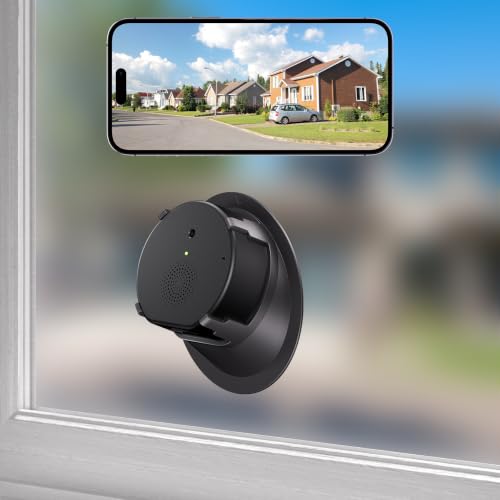 Fazoxo 2.5K Wireless Window Camera |
8.6/10 | Buy |
 VISION WELL 2K Wireless Security Camera |
8.3/10 | Buy | |
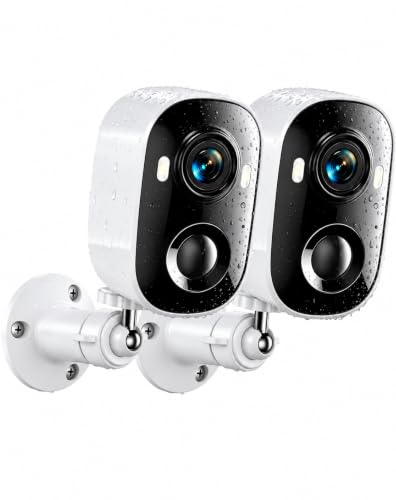 AlertSine 2K Wireless Outdoor Security Camera |
8.0/10 | Buy | |
 ZUMIMALL 3MP Wireless Outdoor PTZ Camera |
7.8/10 | Buy |
Wynoxian 1080p Wireless Outdoor Camera
Designed for wire-free home monitoring, this compact Wynoxian camera pairs 1080p video with AI human detection to reduce false alerts. With infrared night vision reaching 33 feet and a rechargeable 5200mAh battery, it suits entryways or spots lacking nearby outdoor outlets.
Pros
- Built-in 5200mAh rechargeable battery
- AI human filtering reduces false alerts
- Night vision visibility up to 33 feet
- Two-way audio for remote communication
- Compact size and lightweight construction
Cons
- Operates only on 2.4GHz Wi-Fi networks
- Pre-roll recording requires cloud storage access
- Video resolution is limited to 1080p
ZEEPORTE 2K Solar Wireless Outdoor Security Camera
The ZEEPORTE 2K Solar Wireless Outdoor Security Camera provides flexible 355-degree pan and 120-degree tilt coverage powered by an included 2W solar panel and rechargeable battery. It is an affordable, wire-free option for homeowners and renters seeking color night vision and local microSD storage without mandatory monthly fees.
Pros
- Includes a 2W solar panel and rechargeable battery for convenient, wire-free exterior installation
- Expansive viewing flexibility with motorized 355-degree pan and 120-degree tilt controls via the app
- Flexible storage options supporting up to 256GB microSD cards alongside free 7-day rolling 6-second cloud clips
- Integrated spotlight provides full-color night vision alongside a flashing LED and siren alarm for perimeter deterrence
- IP65 weather-resistant enclosure engineered to withstand typical outdoor rain and weather conditions
Cons
- Advanced AI detection for people, vehicles, pets, and packages requires a paid cloud subscription
- Does not support 24/7 continuous video recording or automated subject motion tracking
- Operates exclusively on 2.4 GHz Wi-Fi bands with no support for 5 GHz networks
HITELLARCAM 2K Wireless Outdoor Security Camera
The HITELLARCAM 2K wireless outdoor security camera provides wire-free surveillance featuring dual-band Wi-Fi, full-color night vision, and flexible storage via a microSD slot or free SD-quality cloud tier. It serves as an accessible option for suburban homeowners or renters seeking budget-friendly entryway and perimeter coverage without mandatory monthly fees.
Pros
- Dual-band 2.4GHz and 5GHz Wi-Fi support provides flexible home network integration
- Free SD-quality cloud storage option provides clip access without mandatory subscription fees
- Onboard microSD card slot supports up to 256GB for zero-monthly-cost local video storage
- IP66 weather-resistant construction withstands exposure to outdoor rain and dust
- Integrated LED spotlights enable full-color night recording and visual deterrence
Cons
- Free cloud storage tier is limited to standard-definition playback unless upgraded to a paid plan
- MicroSD card is not included with the camera and must be purchased separately
- Battery runtime varies significantly based on trigger frequency, live-view streaming, and cold temperatures
Fazoxo 2.5K Wireless Window Camera
Designed for glass-mounted home surveillance, this wire-free camera delivers 2.5K video with a helpful six-second pre-roll buffer before motion triggers. An adjustable bracket and rechargeable battery allow flexible placement on windows without running power cords.
Pros
- Sharp 2.5K resolution with wide F1.6 aperture
- Six-second pre-roll captures context before motion occurs
- Completely wire-free battery design for flexible placement
- Supports local microSD storage without mandatory monthly fees
Cons
- MicroSD card must be purchased separately
- Color night vision requires ambient light to function
- Cloud video storage requires an optional paid subscription
VISION WELL 2K Wireless Security Camera
The VISION WELL 2K Wireless Security Camera delivers flexible, wire-free surveillance for indoor or outdoor spaces with clear 2K resolution, color night vision, and on-device AI motion filtering. It is a dependable, budget-conscious choice for homeowners and renters seeking reliable entryway deterrence without mandatory monthly fees.
Pros
- Completely wire-free battery installation with included bracket and screws, making it ideal for renters and suburban homeowners.
- Sharp 2K video clarity supported by full-color night vision and a 33-foot illumination range.
- PIR motion detection paired with smart AI filtering for people, vehicles, pets, and packages.
- Local recording support on microSD cards up to 128GB to avoid mandatory monthly subscriptions.
- IP65 weather-resistant rating suitable for exterior perimeter or sheltered entryway mounting.
Cons
- Only connects to 2.4 GHz Wi-Fi networks and does not support 5 GHz frequencies.
- Designed for motion-activated event clips rather than continuous 24/7 video recording.
- MicroSD storage card is not included in the box and must be purchased separately.
AlertSine 2K Wireless Outdoor Security Camera
The AlertSine wireless outdoor camera provides crisp 2K video clarity, full-color night vision, and responsive PIR-assisted AI human detection in an accessible wire-free format. It is a practical perimeter and entryway monitor for budget-conscious homeowners and renters comfortable with a cloud-first storage model.
Pros
- Sharp 2K video resolution delivers crisp daytime detail and full-color night viewing for entryways and perimeters.
- Completely wire-free design with a 4400mAh rechargeable battery allows flexible mounting without electrical wiring.
- PIR heat detection paired with AI human recognition helps reduce false alerts from windblown foliage and weather.
- Durable IP65 weatherproof construction provides reliable outdoor protection across changing seasons.
Cons
- Lacks an onboard microSD card slot, requiring an ongoing cloud subscription for video history once the 3-day trial expires.
- The 4400mAh battery capacity may require more frequent recharging in high-traffic mounting locations.
- Does not support continuous 24/7 video recording, capturing motion-triggered events only.
ZUMIMALL 3MP Wireless Outdoor PTZ Camera
Designed for wire-free exterior monitoring, this outdoor camera delivers wide pan-and-tilt coverage in crisp 3MP resolution with color night vision. Its rechargeable battery and customizable detection zones make it a practical option for homeowners seeking perimeter security without running cables.
Pros
- Broad coverage via smooth pan-and-tilt motorized control
- Integrated spotlight provides vivid color night vision
- Wire-free installation with rechargeable battery power
- Durable IP66 weatherproof housing resists extreme outdoor temperatures
Cons
- Incompatible with 5GHz Wi-Fi networks
- MicroSD card is not included for local storage
- Advanced AI recognition features require an optional add-on
Guide to Selecting the Best Battery Security Camera
Answering what is the best battery security camera requires identifying the right balance between battery longevity, optical resolution, smart motion detection, and local storage ownership. Unlike wired surveillance systems that draw continuous power, wire-free units operate under strict energy budgets that dictate how footage is captured. The most effective camera matches your property layout, Wi-Fi coverage, and tolerance for manual recharging. Understanding how optical sensors, PIR detection, and wireless radios interact ensures you select a dependable surveillance tool for your home.
How Wire-Free Cameras Conserve Power via Standby States
Battery-powered security cameras function differently from continuous-recording wired units. To conserve limited internal energy, these devices spend most of their operational life in an ultra-low-power standby mode. Standby mode shuts down the primary processor, image sensor, and Wi-Fi transmitter while maintaining a low-power hardware monitoring circuit. When motion triggers this monitoring circuit, the camera quickly wakes up, connects to your network, and records event footage.
Advanced battery models often incorporate brief pre-roll buffering using low-power standby memory. Units like the Fazoxo indoor window camera and Wynoxian outdoor camera utilize pre-roll technology to capture the critical seconds before motion detection triggers. This capability solves the common problem of recording only the back of an intruder walking away after wake-up lag. Preserving these initial seconds provides crucial evidentiary context without requiring the heavy energy consumption of continuous commercial recording systems.
Optical Clarity and Sensor Formats: 1080p, 2K, and 2.5K
Video resolution directly determines your ability to discern critical visual evidence, including facial features, clothing logos, or vehicle identifiers. Entry-level models provide 1080p Full HD resolution, which offers adequate general awareness for compact doorways. Higher-resolution options, such as the 2K sensors found in ZEEPORTE SECURITY, HITELLARCAM, and ZUMIMALL cameras, produce 2304 by 1296 pixels. That extra pixel density allows homeowners to digitally zoom into recorded clips without severe image distortion.
Optical clarity also relies on lens aperture dimensions and ambient lighting efficiency. An F1.6 aperture, featured on the Fazoxo 2.5K camera, admits significantly more light onto the image sensor than standard narrow lenses. This light-gathering capacity enhances low-light visibility and helps the camera retain natural colors when porch lights or streetlamps are present. Evaluating camera resolution alongside international DORI standards helps you choose an optical sensor that satisfies facial identification requirements across your coverage distance.
Stationary Lenses vs Pan-Tilt Coverage for Residential Yards
Fixed-lens cameras offer a set diagonal field of view, typically ranging between one hundred and one hundred and thirty degrees. While a stationary wide-angle lens excels at monitoring straightforward entryways, it leaves blind spots across wide perimeters. Motorized pan-tilt cameras provide physical rotation capabilities that dramatically expand yard visibility. Hardware like the ZEEPORTE SECURITY and ZUMIMALL outdoor cameras delivers three hundred and fifty-five degrees of horizontal pan and one hundred and twenty degrees of vertical tilt.
Homeowners managing wide driveways or corner lots often face coverage gaps that standard stationary lenses cannot resolve. Installing specialized ptz security cameras for driveway coverage allows property owners to remotely sweep open spaces and adjust viewing angles directly through a mobile app. The motorized mechanism eliminates the need to install multiple overlapping stationary cameras on separate exterior walls. This versatility minimizes structural drilling while providing complete visual awareness across parking areas and walkway approaches.
Thermal PIR Sensing and Edge-AI Human Filtering
Early generations of wireless cameras relied on primitive pixel-change motion detection, which analyzed frame-by-frame shifts in image brightness. This approach produced relentless notification fatigue because swaying tree branches, blowing debris, flying insects, and passing headlights triggered constant recordings. Modern battery security cameras solve this problem by pairing hardware passive infrared (PIR) sensors with edge-based artificial intelligence. The PIR sensor measures changes in differential thermal energy, ensuring the unit only wakes when warm bodies move across its detection zones.
Once the PIR sensor wakes the camera, onboard artificial intelligence analyzes the visual contours of the moving subject. Algorithms distinguish between humans, vehicles, domestic pets, and delivered packages before dispatching an instant alert to your smartphone. Cameras from AlertSine, VISION WELL, and Wynoxian feature AI human filtering designed to suppress nuisance alerts from passing wildlife or windblown foliage. Limiting wake cycles exclusively to genuine human activity preserves battery reserves while ensuring critical security events never go unnoticed.
Battery Capacity, Solar Harvesting, and Sub-Freezing Charging
Internal battery capacity serves as the foundational energy reservoir for wire-free security hardware. Capacities in modern battery units range from 4400mAh, as seen in AlertSine models, up to 5200mAh in Wynoxian cameras. Under moderate operational parameters of ten to fifteen wake events daily, these rechargeable cells provide between one and six months of endurance. Integrating solar harvesting accessories fundamentally improves the ownership experience by establishing continuous trickle charging. The ZEEPORTE SECURITY camera bundles a compact 2W solar panel that replenishes daily battery consumption using ambient sunlight, eliminating ladder trips for recharging.
Rechargeable lithium battery chemistry introduces distinct environmental boundaries that property owners must respect. Modern battery management systems automatically block charging cycles whenever internal cell temperatures drop below thirty-two degrees Fahrenheit (zero degrees Celsius). Attempting to charge lithium-ion cells at or below freezing risks permanent cell damage through lithium plating. While the camera can still discharge power to record footage during cold snaps, solar panels will not replenish battery reserves until ambient temperatures climb safely above freezing.
Storage Topologies: Subscription-Free MicroSD vs Cloud Archiving
Video storage structure represents one of the most critical long-term considerations when purchasing wireless security hardware. Many modern systems support onboard local storage via high-capacity microSD cards, often accommodating cards up to 128GB or 256GB. Choosing battery security cameras with local storage eliminates recurring monthly subscription fees and keeps sensitive visual data inside your physical custody. When local cards reach maximum capacity, the camera automatically overwrites the oldest unlocked footage through continuous FIFO loop recording.
Cloud storage offers valuable redundancy by securing recorded evidence off-site if an intruder steals or damages the physical camera. Several manufacturers provide entry-level cloud functionality without mandatory subscription fees. For example, ZEEPORTE SECURITY offers lifetime seven-day rolling cloud storage for short clips, while HITELLARCAM includes free standard-definition cloud storage alongside local card slots. Installing high-endurance microSD cards rated Class 10, U3, or V30 ensures smooth data throughput and prolonged card longevity for local recording setups.
Wireless Radio Frequencies: 2.4 GHz vs Dual-Band 5 GHz
Reliable wireless connectivity is indispensable for transmitting motion alerts, establishing live video streams, and syncing recordings. The overwhelming majority of wire-free surveillance hardware, including ZUMIMALL, VISION WELL, and Wynoxian cameras, operates exclusively on the 2.4 GHz Wi-Fi frequency band. The longer radio wavelength of the 2.4 GHz spectrum penetrates dense building materials, such as brick, stucco, wood framing, and exterior insulation, far better than shorter 5 GHz waves. This structural penetration capability makes 2.4 GHz ideal for reaching perimeter fence lines and detached garages.
Conversely, the 2.4 GHz spectrum frequently suffers from heavy congestion in densely populated suburban neighborhoods and apartment complexes. Crowded wireless channels can introduce latency, delay push notifications, or cause live feeds to stutter during high-traffic hours. To overcome spectrum crowding, newer hardware like the HITELLARCAM security camera incorporates dual-band Wi-Fi support across both 2.4 GHz and 5 GHz networks. Maintaining an RSSI signal of negative sixty-five decibel-milliwatts (-65 dBm) or better ensures prompt alert delivery without excessive battery draw.
Ingress Protection, Temperature Extremes, and Enclosure Seals
Outdoor surveillance hardware must withstand constant exposure to harsh environmental elements, including driving rain, blowing dust, and intense sunlight. The international Ingress Protection (IP) standard quantifies weatherproofing through standardized ratings. Cameras bearing an IP65 rating, such as those from VISION WELL, ZEEPORTE SECURITY, and AlertSine, are completely dust-tight and shielded against low-pressure water jets from any direction. Upgraded IP66 housings, featured on ZUMIMALL and HITELLARCAM models, offer enhanced resistance against powerful water jets and severe storm conditions.
Operational temperature boundaries play an equally vital role in ensuring uninterrupted year-round perimeter security. The ZUMIMALL outdoor camera operates reliably across temperatures spanning from negative four degrees Fahrenheit to one hundred and twenty degrees Fahrenheit (-20°C to 50°C). Sub-zero temperatures increase internal electrical resistance within lithium-ion cells, causing terminal voltage to drop prematurely under load during overnight frosts. Selecting an outdoor unit with ruggedized weather seals and an intelligent power-saving mode helps maintain operational continuity through severe seasonal weather shifts.
Audio Intercoms, Legal Consent, and Neighbor Privacy Boundaries
Two-way audio hardware transforms a passive monitoring camera into an active residential communication and deterrence platform. Built-in omnidirectional microphones and integrated micro-speakers allow homeowners to speak directly with delivery drivers, screen visitors, or warn trespassers away from driveways. Most battery security cameras utilize half-duplex audio transmission, functioning similarly to a two-way radio where one party speaks at a time to prevent acoustic feedback. Combining live voice warnings with integrated siren alarms and flashing LED spotlights creates a formidable visual and audible deterrent against prowlers.
Integrating audio recording into outdoor surveillance systems introduces critical legal and privacy obligations that property owners must navigate. In the United States, federal wiretap law (18 U.S.C. § 2511) and various state statutes govern the interception and recording of oral communications. Several states enforce all-party (two-party) consent laws, making it unlawful to record confidential audio conversations without the knowledge and permission of all participating parties. In contrast, one-party consent jurisdictions require only one participant to approve the audio recording.
Homeowners should recognize that individuals possess a reduced expectation of privacy in open outdoor areas like driveways, but capturing audio from adjacent private yards can prompt legal disputes. Most camera applications provide simple configuration toggles to disable audio recording while retaining full video surveillance capabilities. Positioning cameras to capture only your own property boundaries and posting clear surveillance notice signs helps avoid neighborhood friction. This technical analysis provides educational context and should not substitute for formal legal counsel regarding local surveillance statutes.
Optimal Mounting Heights, Downward Angles, and Walk Testing
Proper physical installation determines whether your battery security camera captures actionable forensic evidence or useless overhead imagery. The ideal mounting height for most battery-powered outdoor cameras sits between eight and ten feet above the ground. Mounting the camera too high creates a steep downward angle that captures only the tops of hats or vehicle roofs rather than recognizable facial features. Conversely, mounting a camera below seven feet leaves the physical housing vulnerable to tampering or theft by bad actors.
Camera orientation requires deliberate planning to avoid optical blinding and false triggers. Angling the camera directly toward the morning sunrise or evening sunset causes severe backlighting that silhouettes human figures and washes out video contrast. Furthermore, aiming a thermal PIR sensor directly across a busy public street will trigger dozens of daily recordings from passing vehicles, rapidly depleting battery reserves. Angling the lens downward to cover your private walkway and configuring software activity zones ensures alerts remain confined strictly to your property perimeter.
After mounting the bracket and securing the camera, performing a thorough verification test confirms reliable operation. Walk across the designated protection zone at varying paces to verify PIR sensitivity, measuring the time elapsed before a push notification reaches your smartphone. Verify that recorded clips provide sufficient DORI recognition detail under both bright sunlight and pitch-black conditions. Establishing this baseline functionality ensures your wire-free security camera delivers dependable, automated protection for your home and family over the long term.
Selecting what is the best battery security camera ultimately depends on matching specific hardware capabilities to your unique residential environment. If broad property surveillance across wide yards is your goal, a motorized pan-tilt model with solar harvesting delivers comprehensive coverage with minimal maintenance overhead. Conversely, property owners seeking privacy and budget certainty should prioritize cameras offering robust edge-AI human filtering, dual-band Wi-Fi flexibility, and subscription-free local microSD storage. Evaluating these critical engineering factors ensures your chosen wire-free camera maintains vigilant, reliable perimeter security for years to come.
About the author
Rebecca Edwards is a veteran journalist and home safety expert with decades of editorial experience and more than a decade focused on home and personal security. She researches and tests security systems, smart gadgets, safety technology, and crime-related data to turn complicated topics into practical advice. Her consumer-focused approach helps families evaluate security products based on real needs rather than marketing claims alone.