
What Is the Best Security Camera for Inside Home: Practical Guide for 2026
Evaluating what is the best security camera for inside home for November 2026 means balancing sensor clarity, pan-tilt coverage, local storage security, and essential indoor privacy controls.
 By John R. Delaney
Updated October 28, 2026

Securing the interior of your residence requires a deliberate balance between comprehensive visibility and personal household privacy. While perimeter surveillance focuses primarily on weather-resistant housings and deterrence lighting, indoor monitoring demands discrete physical placement, high-fidelity optical clarity, and responsive acoustic awareness. Homeowners searching for what is the best security camera for inside home must weigh whether fixed wide-angle lenses or motorized tracking mechanisms best serve their specific floor plans. These monitoring decisions also depend on how easily a camera integrates into daily life without triggering relentless nuisance notifications from pets or ceiling fans.
Connectivity architecture and recording retention play equally crucial roles when evaluating interior surveillance options. Many residents choose wire-free cameras with local storage to eliminate unsightly trailing power cords while retaining full ownership of their recorded footage without recurring monthly fees. Deciding between continuous AC plug-in power and rechargeable battery cells dictates whether a camera can handle 24/7 continuous video recording or relies on motion-triggered wake events. Evaluating features like two-way audio, mechanical privacy modes, and dual-band wireless connectivity ensures your chosen hardware delivers reliable remote awareness without saturating residential Wi-Fi bandwidth.
| Award | Product | SSG Score About SSG ScoreThe SSG Score is our own rating from 0 to 10, based on performance, design and build, ease of use, and value. It reflects independent research and is never influenced by manufacturers, retailers, or affiliate commissions. Learn more › | |
|---|---|---|---|
| Best Overall |
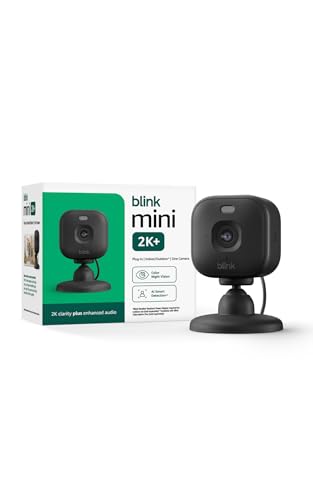
Blink Mini 2K+ Plug-In Indoor Smart Security
|
9.1/10 | Buy |
| Best Budget |
 VSMAHOME 2K Indoor/Outdoor Security Camera |
8.8/10 | Buy |
| Best Premium |
 Fazoxo 2.5K Wireless Window Camera |
8.6/10 | Buy |
| Best Value |
 Vimtag 2.5K Indoor Outdoor Security Camera 2-Pack |
8.4/10 | Buy |
 VISION WELL 2K Wireless Security Camera |
8.3/10 | Buy | |
 AOQEE G5 2K Indoor Security Camera (2-Pack) |
8.1/10 | Buy | |
 Anona 4K Indoor Pan-Tilt Security Camera 2-Pack |
8.0/10 | Buy |
Blink Mini 2K+ Plug-In Indoor Smart Security
The Blink Mini 2K+ is a compact plug-in indoor security camera that delivers crisp 2K video resolution, clear two-way audio with noise cancellation, and seamless Alexa compatibility. It is an ideal surveillance solution for apartment renters, pet owners, and homeowners seeking straightforward, dependable indoor monitoring.
Pros
- Sharp 2K video resolution with up to 4x zoom provides clear daytime and low-light indoor coverage.
- Upgraded two-way audio with noise cancellation makes communicating with pets or visitors clear and intelligible.
- Ultra-compact and lightweight design fits easily onto shelves or mounts to walls with the included hardware.
- Doubles as an indoor plug-in chime when paired with an optional Blink Video Doorbell.
- Plug-in AC operation ensures continuous surveillance without battery recharge cycles.
Cons
- Advanced person and vehicle AI detection features require an optional paid Blink Subscription Plan.
- Requires proximity to an electrical wall outlet, limiting placement options away from AC power.
- Exterior placement requires purchasing a separate weather-resistant power adapter.
VSMAHOME 2K Indoor/Outdoor Security Camera
Designed for flexible whole-home monitoring, this VSMAHOME camera pairs sharp 2K resolution with color night vision and two-way talk. It offers dependable 24/7 coverage for homeowners who need versatile surveillance inside the nursery or outside on the porch.
Pros
- Sharp 2K video clarity with color night vision
- IP66 weatherproofing protects against rain and dust
- Supports continuous local recording up to 128GB
- Two-way talk enables easy remote communication
- Quick and straightforward setup out of the box
Cons
- MicroSD card is not included in the package
- Requires access to an outlet via 6.56-foot cord
- Outdoor placement works best under sheltered eaves
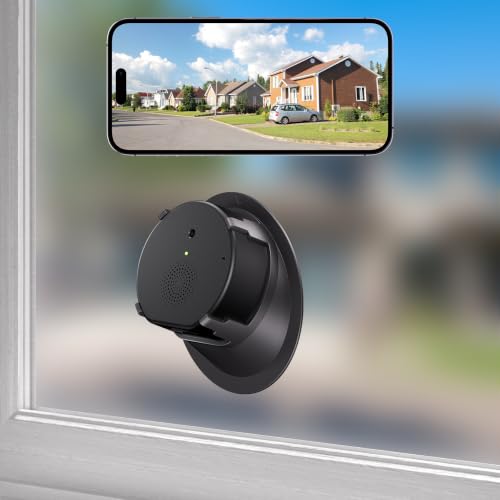
Fazoxo 2.5K Wireless Window Camera
Designed for glass-mounted home surveillance, this wire-free camera delivers 2.5K video with a helpful six-second pre-roll buffer before motion triggers. An adjustable bracket and rechargeable battery allow flexible placement on windows without running power cords.
Pros
- Sharp 2.5K resolution with wide F1.6 aperture
- Six-second pre-roll captures context before motion occurs
- Completely wire-free battery design for flexible placement
- Supports local microSD storage without mandatory monthly fees
Cons
- MicroSD card must be purchased separately
- Color night vision requires ambient light to function
- Cloud video storage requires an optional paid subscription
Vimtag 2.5K Indoor Outdoor Security Camera 2-Pack
The Vimtag 2.5K Indoor/Outdoor Security Camera 2-Pack offers 4MP video clarity, dual-band Wi-Fi flexibility, and color night vision backed by a built-in spotlight and siren. It provides a versatile, cost-effective monitoring solution for homeowners and renters seeking reliable indoor or perimeter coverage with local microSD storage support.
Pros
- Dual-band 2.4 GHz and 5 GHz Wi-Fi compatibility provides greater connection flexibility than standard 2.4 GHz-only cameras
- Solid 2.5K video resolution paired with spotlight illumination ensures clear daytime and nighttime video capture
- IP66-rated enclosure allows seamless transition between indoor nursery monitoring and exposed outdoor surveillance
- Local microSD slot enables subscription-free video storage without forcing an ongoing monthly cloud fee
- Convenient plug-and-play setup supports freestanding tabletop placement or permanent wall mounting with included screws
Cons
- MicroSD card is not included in the box and must be purchased separately for local recording
- Continuous AC power connection is required, limiting placement to areas near electrical outlets
- Advanced cloud video recording and extended alert history require an optional paid Vimtag Cloud subscription
VISION WELL 2K Wireless Security Camera
The VISION WELL 2K Wireless Security Camera delivers flexible, wire-free surveillance for indoor or outdoor spaces with clear 2K resolution, color night vision, and on-device AI motion filtering. It is a dependable, budget-conscious choice for homeowners and renters seeking reliable entryway deterrence without mandatory monthly fees.
Pros
- Completely wire-free battery installation with included bracket and screws, making it ideal for renters and suburban homeowners.
- Sharp 2K video clarity supported by full-color night vision and a 33-foot illumination range.
- PIR motion detection paired with smart AI filtering for people, vehicles, pets, and packages.
- Local recording support on microSD cards up to 128GB to avoid mandatory monthly subscriptions.
- IP65 weather-resistant rating suitable for exterior perimeter or sheltered entryway mounting.
Cons
- Only connects to 2.4 GHz Wi-Fi networks and does not support 5 GHz frequencies.
- Designed for motion-activated event clips rather than continuous 24/7 video recording.
- MicroSD storage card is not included in the box and must be purchased separately.
AOQEE G5 2K Indoor Security Camera (2-Pack)
Designed for pet and home monitoring, this two-pack delivers 2K video resolution with 360-degree pan-and-tilt tracking. Dual-band Wi-Fi and local microSD storage make it a flexible indoor surveillance option without requiring mandatory monthly subscription fees.
Pros
- Dual-band Wi-Fi offers versatile wireless network compatibility
- Auto-tracking keeps moving pets and people in frame
- Operates normally with local storage without cloud fees
- Invisible infrared lights avoid sleep disturbances at night
Cons
- Requires continuous wired power connection to operate
- MicroSD card is not included in the package
- Alexa voice control is limited strictly to live viewing
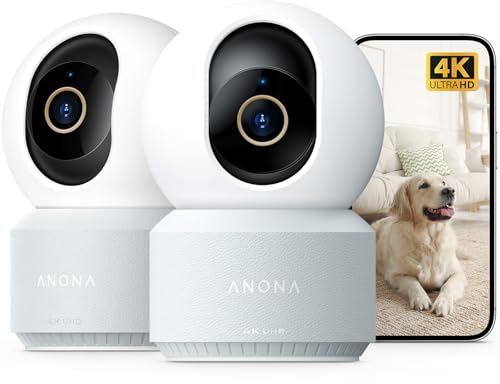
Anona 4K Indoor Pan-Tilt Security Camera 2-Pack
This Anona 4K pan-tilt indoor security camera two-pack pairs sharp ultra-high-definition video with dual-band Wi-Fi 6 and on-device detection for pets, people, and crying babies. It is an ideal pick for parents, pet owners, and apartment dwellers who want expansive room coverage and flexible local microSD storage without mandatory cloud subscription fees.
Pros
- Native 4K ultra-high-definition video delivers sharp image clarity compared to standard 1080p or 2K indoor cameras
- Dual-band Wi-Fi 6 compatibility provides stable data transmission across both 2.4 GHz and 5 GHz frequencies
- Motorized 360-degree pan and 110-degree tilt with auto-tracking ensure moving subjects remain in view
- High-capacity local storage slot accepts up to 512 GB microSD cards for subscription-free clip retention
- Dedicated sound and motion filtering detects persons, pets, and baby crying sounds directly
Cons
- Engineered strictly for indoor environments and lacks weatherproofing or water resistance for outdoor placement
- Requires a constant connection to a standard electrical outlet as it does not include an internal battery
- MicroSD card is not included and must be purchased separately for local clip recording
Key Architecture and Performance Standards for Interior Surveillance
Selecting an indoor camera requires understanding that interior surveillance environments present fundamentally different operational challenges than outdoor perimeters. While exterior cameras battle weather extremes and expansive physical distances, indoor cameras operate in high-contrast indoor lighting, enclosed acoustic spaces, and sensitive personal zones. Identifying the right setup comes down to choosing between continuous recording capability, pan-tilt flexibility, edge-processed artificial intelligence, and private storage retention. Each architectural choice directly dictates how effectively a device protects your home while preserving domestic peace of mind.
Optical Clarity: Sensor Resolution from 2K to 4K Ultra-HD
Image sensor resolution establishes the primary baseline for visual clarity across interior living spaces. While older indoor cameras relied on standard 1080p sensors, modern units utilize 2K, 2.5K, and native 4K UHD sensors to deliver sharper edge detail and cleaner facial textures. High-resolution sensors provide substantial headroom for digital magnification, allowing homeowners to inspect distant objects without severe pixelation. In large living rooms or open-concept floor plans, a 4K camera with 8x digital zoom preserves forensic facial details that lower-resolution sensors blur into digital noise.
Optical performance also depends heavily on lens aperture and dynamic range handling. Sensors with wide apertures, such as f/1.6 optics, draw in higher levels of ambient light, enabling colorful and detailed imaging even in moderately dim rooms. Wide dynamic range processing is equally vital for indoor spaces where sunlight streams through exterior windows into relatively dark living areas. Without adequate dynamic range compensation, video feeds frequently suffer from blown-out backlighting where window glass turns into pure white glare while interior subjects become dark silhouettes.
Coverage Dynamics: Fixed Wide-Angle Lenses Versus Motorized Pan-Tilt Tracking
Room layout dictates whether a fixed wide-angle camera or a motorized pan-tilt device provides superior coverage. Fixed cameras deliver reliable, constant surveillance over a dedicated viewing cone, making them ideal for monitoring focused choke points like front entry hallways, staircases, or nursery cribs. Because fixed cameras maintain a stationary optical axis, they never point away from critical zones or get caught looking in the wrong direction during an unexpected event. They also feature smaller physical profiles, making them easier to position inconspicuously on bookshelves or wall mounts.
Motorized pan-tilt cameras eliminate interior blind spots by providing complete 360-degree horizontal panning and expansive vertical tilt adjustments. When paired with automated motion tracking, these motorized units detect moving subjects and physically rotate the lens assembly to follow pets, toddlers, or visitors across an entire room. This mechanical adaptability provides exceptional flexibility for open-concept floor plans that would otherwise require multiple fixed cameras to cover completely. Similar to how property owners utilize pan-tilt-zoom security cameras across wide exterior driveways, indoor pan-tilt units allow users to survey large rooms through active mobile pan controls.
Power Delivery: Continuous AC Plug-in Versus Wire-Free Battery Flexibility
Power architecture directly shapes the operational capabilities and recording continuity of any indoor camera. Mains-powered AC plug-in cameras connect to standard wall outlets, providing uninterrupted electrical current that supports continuous 24/7 video recording. Because these units never face power conservation constraints, their optical sensors, processors, and wireless radios remain active constantly. This persistent operational state allows plug-in cameras to deliver instant live-view streaming and immediate motion detection without waking from low-power sleep states.
Battery-powered indoor cameras offer complete installation freedom without the aesthetic distraction or physical limitation of trailing power cords. Homeowners and apartment renters can place wire-free cameras on high architectural ledges, kitchen islands, or interior window sills where electrical outlets are unavailable. However, battery-operated cameras operate on aggressive power-saving sleep cycles, waking only when internal passive infrared sensors detect thermal movement. This architecture prevents continuous 24/7 recording, relying instead on short event clips to preserve lithium-ion battery capacity across several months of typical usage.
Event Capture Latency and Pre-Roll Buffer Mechanics
Motion wake-up latency represents one of the most critical operational distinctions between battery-operated and continuous-power cameras. When a battery-powered camera enters deep standby to conserve power, its optical processor remains dormant until an ambient motion trigger activates the circuit. This wake cycle can consume one to two seconds, sometimes resulting in clipped recordings where the camera captures only the back of a person exiting the frame. Understanding this latency helps homeowners position battery units along angled approach paths rather than perpendicular choke points.
Advanced indoor cameras address event capture delays through pre-roll buffering technology. Mains-powered cameras continuously write a rolling few seconds of video into volatile onboard memory, allowing the saved motion clip to include the moments immediately preceding the trigger. Certain specialized battery models implement lower-frame-rate pre-buffering to achieve similar results without exhausting the internal cell. Capturing these pre-event seconds provides vital context, ensuring you see exactly how an incident unfolded rather than just the subsequent aftermath.
Edge-Based Artificial Intelligence: Filtering Motion and Sound
Early generations of indoor cameras relied on primitive pixel-luminance changes to trigger alerts, generating endless false notifications from moving ceiling fans, drifting curtains, or shifting ambient sunlight. Modern surveillance systems integrate neural processing units directly onto the camera chipset to execute edge-based computer vision models. These onboard algorithms distinguish human shapes from pets and inanimate motion without sending private video frames to remote cloud servers. Filtering motion at the hardware level ensures that homeowners receive instant, meaningful push alerts rather than constant notification fatigue.
Acoustic intelligence expands indoor situational awareness beyond visual line-of-sight boundaries. Specialized indoor cameras incorporate high-sensitivity microphone arrays coupled with acoustic pattern recognition to detect distinct domestic sounds. These systems can identify sudden loud noises, shattered window glass, smoke alarm sirens, and baby crying signatures, immediately alerting parents or caretakers. Because acoustic detection operates across the entire room regardless of camera orientation, it provides continuous protective coverage even when subjects move outside the physical field of view.
Network Performance: Dual-Band Wi-Fi and Wi-Fi 6 Throughput
Interior camera reliability hinges upon stable wireless transmission protocols and thoughtful home network management. Many budget indoor cameras operate exclusively on congested 2.4 GHz Wi-Fi frequencies, which provide superior structural wall penetration but suffer from severe channel interference from nearby household electronics. Modern indoor cameras increasingly support dual-band connectivity, enabling users to shift data-heavy video streams onto cleaner 5 GHz channels. Transitioning high-resolution feeds to 5 GHz reduces live-stream latency and prevents frame stuttering when monitoring high-traffic interior spaces.
The integration of Wi-Fi 6 technology further optimizes wireless surveillance performance across dense residential environments. Wi-Fi 6 utilizes advanced multi-user orthogonal frequency division multiple access to communicate with multiple network clients simultaneously without queuing bottlenecks. This protocol efficiency prevents high-bitrate 2K and 4K streams from monopolizing residential upload bandwidth or slowing down connected smart home devices. For homeowners expanding their surveillance ecosystem or evaluating dedicated recording hardware alongside add-on cameras for an NVR system, deploying efficient wireless hardware ensures dependable long-term video streaming.
Storage Architecture: Local MicroSD Endurance Versus Encrypted Cloud Vaults
Deciding how and where surveillance footage is stored represents a crucial operational and financial consideration. Local storage utilizing on-device microSD cards offers complete autonomy from recurring subscription fees and guarantees private, on-premise video archives. Many indoor cameras support microSD capacities ranging from 128GB up to 512GB, providing ample room for days or weeks of continuous or event-based recordings. However, continuous 24/7 video recording subjects flash memory to intense read-write cycles, requiring specialized high-endurance cards rated for constant video surveillance to prevent silent data corruption.
Cloud storage provides resilient off-site redundancy that protects recorded footage against camera theft, accidental destruction, or hardware tampering. Encrypted cloud platforms utilize AES-128 or AES-256 standards to secure video clips during transit and storage in remote data centers. Cloud subscriptions frequently unlock extended video history, shared family access accounts, and cloud-assisted artificial intelligence detection models. Balancing these methods involves weighing the upfront cost of high-endurance flash memory against the perpetual financial overhead of recurring cloud subscription tiers.
Household Privacy Protocols, Audio Consent Laws, and Data Security
Deploying cameras inside private living quarters introduces distinct ethical, privacy, and legal responsibilities that outdoor installations rarely encounter. Homeowners must respect the reasonable expectation of privacy held by family members, roommates, and domestic visitors. Interior surveillance should never be installed in private sanctuaries such as bathrooms, guest bedrooms, or dedicated dressing spaces. To ensure domestic comfort, many indoor cameras provide motorized physical privacy shutters or software-driven privacy modes that automatically blind the lens and cut microphone feeds when family members arrive home.
Audio surveillance requires strict compliance with applicable federal and state wiretap statutes. Under federal law (18 U.S.C. Section 2511), recording oral communications generally requires the consent of at least one party involved in the conversation. However, numerous states enforce strict all-party or two-party consent laws, making it illegal to capture private conversations without the explicit knowledge of everyone present. Homeowners should consult local regulations and consider disabling the integrated microphone or notifying domestic workers, babysitters, and guests whenever indoor recording devices are active.
Network-level device hardening represents another vital layer of interior security and digital privacy protection. IP security cameras should be isolated on dedicated guest networks or segregated virtual local area networks to prevent compromised IoT hardware from exposing sensitive domestic computing devices. Users must replace default administrative credentials with complex, unique passwords and activate multi-factor authentication across all associated mobile applications. Disabling universal plug-and-play settings on your primary router further shields connected interior cameras from unauthorized external internet probing.
Strategic Interior Positioning: Eliminating Glare and Obstructions
Proper physical placement determines whether an indoor camera captures actionable evidence or compromised, unusable video. Cameras should generally be mounted between six and eight feet above the floor, angled slightly downward toward primary room entryways. Mounting a camera too high creates an excessive downward angle that captures only the tops of individuals’ heads, obscuring critical facial features needed for identification. Positioning cameras near shelf edges or utilizing ceiling brackets prevents physical furniture from blocking the camera’s horizontal field of view.
Special attention must be paid to reflective surfaces and window glass when positioning indoor surveillance equipment. Aiming an indoor camera through an exterior window to monitor a porch or yard frequently causes catastrophic infrared bounce-back during nighttime hours. The camera’s built-in infrared light-emitting diodes reflect directly off double-pane glass, blinding the optical sensor and rendering exterior scenes pitch black. Overcoming this optical obstacle requires disabling internal infrared illumination and relying on external ambient lighting or utilizing specialized window-mount cameras engineered for glass contact.
Everyday Verification Checks and Operational Maintenance
Maintaining consistent surveillance performance requires routine operational verification and physical hardware upkeep. Homeowners should periodically inspect camera live streams to verify that Wi-Fi signal strength remains robust, aiming for received signal strength indicator readings better than -65 dBm. Testing push notification delivery times and measuring two-way audio latency ensures clear voice communication when interacting with children, pets, or visitors. Performing these simple digital checks confirms that camera firmware and wireless connections operate without unexpected dropouts or processing delays.
Physical maintenance for indoor cameras is straightforward yet essential for preserving long-term optical performance. Dust, pet dander, and cooking grease particles gradually accumulate on the optical lens element, degrading contrast and creating milky halos around indoor light fixtures. Gently wiping the lens with a clean microfiber cloth every few months restores optical sharpness without damaging delicate anti-reflective coatings. Additionally, periodically reformatting local microSD cards within the companion app clears storage overhead and maintains consistent file structure integrity across continuous recording cycles.
Selecting the right indoor camera ultimately depends on matching your property layout, storage preferences, and daily lifestyle habits with the appropriate hardware capabilities. Homeowners prioritizing continuous 24/7 video recording and zero monthly fees benefit most from plug-in models equipped with high-capacity local microSD storage. Conversely, busy families seeking full-room tracking and acoustic nursery alerts will find motorized pan-tilt units with edge-based sound recognition best suited to their needs. By configuring dedicated privacy zones, establishing secure wireless networks, and respecting audio recording boundaries, you can deploy an interior surveillance system that keeps your living spaces thoroughly protected and private.
About the author
John R. Delaney is a veteran technology editor and product reviewer specializing in home security, smart home devices, and wireless networking. With extensive experience evaluating connected security systems, cameras, smart locks, sensors, and networking equipment, he brings a practical testing mindset to consumer technology. His work emphasizes usability, performance, connectivity, and long-term value for homeowners building reliable smart security systems.